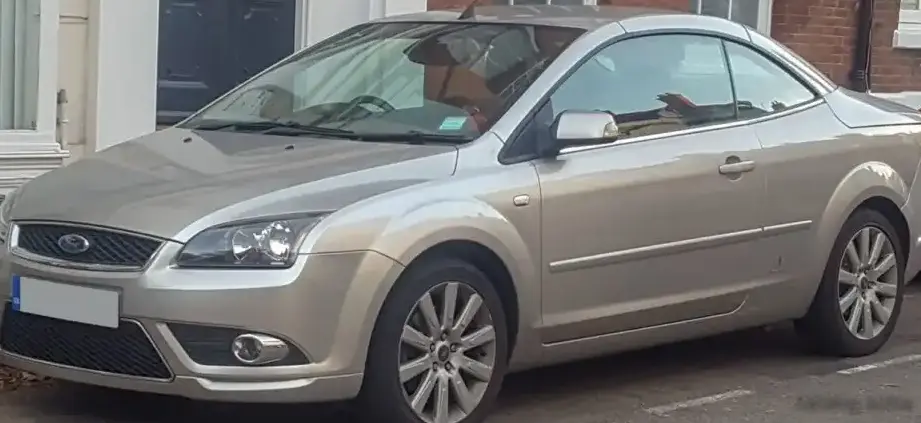
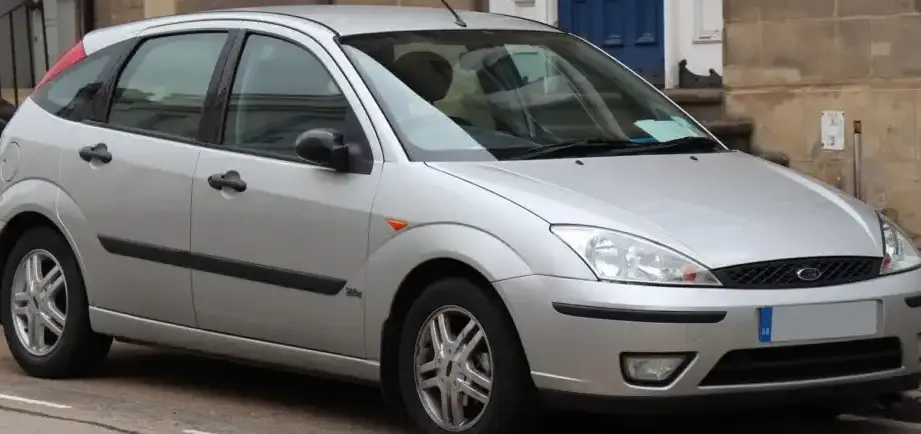
The Ford Focus III, specifically the facelifted model produced from 2014 to 2018, represented a significant evolution of Ford’s globally popular compact car. Within this generation, the 1.6 Ti-VCT (125 horsepower) variant equipped with the PowerShift dual-clutch transmission occupied a middle-ground position in the lineup, aimed at buyers seeking a balance between fuel efficiency, affordability, and modern convenience. This configuration was particularly prevalent in European markets, where compact hatchbacks are a dominant vehicle segment, and also saw moderate sales in North America. The facelift brought revised styling, updated technology, and refinements to the existing powertrain options, including this 1.6-liter engine.
Technical Specifications
| Brand | Ford |
| Model | Focus |
| Generation | Focus III Hatchback (facelift 2014) |
| Type (Engine) | 1.6 Ti-VCT (125 Hp) PowerShift |
| Start of production | 2014 |
| End of production | 2018 |
| Powertrain Architecture | Internal Combustion engine |
| Body type | Hatchback |
| Seats | 5 |
| Doors | 5 |
| Fuel consumption (urban) | 8.7 l/100 km (27 US mpg, 32.5 UK mpg, 11.5 km/l) |
| Fuel consumption (extra urban) | 4.9 l/100 km (48 US mpg, 57.6 UK mpg, 20.4 km/l) |
| Fuel consumption (combined) | 6.3 l/100 km (37.3 US mpg, 44.8 UK mpg, 15.9 km/l) |
| CO2 emissions | 146 g/km |
| Fuel Type | Petrol (Gasoline) |
| Acceleration 0 – 100 km/h | 11.7 sec |
| Acceleration 0 – 62 mph | 11.7 sec |
| Acceleration 0 – 60 mph | 11.1 sec |
| Maximum speed | 187 km/h (116.2 mph) |
| Emission standard | Euro 5 |
| Weight-to-power ratio | 10.5 kg/Hp, 95.4 Hp/tonne |
| Weight-to-torque ratio | 8.2 kg/Nm, 121.4 Nm/tonne |
| Power | 125 Hp @ 6000 rpm |
| Power per litre | 78.3 Hp/l |
| Torque | 159 Nm @ 4000 rpm (117.27 lb.-ft. @ 4000 rpm) |
| Engine layout | Front, Transverse |
| Engine Model/Code | PNDD |
| Engine displacement | 1596 cm3 (97.39 cu. in.) |
| Number of cylinders | 4 |
| Engine configuration | Inline |
| Cylinder Bore | 79 mm (3.11 in.) |
| Piston Stroke | 81.4 mm (3.2 in.) |
| Compression ratio | 11:1 |
| Number of valves per cylinder | 4 |
| Fuel injection system | Multi-port manifold injection |
| Engine aspiration | Naturally aspirated engine |
| Valvetrain | DOHC |
| Engine oil capacity | 4.1 l (4.33 US qt | 3.61 UK qt) |
| Coolant | 5.7 l (6.02 US qt | 5.02 UK qt) |
| Kerb Weight | 1310 kg (2888.06 lbs.) |
| Max. weight | 1825 kg (4023.44 lbs.) |
| Max load | 515 kg (1135.38 lbs.) |
| Trunk (boot) space – minimum | 277 l (9.78 cu. ft.) |
| Trunk (boot) space – maximum | 1062 l (37.5 cu. ft.) |
| Fuel tank capacity | 55 l (14.53 US gal | 12.1 UK gal) |
| Length | 4358 mm (171.57 in.) |
| Width | 1823 mm (71.77 in.) |
| Height | 1484 mm (58.43 in.) |
| Wheelbase | 2648 mm (104.25 in.) |
| Front track | 1544 mm (60.79 in.) |
| Rear (Back) track | 1559 mm (61.38 in.) |
| Minimum turning circle | 11 m (36.09 ft.) |
| Drivetrain Architecture | The Internal combustion engine (ICE) drives the front wheels of the vehicle. |
| Drive wheel | Front wheel drive |
| Number of gears and type of gearbox | 6 gears, automatic transmission PowerShift |
| Front suspension | Independent, type McPherson with coil spring and anti-roll bar |
| Rear suspension | Independent multi-link suspension |
| Front brakes | Disc |
| Rear brakes | Drum |
| Assisting systems | ABS (Anti-lock braking system) |
| Steering type | Steering rack and pinion |
| Tires size | 205/55 R16; 215/50 R17 |
| Wheel rims size | 6.5J x 16; 7.0J x 17 |
Powertrain & Engine Architecture
The heart of this Focus variant is the 1.6-liter Ti-VCT inline-four cylinder engine, designated with the engine code PNDD. “Ti-VCT” stands for Twin Independent Variable Camshaft Timing, a technology that allows for independent control of intake and exhaust valve timing. This optimizes engine performance across the rev range, improving both power and fuel efficiency. The engine utilizes multi-port fuel injection, delivering fuel directly into the intake ports. The 125 horsepower output is achieved at 6000 rpm, with a peak torque of 159 Nm (117.27 lb-ft) available at 4000 rpm. The PowerShift transmission is a six-speed dual-clutch transmission (DCT). It operates similarly to a manual transmission but shifts automatically, offering quicker gear changes and improved fuel economy compared to a traditional automatic. However, early iterations of the PowerShift were known to have reliability issues, particularly concerning clutch pack wear and shuddering.
Driving Characteristics
The 1.6 Ti-VCT with PowerShift delivers adequate, but not exhilarating, performance. The 0-60 mph time of around 11.1 seconds reflects its positioning as a practical, everyday vehicle rather than a performance-oriented one. The PowerShift transmission provides smooth shifts under normal driving conditions, but can sometimes feel hesitant or jerky at lower speeds. Compared to the manual transmission version, the PowerShift offers greater convenience, especially in urban traffic. However, it lacks the direct engagement and responsiveness of a manual gearbox. Compared to higher-output versions of the Focus III, such as those equipped with the 1.5L EcoBoost or 2.0L engines, this 1.6L variant feels noticeably less powerful, particularly when accelerating or overtaking. The gear ratios in the PowerShift transmission are tuned for fuel efficiency, which can sometimes result in the engine feeling strained when climbing hills or carrying a full load.
Equipment & Trim Levels
The 1.6 Ti-VCT PowerShift typically came in mid-range trim levels, such as the SE or SEL in the North American market, or equivalent trims in Europe. Standard features generally included air conditioning, power windows and locks, a basic audio system with USB connectivity, and steel wheels with wheel covers. Higher trim levels offered upgrades such as alloy wheels, a more advanced infotainment system with touchscreen display, automatic climate control, and parking sensors. Optional extras included a sunroof, leather upholstery, and a premium sound system. Safety features like ABS, electronic stability control, and multiple airbags were standard across all trim levels.
Chassis & Braking
The Focus III utilizes an independent McPherson strut suspension at the front and an independent multi-link suspension at the rear, providing a comfortable and controlled ride. The front brakes are discs, while the rear brakes are drums on most variants of this trim level. Stabilizer bars are fitted to both the front and rear axles to reduce body roll during cornering. The steering is a rack and pinion system, offering precise and responsive handling. The suspension tuning is geared towards comfort and everyday usability, rather than outright sportiness. The drum brakes on the rear are a cost-saving measure, and while adequate for normal driving, they lack the stopping power and fade resistance of disc brakes.
Market Reception & Comparison
The 1.6 Ti-VCT PowerShift Focus was generally well-received by critics as a practical and fuel-efficient option. However, the PowerShift transmission’s reliability issues were a recurring concern in reviews and owner feedback. Fuel economy was consistently praised, with combined figures around 37.3 US mpg being achievable in real-world driving. Compared to the diesel variants (like the 1.6 TDCi), the 1.6 Ti-VCT offered a smoother and quieter driving experience, but lacked the diesel’s superior fuel economy and low-end torque. Against competitors like the Volkswagen Golf, Opel Astra, and Peugeot 308, the Focus offered a compelling combination of features, handling, and value, although the PowerShift transmission remained a potential drawback.
Legacy
The 1.6 Ti-VCT PowerShift Focus III remains a relatively common sight on used car lots today. While the engine itself is generally reliable, the PowerShift transmission continues to be a point of concern for potential buyers. Proper maintenance, including regular fluid changes, is crucial for maximizing the lifespan of the transmission. The car’s affordability and practicality make it an attractive option for budget-conscious buyers, but a thorough inspection of the transmission is highly recommended before purchase. The Focus III, in general, helped solidify Ford’s reputation for building well-rounded and enjoyable-to-drive compact cars, and this 1.6L variant played a role in making that accessible to a wider range of customers.