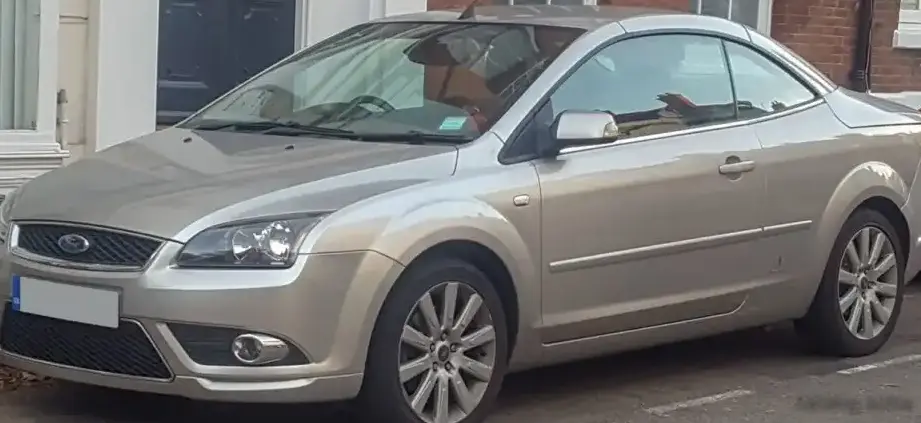
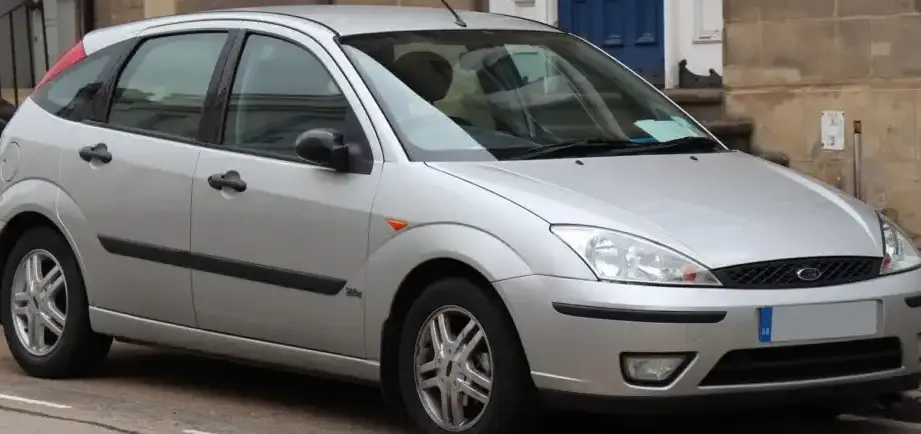
The Ford Focus III, particularly the facelifted model introduced in 2014, represented a significant step forward for Ford’s global compact car. Among the various engine and transmission options offered, the 2.0 TDCi 150 horsepower variant paired with the PowerShift dual-clutch automatic transmission (often denoted with ‘S&S’ for Smart Start/Stop) occupied a middle ground in the lineup. Production of this specific configuration ran from 2014 through 2018. This model aimed to balance fuel efficiency, performance, and convenience, appealing to buyers seeking a refined driving experience without sacrificing practicality. It was primarily marketed in Europe and other global markets where diesel engines remained popular, though limited numbers were available in North America.
Technical Specifications
| Brand | Ford |
| Model | Focus |
| Generation | Focus III Hatchback (facelift 2014) |
| Type (Engine) | 2.0 TDCi (150 Hp) PowerShift S&S |
| Start of production | 2014 |
| End of production | 2018 |
| Powertrain Architecture | Internal Combustion engine |
| Body type | Hatchback |
| Seats | 5 |
| Doors | 5 |
| Fuel consumption (urban) | 5.2 l/100 km (45.2 US mpg, 54.3 UK mpg, 19.2 km/l) |
| Fuel consumption (extra urban) | 4 l/100 km (58.8 US mpg, 70.6 UK mpg, 25 km/l) |
| Fuel consumption (combined) | 4.4 l/100 km (53.5 US mpg, 64.2 UK mpg, 22.7 km/l) |
| CO2 emissions | 115 g/km |
| Fuel Type | Diesel |
| Acceleration 0 – 100 km/h | 8.7 sec |
| Acceleration 0 – 62 mph | 8.7 sec |
| Acceleration 0 – 60 mph | 8.3 sec |
| Maximum speed | 210 km/h (130.49 mph) |
| Emission standard | Euro 6 |
| Weight-to-power ratio | 9.7 kg/Hp, 103.1 Hp/tonne |
| Weight-to-torque ratio | 3.9 kg/Nm, 254.3 Nm/tonne |
| Power | 150 Hp @ 3750 rpm |
| Power per litre | 75.1 Hp/l |
| Torque | 370 Nm @ 2000-3250 rpm (272.9 lb.-ft. @ 2000-3250 rpm) |
| Engine layout | Front, Transverse |
| Engine Model/Code | T7DB |
| Engine displacement | 1997 cm3 (121.86 cu. in.) |
| Number of cylinders | 4 |
| Engine configuration | Inline |
| Cylinder Bore | 85 mm (3.35 in.) |
| Piston Stroke | 88 mm (3.46 in.) |
| Compression ratio | 16:1 |
| Number of valves per cylinder | 4 |
| Fuel injection system | Diesel Commonrail |
| Engine aspiration | Turbocharger, Intercooler |
| Valvetrain | DOHC |
| Engine oil capacity | 6.1 l (6.45 US qt | 5.37 UK qt) |
| Coolant | 8 l (8.45 US qt | 7.04 UK qt) |
| Kerb Weight | 1455 kg (3207.73 lbs.) |
| Max. weight | 2050 kg (4519.48 lbs.) |
| Max load | 595 kg (1311.75 lbs.) |
| Trunk (boot) space – minimum | 277 l (9.78 cu. ft.) |
| Trunk (boot) space – maximum | 1062 l (37.5 cu. ft.) |
| Fuel tank capacity | 53 l (14 US gal | 11.66 UK gal) |
| Length | 4358 mm (171.57 in.) |
| Width | 1823 mm (71.77 in.) |
| Height | 1484 mm (58.43 in.) |
| Wheelbase | 2648 mm (104.25 in.) |
| Front track | 1544 mm (60.79 in.) |
| Rear (Back) track | 1559 mm (61.38 in.) |
| Minimum turning circle | 11 m (36.09 ft.) |
| Drivetrain Architecture | Front wheel drive |
| Number of gears | 6 |
| Gearbox type | Automatic transmission PowerShift |
| Front suspension | Independent, type McPherson with coil spring and anti-roll bar |
| Rear suspension | Independent multi-link suspension |
| Front brakes | Disc |
| Rear brakes | Disc |
| Assisting systems | ABS (Anti-lock braking system) |
| Steering type | Steering rack and pinion |
| Tires size | 205/55 R16; 215/50 R17 |
| Wheel rims size | 6.5J x 16; 7.0J x 17 |
Powertrain & Engine Architecture
The heart of this Focus variant is the 2.0-liter TDCi diesel engine, specifically the T7DB engine code. This engine belongs to the Ford Duratorque family, known for its robust construction and relatively good fuel economy. It utilizes a common-rail direct injection system, delivering fuel at extremely high pressure for optimized combustion. The engine features a single turbocharger with an intercooler to increase air density and boost power output. The double overhead camshaft (DOHC) valvetrain, with four valves per cylinder, further enhances breathing and efficiency. The PowerShift 6-speed dual-clutch transmission (DCT) is a key component. Unlike a traditional automatic, PowerShift offers quicker, more direct shifts and contributes to improved fuel economy. It operates similarly to two manual transmissions in one, with one clutch handling odd gears and the other even gears, allowing for seamless gear changes. The ‘S&S’ designation indicates the inclusion of Ford’s Auto-Start-Stop system, which automatically shuts off the engine when the vehicle is stationary (e.g., at traffic lights) to conserve fuel.
Driving Characteristics
The 150 horsepower and 370 Nm (272.9 lb-ft) of torque provided by the 2.0 TDCi engine, coupled with the PowerShift transmission, resulted in a capable and refined driving experience. Acceleration from 0-60 mph took approximately 8.3 seconds, making it reasonably quick for a compact hatchback. The PowerShift transmission, while generally smooth, could exhibit some low-speed jerkiness, a common characteristic of early DCT implementations. The gear ratios were tuned for a balance between fuel efficiency and responsiveness. Compared to the higher-output 163 hp version of the same engine, this variant offered slightly less outright performance, but the difference was often negligible in everyday driving. Compared to the manual transmission options, the PowerShift provided greater convenience, particularly in urban environments, but some drivers preferred the more direct feel and control of a manual gearbox.
Equipment & Trim Levels
The 2.0 TDCi 150 hp PowerShift S&S typically sat in the mid-range of the Focus III facelift trim levels. Standard equipment often included air conditioning, power windows, power mirrors, a basic audio system with USB connectivity, and alloy wheels. Higher trim levels, such as Titanium, added features like automatic climate control, a more advanced infotainment system with touchscreen display, rear parking sensors, and upgraded interior upholstery. Optional extras could include a panoramic sunroof, heated seats, and a premium sound system. Interior upholstery was typically cloth, with leather options available on higher trims.
Chassis & Braking
The Focus III utilized an independent front suspension with McPherson struts and a multi-link independent rear suspension. This setup provided a good balance of ride comfort and handling. The 2.0 TDCi models generally featured disc brakes on all four wheels, providing adequate stopping power. Anti-lock Braking System (ABS) was standard. Stabilizer bars were fitted to both the front and rear axles to reduce body roll during cornering. The suspension tuning was generally geared towards comfort, but the Focus still offered a reasonably engaging driving experience.
Market Reception & Comparison
The 2.0 TDCi 150 hp PowerShift S&S Focus was generally well-received by automotive critics. It was praised for its fuel efficiency, comfortable ride, and refined powertrain. However, the PowerShift transmission received some criticism for its occasional jerkiness and potential reliability issues, particularly in earlier iterations. Compared to the 1.0 EcoBoost petrol engine, the 2.0 TDCi offered significantly more torque and better fuel economy, especially on longer journeys. Compared to the higher-output diesel variants, it represented a more affordable option with a slight compromise in performance.
Legacy
The 2.0 TDCi engine, in general, proved to be a durable and reliable unit, although the PowerShift transmission has a more mixed reputation. Early versions of the PowerShift were prone to clutch failures and software glitches, leading to recalls and warranty claims. Later revisions of the transmission addressed some of these issues, but concerns remained. In the used car market, these Focus models offer good value for money, but potential buyers should carefully inspect the PowerShift transmission and check for any signs of issues. The Focus III, as a whole, established Ford as a major player in the global compact car segment, and the 2.0 TDCi 150 hp PowerShift S&S variant remains a popular choice for those seeking a fuel-efficient and practical hatchback.