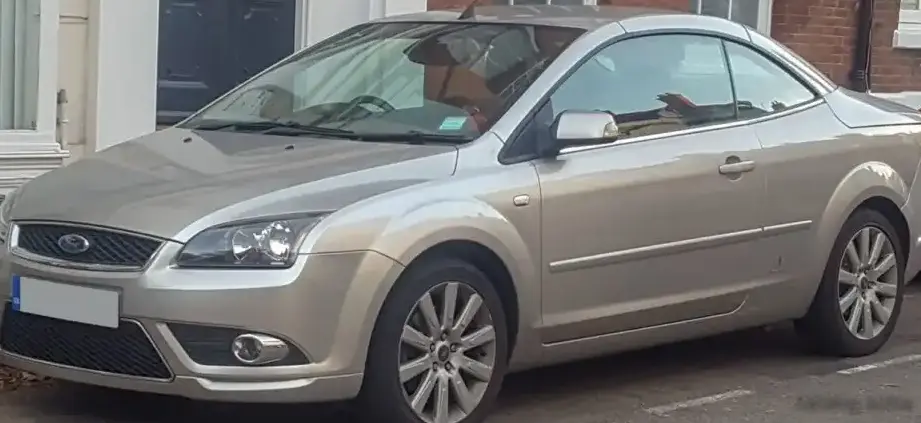
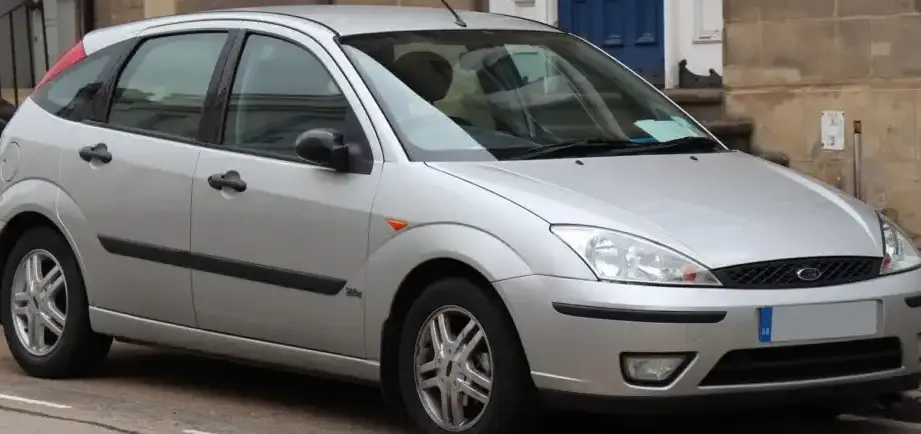
The Ford Focus III, specifically the facelifted model produced from 2014 to 2018, represented a significant evolution of Ford’s globally successful compact car. Within the North American market, the Focus aimed to provide a blend of European handling characteristics with American practicality. The 2.0 Ti-VCT (160 Hp) Flex Fuel variant, introduced during this facelift, occupied a mid-range position in the lineup, offering a step up in performance from the base 1.0L EcoBoost engine while remaining more accessible than the performance-oriented ST model. This version was designed to appeal to buyers seeking a balance of fuel efficiency, power, and the flexibility of running on gasoline or E85 ethanol blends.
Technical Specifications
| Brand | Ford |
| Model | Focus |
| Generation | Focus III Hatchback (facelift 2014) |
| Type (Engine) | 2.0 Ti-VCT (160 Hp) Flex Fuel |
| Start of production | 2014 |
| End of production | 2018 |
| Powertrain Architecture | Internal Combustion engine |
| Body type | Hatchback |
| Seats | 5 |
| Doors | 5 |
| Fuel consumption (economy) – urban (EPA) | 9 l/100 km (26.1 US mpg) |
| Fuel consumption (economy) – extra urban (EPA) | 6.5 l/100 km (36.2 US mpg) |
| Fuel consumption (economy) – combined (EPA) | 7.8 l/100 km (30.2 US mpg) |
| Fuel Type | Petrol / Ethanol – E85 |
| Emission standard | SULEV |
| Weight-to-power ratio | 8.3 kg/Hp |
| Weight-to-torque ratio | 6.7 kg/Nm |
| Power | 160 Hp @ 6500 rpm |
| Power per litre | 80 Hp/l |
| Torque | 198 Nm @ 4450 rpm (146.04 lb.-ft. @ 4450 rpm) |
| Engine layout | Front, Transverse |
| Engine Model/Code | Duratec |
| Engine displacement | 1999 cm3 (121.99 cu. in.) |
| Number of cylinders | 4 |
| Engine configuration | Inline |
| Cylinder Bore | 87.5 mm (3.44 in.) |
| Piston Stroke | 83.1 mm (3.27 in.) |
| Compression ratio | 12:1 |
| Number of valves per cylinder | 4 |
| Fuel injection system | Direct injection |
| Engine aspiration | Naturally aspirated engine |
| Valvetrain | DOHC |
| Engine oil capacity | 4.3 l (4.54 US qt | 3.78 UK qt) |
| Coolant | 8 l (8.45 US qt | 7.04 UK qt) |
| Kerb Weight | 1324 kg (2918.92 lbs.) |
| Trunk (boot) space – minimum | 277 l (9.78 cu. ft.) |
| Trunk (boot) space – maximum | 1062 l (37.5 cu. ft.) |
| Fuel tank capacity | 47 l (12.42 US gal | 10.34 UK gal) |
| Length | 4359 mm (171.61 in.) |
| Width | 1824 mm (71.81 in.) |
| Width with mirrors folded | 1882 mm (74.09 in.) |
| Width including mirrors | 2045 mm (80.51 in.) |
| Height | 1466 mm (57.72 in.) |
| Wheelbase | 2649 mm (104.29 in.) |
| Front track | 1554 mm (61.18 in.) |
| Rear (Back) track | 1534 mm (60.39 in.) |
| Minimum turning circle (turning diameter) | 11 m (36.09 ft.) |
| Drivetrain Architecture | The Internal combustion engine (ICE) drives the front wheels of the vehicle. |
| Drive wheel | Front wheel drive |
| Number of gears and type of gearbox | 5 gears, manual transmission |
| Front suspension | Independent, type McPherson with coil spring and anti-roll bar |
| Rear suspension | Independent multi-link spring suspension with stabilizer |
| Front brakes | Ventilated discs, 277 mm |
| Rear brakes | Drum, 228 mm |
| Assisting systems | ABS (Anti-lock braking system) |
| Steering type | Steering rack and pinion |
| Power steering | Electric Steering |
| Tires size | 215/55 R16; 215/50 R17; 235/40 R18 |
| Wheel rims size | 16; 17; 18 |
Powertrain & Engine Architecture
The heart of this Focus variant is the 2.0-liter Duratec inline-four cylinder engine. This engine, part of Ford’s Duratec family, utilizes a twin independent variable camshaft timing (Ti-VCT) system. This technology optimizes valve timing for improved performance and fuel efficiency across the engine’s operating range. The direct fuel injection system further enhances combustion efficiency and reduces emissions. The engine’s code is often referenced as a variant within the broader Duratec series, and specific calibrations were implemented to accommodate the Flex Fuel capability, allowing the vehicle to run on gasoline, E85 ethanol, or any blend thereof. The 5-speed manual transmission was the standard offering, chosen for its simplicity and relatively low cost. It featured typical gear ratios for a front-wheel-drive application, prioritizing acceleration in the lower gears and fuel efficiency at highway speeds.
Driving Characteristics
The 160 horsepower and 146 lb-ft of torque provided by the 2.0L engine and 5-speed manual transmission delivered a respectable, though not exhilarating, driving experience. Acceleration from 0 to 60 mph was typically in the 8-9 second range. Compared to the base 1.0L EcoBoost, the 2.0L offered noticeably more power, particularly during highway merging and overtaking maneuvers. However, it lacked the punch of the Focus ST. The manual transmission provided a more engaging driving experience than an automatic, allowing the driver to maintain control over the engine’s powerband. The gear ratios were well-suited for everyday driving, but the 5-speed configuration meant that highway cruising could sometimes feel slightly strained at higher speeds. The suspension, tuned for a balance of comfort and handling, provided a reasonably compliant ride without sacrificing too much cornering stability.
Equipment & Trim Levels
The 2.0L Ti-VCT Flex Fuel model typically came equipped as a mid-level trim, often designated as the SE or SEL depending on the specific market and package options. Standard features generally included air conditioning, power windows and locks, a basic audio system with USB connectivity, and steel wheels with wheel covers. Higher trim levels offered upgrades such as alloy wheels, a more advanced infotainment system with a touchscreen display, automatic climate control, and a sunroof. Optional extras included a rear parking sensor, upgraded audio systems, and leather upholstery. Interior upholstery was typically cloth, with higher trims offering the option of leather or premium cloth materials. The dashboard layout was functional and straightforward, prioritizing ease of use over stylistic flair.
Chassis & Braking
The Focus III utilized an independent McPherson strut front suspension and an independent multi-link rear suspension. This setup provided a good balance of ride comfort and handling precision. The front suspension incorporated a stabilizer bar to reduce body roll during cornering. The rear suspension also featured a stabilizer bar, further enhancing stability. Braking duties were handled by ventilated discs at the front and drum brakes at the rear. While adequate for everyday driving, the rear drum brakes were a cost-saving measure and didn’t offer the same stopping power as disc brakes. The car was equipped with an Anti-lock Braking System (ABS) as standard, enhancing safety during emergency braking situations. Electric power steering provided a light and responsive steering feel.
Market Reception & Comparison
The 2.0L Ti-VCT Flex Fuel Focus was generally well-received by automotive critics as a practical and efficient option in the compact car segment. It was praised for its fuel economy, comfortable ride, and flexible fuel capability. However, some reviewers noted that the engine lacked the refinement and power of some of its competitors. Compared to the 1.0L EcoBoost, the 2.0L offered more power but at the expense of slightly lower fuel economy. Compared to the Focus ST, it was significantly less powerful and lacked the sporty handling characteristics. The Flex Fuel capability was a unique selling point, appealing to environmentally conscious buyers and those seeking to take advantage of lower E85 fuel prices.
Legacy
The 2.0L Ti-VCT engine, while not known for any major inherent flaws, has proven to be reasonably reliable in long-term ownership. Common maintenance items include regular oil changes, spark plug replacements, and air filter replacements. The Flex Fuel system requires occasional maintenance to ensure proper operation. On the used car market, these Focus models represent a good value proposition, offering a blend of practicality, fuel efficiency, and affordability. However, potential buyers should be aware of the potential for age-related wear and tear, and a thorough inspection is recommended before purchase. The Focus III, in general, helped solidify Ford’s reputation for building competent and well-rounded compact cars, and the 2.0L Ti-VCT variant remains a viable option for buyers seeking a reliable and economical transportation solution.