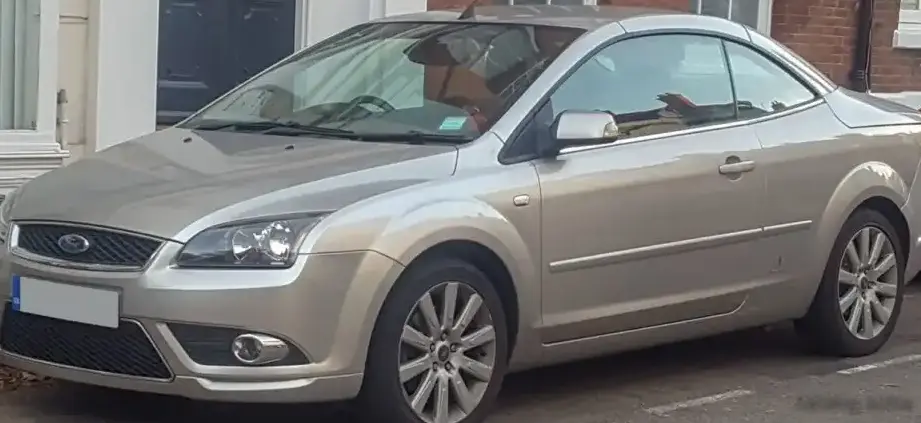
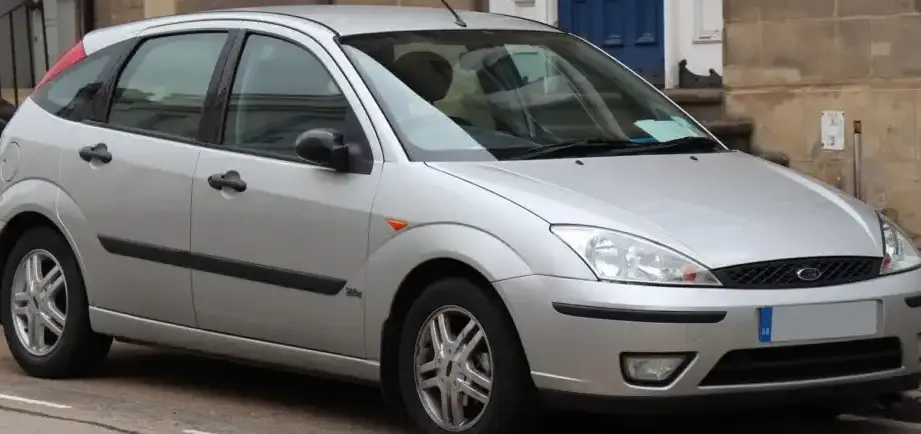
The Ford Focus III, specifically the facelifted model produced from 2014 to 2018, represented a significant evolution of Ford’s globally successful compact car. Within the North American market, the Focus aimed to provide a blend of European handling characteristics with American practicality and affordability. The 2.0 Ti-VCT (160 Hp) Flex Fuel variant, paired with the PowerShift dual-clutch transmission, occupied a mid-range position in the Focus lineup, offering a step up in performance from the base 1.0L EcoBoost engine while remaining more accessible than the performance-oriented ST model. This configuration was designed to appeal to buyers seeking a responsive and fuel-efficient driving experience.
Technical Specifications
| Brand | Ford |
| Model | Focus |
| Generation | Focus III Hatchback (facelift 2014) |
| Type (Engine) | 2.0 Ti-VCT (160 Hp) Flex Fuel PowerShift |
| Start of production | 2014 |
| End of production | 2018 |
| Powertrain Architecture | Internal Combustion engine |
| Body type | Hatchback |
| Seats | 5 |
| Doors | 5 |
| Fuel consumption (urban) | 8.7-9 l/100 km (27 – 26.1 US mpg) |
| Fuel consumption (extra urban) | 5.9-6.2 l/100 km (39.9 – 37.9 US mpg) |
| Fuel consumption (combined) | 7.6-7.8 l/100 km (30.9 – 30.2 US mpg) |
| Fuel Type | Petrol / Ethanol – E85 |
| Emission standard | SULEV |
| Weight-to-power ratio | 8.4 kg/Hp |
| Weight-to-torque ratio | 6.8 kg/Nm |
| Power | 160 Hp @ 6500 rpm |
| Power per litre | 80 Hp/l |
| Torque | 198 Nm @ 4450 rpm (146.04 lb.-ft. @ 4450 rpm) |
| Engine layout | Front, Transverse |
| Engine Model/Code | Duratec |
| Engine displacement | 1999 cm3 (121.99 cu. in.) |
| Number of cylinders | 4 |
| Engine configuration | Inline |
| Cylinder Bore | 87.5 mm (3.44 in.) |
| Piston Stroke | 83.1 mm (3.27 in.) |
| Compression ratio | 12:1 |
| Number of valves per cylinder | 4 |
| Fuel injection system | Direct injection |
| Engine aspiration | Naturally aspirated engine |
| Valvetrain | DOHC |
| Engine oil capacity | 4.3 l (4.54 US qt | 3.78 UK qt) |
| Coolant capacity | 8 l (8.45 US qt | 7.04 UK qt) |
| Kerb Weight | 1337 kg (2947.58 lbs.) |
| Trunk (boot) space – minimum | 277 l (9.78 cu. ft.) |
| Trunk (boot) space – maximum | 1062 l (37.5 cu. ft.) |
| Fuel tank capacity | 47 l (12.42 US gal | 10.34 UK gal) |
| Length | 4359 mm (171.61 in.) |
| Width | 1824 mm (71.81 in.) |
| Width with mirrors folded | 1882 mm (74.09 in.) |
| Width including mirrors | 2045 mm (80.51 in.) |
| Height | 1466 mm (57.72 in.) |
| Wheelbase | 2649 mm (104.29 in.) |
| Front track | 1554 mm (61.18 in.) |
| Rear track | 1534 mm (60.39 in.) |
| Minimum turning circle | 11 m (36.09 ft.) |
| Drivetrain | Front wheel drive |
| Number of gears | 6 |
| Gearbox type | Automatic transmission PowerShift |
| Front suspension | Independent, McPherson with coil spring and anti-roll bar |
| Rear suspension | Independent multi-link spring suspension with stabilizer |
| Front brakes | Ventilated discs, 277 mm |
| Rear brakes | Drum, 228 mm |
| Assisting systems | ABS (Anti-lock braking system) |
| Steering type | Steering rack and pinion |
| Power steering | Electric |
| Tires size | 215/55 R16; 215/50 R17; 235/40 R18 |
| Wheel rims size | 16; 17; 18 |
Powertrain & Engine Architecture
The heart of this Focus variant is the 2.0-liter Duratec inline-four cylinder engine. This engine, internally designated with various codes depending on the specific market and year, is a naturally aspirated powerplant featuring direct fuel injection and a double overhead camshaft (DOHC) valvetrain with four valves per cylinder. The Ti-VCT (Twin Independent Variable Camshaft Timing) system optimizes valve timing for improved performance and fuel efficiency across the engine’s operating range. The engine’s ability to run on E85 flex fuel provided an alternative fuel option, though it typically resulted in slightly reduced horsepower and fuel economy. The PowerShift 6-speed dual-clutch transmission (DCT) was a key component, offering quicker and smoother shifts compared to a traditional automatic transmission. This DCT utilized two separate clutches, one for odd-numbered gears and one for even-numbered gears, allowing for pre-selection of the next gear and minimizing interruption in power delivery.
Driving Characteristics
The 160 horsepower and 198 Nm (146 lb-ft) of torque delivered by the 2.0L engine and PowerShift transmission provided a respectable, if not exhilarating, driving experience. Acceleration from 0 to 60 mph was typically in the 8-9 second range. The PowerShift transmission, while generally responsive, could exhibit some hesitation at low speeds or during initial acceleration, a common characteristic of early DCT implementations. Compared to the manual transmission versions of the 2.0L Focus, the PowerShift offered convenience but slightly diminished responsiveness. The gear ratios were tuned for a balance between fuel economy and everyday drivability, prioritizing smooth cruising over outright performance. The automatic transmission also differed significantly from the higher-performance Focus ST, which featured a more aggressive tune and quicker shift times.
Equipment & Trim Levels
The 2.0L Ti-VCT with PowerShift typically came in mid-level trim configurations, such as the SE or SEL. Standard features generally included air conditioning, power windows and locks, a basic audio system with USB connectivity, and steel wheels with wheel covers. Higher trim levels added features like alloy wheels, a more advanced infotainment system with touchscreen display, automatic climate control, and upgraded interior upholstery. Optional extras included a sunroof, navigation system, and parking sensors. Interior materials were generally durable and functional, reflecting the Focus’s position as a mainstream compact car.
Chassis & Braking
The Focus III utilized an independent front suspension with McPherson struts and a multi-link independent rear suspension. This setup provided a comfortable ride and relatively good handling characteristics. The front suspension incorporated a stabilizer bar to reduce body roll during cornering. Braking duties were handled by ventilated discs at the front and drum brakes at the rear. ABS (Anti-lock Braking System) was standard. The suspension tuning was geared towards providing a balance between comfort and handling, making it suitable for everyday driving conditions. The brake setup was adequate for the vehicle’s weight and performance, but not particularly sporty.
Market Reception & Comparison
The 2.0L Ti-VCT with PowerShift received mixed reviews. Critics praised the engine’s smooth operation and decent fuel economy, but some found the PowerShift transmission to be less refined than traditional automatics or manual transmissions. Compared to the base 1.0L EcoBoost engine, the 2.0L offered significantly more power and a more relaxed driving experience, particularly on the highway. However, the 1.0L EcoBoost was more fuel-efficient. The Focus ST, with its turbocharged engine and sport-tuned suspension, provided a much more engaging driving experience but came at a higher price point. Reliability of the PowerShift transmission was a concern for some owners, with reports of clutch failures and software glitches.
Legacy
The 2.0L Ti-VCT with PowerShift Focus remains a relatively common sight on the used car market. While the PowerShift transmission’s long-term reliability has been a point of concern, many examples have proven to be durable with proper maintenance. The engine itself is generally considered to be reliable. The Focus III, in general, established a reputation for its handling and practicality, and the 2.0L variant offered a good balance of performance and fuel efficiency for buyers seeking a well-rounded compact car. Today, these models represent an affordable entry point into the Ford Focus lineage, offering a comfortable and reasonably efficient driving experience.