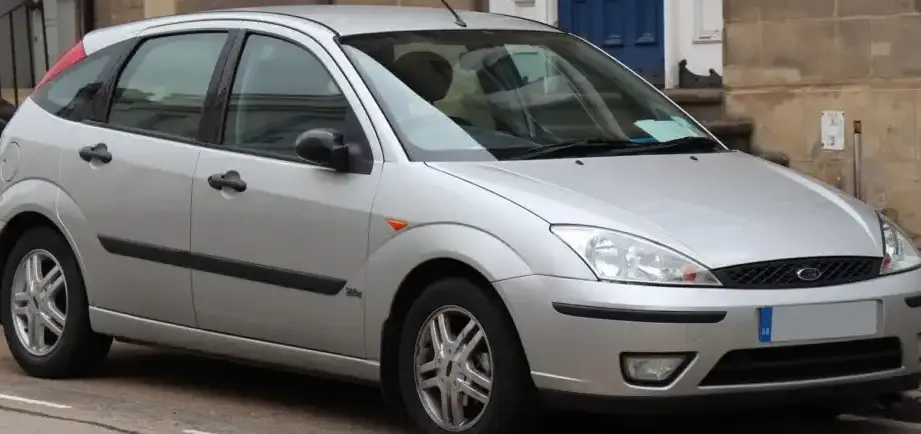
The Ford Focus III facelift, introduced in 2014, represented a significant refresh of the globally successful Focus model. Within this generation, the ST 2.0 EcoBoost variant, producing 250 horsepower, served as the performance flagship. Production of this model ran from 2014 to 2018, primarily targeting the European market and increasingly, North America, where the hot hatch segment was gaining traction. The Focus ST aimed to deliver a compelling blend of everyday usability and engaging driving dynamics, competing with rivals like the Volkswagen Golf GTI and the Renault Mégane RS.
Technical Specifications
| Brand | Ford |
| Model | Focus |
| Generation | Focus III Hatchback (facelift 2014) |
| Type (Engine) | ST 2.0 EcoBoost (250 Hp) |
| Start of production | 2014 |
| End of production | 2018 |
| Powertrain Architecture | Internal Combustion engine |
| Body type | Hatchback |
| Seats | 5 |
| Doors | 5 |
| Fuel consumption (urban) | 9.9 l/100 km (23.8 US mpg) |
| Fuel consumption (extra urban) | 5.7 l/100 km (41.3 US mpg) |
| Fuel consumption (combined) | 7.2 l/100 km (32.7 US mpg) |
| CO2 emissions | 169 g/km |
| Fuel Type | Petrol (Gasoline) |
| Acceleration 0 – 100 km/h | 6.5 sec |
| Acceleration 0 – 62 mph | 6.5 sec |
| Acceleration 0 – 60 mph | 6.2 sec |
| Maximum speed | 248 km/h (154.1 mph) |
| Emission standard | Euro 6 |
| Weight-to-power ratio | 5.7 kg/Hp |
| Weight-to-torque ratio | 4 kg/Nm |
| Power | 250 Hp @ 5500 rpm |
| Torque | 360 Nm @ 2000-4500 rpm (265.52 lb.-ft.) |
| Engine layout | Front, Transverse |
| Engine Model/Code | R9DA |
| Engine displacement | 2000 cm3 (122.05 cu. in.) |
| Number of cylinders | 4 |
| Engine configuration | Inline |
| Cylinder Bore | 87.5 mm (3.44 in.) |
| Piston Stroke | 83.1 mm (3.27 in.) |
| Compression ratio | 9.3:1 |
| Number of valves per cylinder | 4 |
| Fuel injection system | Direct injection |
| Engine aspiration | Turbocharger, Intercooler |
| Valvetrain | DOHC |
| Engine oil capacity | 5.4 l (5.71 US qt | 4.75 UK qt) |
| Coolant capacity | 6.45 l (6.82 US qt | 5.68 UK qt) |
| Kerb Weight | 1437 kg (3168.04 lbs.) |
| Max. weight | 2025 kg (4464.36 lbs.) |
| Max load | 588 kg (1296.32 lbs.) |
| Trunk (boot) space – minimum | 316 l (11.16 cu. ft.) |
| Trunk (boot) space – maximum | 1215 l (42.91 cu. ft.) |
| Fuel tank capacity | 62 l (16.38 US gal | 13.64 UK gal) |
| Length | 4362 mm (171.73 in.) |
| Width | 1823 mm (71.77 in.) |
| Height | 1471 mm (57.91 in.) |
| Wheelbase | 2648 mm (104.25 in.) |
| Front track | 1550 mm (61.02 in.) |
| Rear track | 1534 mm (60.39 in.) |
| Minimum turning circle | 12.4 m (40.68 ft.) |
| Drivetrain | Front wheel drive |
| Number of gears | 6 |
| Gearbox type | Manual transmission |
| Front suspension | Independent type McPherson |
| Rear suspension | Double wishbone |
| Front brakes | Ventilated discs |
| Rear brakes | Disc |
| Tires size | 235/40 R18; 235/35 R19 |
| Wheel rims size | 8.5J x 18; 8.0J x 19 |
INTRODUCTION
The Ford Focus ST 2.0 EcoBoost, launched in 2014 as part of the Mk3 Focus facelift, represented Ford’s commitment to delivering a genuinely exciting and accessible hot hatch. Building upon the already successful Mk3 platform (internally designated 1HX0/A3), the ST variant offered a significant performance upgrade over the standard Focus models. It slotted in as the top-tier performance option, positioned above the more economical EcoBoost variants and aimed squarely at enthusiasts seeking a thrilling driving experience without sacrificing practicality. The facelift brought revised styling, updated technology, and refinements to the chassis and engine, further enhancing the ST’s appeal.
Powertrain & Engine Architecture
At the heart of the Focus ST lies the 2.0-liter EcoBoost inline-four cylinder engine, bearing the Ford engine code R9DA. This engine is a direct-injected, turbocharged powerplant, benefiting from advancements in Ford’s EcoBoost technology. Direct injection allows for precise fuel delivery, optimizing combustion efficiency and power output. The engine utilizes a twin-scroll turbocharger, which minimizes turbo lag and provides a more responsive throttle feel. The valvetrain employs a double overhead camshaft (DOHC) design with four valves per cylinder, maximizing airflow and contributing to the engine’s high-revving nature. The 250 horsepower and 360 Nm (265 lb-ft) of torque are delivered across a broad rev range (2000-4500 rpm). The ST exclusively came with a six-speed manual transmission, chosen for its driver engagement and ability to handle the engine’s output.
Driving Characteristics
The Focus ST 2.0 EcoBoost delivers a genuinely engaging driving experience. The 6-speed manual transmission provides precise shifts, and the turbocharger provides a noticeable surge of power. Acceleration from 0-60 mph takes approximately 6.2 seconds, and the car reaches a top speed of 154 mph. The chassis is well-balanced, offering a good blend of comfort and handling. The steering is precise and communicative, providing the driver with confidence in corners. Compared to the standard Focus models, the ST benefits from a stiffer suspension setup, which reduces body roll and improves handling. While the standard EcoBoost models offered a more fuel-efficient and comfortable ride, the ST prioritized performance and driver involvement. The gear ratios are well-matched to the engine’s power delivery, providing strong acceleration in all gears.
Equipment & Trim Levels
The Focus ST came generously equipped as standard. Key features included sport seats with enhanced bolstering, a unique ST body kit (including a rear spoiler and side skirts), and 18-inch alloy wheels. Inside, the ST featured a distinctive steering wheel, aluminum pedals, and a revised instrument cluster. Standard technology included Ford’s SYNC infotainment system with a touchscreen display, Bluetooth connectivity, and air conditioning. Optional extras included leather upholstery, a premium sound system, and a winter package with heated front seats and windshield wipers. The interior trim was generally dark and sporty, reflecting the car’s performance-oriented character.
Chassis & Braking
The Focus ST’s chassis was specifically tuned for enhanced performance. The front suspension utilizes an independent McPherson strut setup, while the rear features a multi-link double wishbone configuration. These suspension components were revised with stiffer springs and dampers compared to the standard Focus. The ST also featured a thicker front stabilizer bar to reduce body roll. The braking system consisted of ventilated discs at the front and solid discs at the rear. The ABS (Anti-lock Braking System) provided enhanced stopping power and stability. The car’s weight distribution was well-balanced, contributing to its neutral handling characteristics.
Market Reception & Comparison
The Ford Focus ST 2.0 EcoBoost was generally well-received by automotive critics. It was praised for its engaging driving dynamics, powerful engine, and practical hatchback body style. Reviewers noted that the ST offered a compelling alternative to rivals like the Volkswagen Golf GTI, often at a more competitive price point. Fuel economy was respectable for a performance car, averaging around 32.7 mpg in combined driving. Reliability was generally good, although some owners reported minor issues with the turbocharger and cooling system. Compared to the lower-powered EcoBoost variants, the ST offered a significantly more exhilarating driving experience, but at the expense of fuel economy and ride comfort.
Legacy
The Ford Focus ST 2.0 EcoBoost has established itself as a popular choice in the used car market. Its combination of performance, practicality, and affordability has made it a desirable option for enthusiasts. The 2.0-liter EcoBoost engine has proven to be relatively reliable, although regular maintenance is essential. The manual transmission is generally robust, but clutch wear should be checked on used examples. The Focus ST remains a well-regarded hot hatch, offering a rewarding driving experience and a strong following among Ford enthusiasts. Its continued presence on the roads is a testament to its enduring appeal and the quality of its engineering.