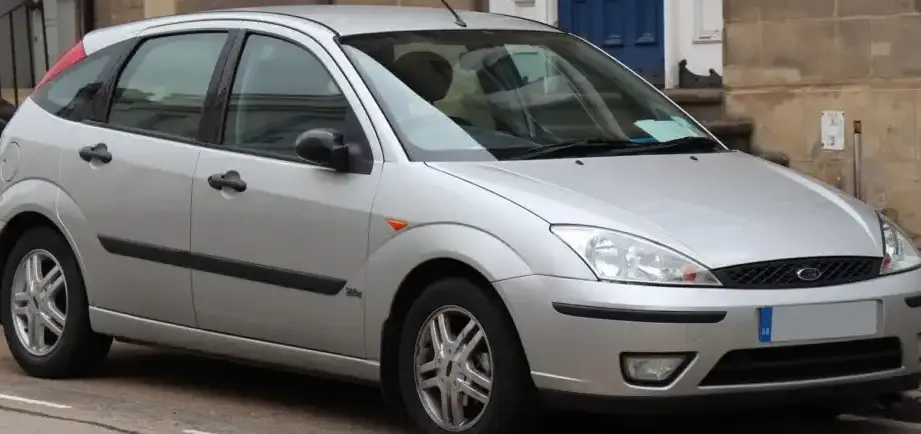
The Ford Focus III, particularly the facelifted version introduced in 2014, represented a significant evolution of Ford’s globally successful compact car. Within the third generation (2011-2018), the ST 2.0 TDCi variant, produced from 2014 to 2018, occupied a unique niche. It aimed to deliver a blend of sporty styling and performance associated with the ST line, coupled with the fuel efficiency and practicality of a diesel engine. This model was primarily targeted at the European market, where diesel engines held a substantial share of the automotive landscape, offering a compelling alternative to petrol-powered hot hatches.
Technical Specifications
| Brand | Ford |
| Model | Focus |
| Generation | Focus III Hatchback (facelift 2014) |
| Type (Engine) | ST 2.0 TDCi (185 Hp) |
| Start of production | 2014 |
| End of production | 2018 |
| Powertrain Architecture | Internal Combustion engine |
| Body type | Hatchback |
| Seats | 5 |
| Doors | 5 |
| Fuel consumption (combined) | 4.4 l/100 km (53.5 US mpg, 64.2 UK mpg, 22.7 km/l) |
| CO2 emissions | 114 g/km |
| Fuel Type | Diesel |
| Acceleration 0 – 100 km/h | 8.1 sec |
| Acceleration 0 – 62 mph | 8.1 sec |
| Acceleration 0 – 60 mph | 7.7 sec |
| Maximum speed | 217 km/h (134.84 mph) |
| Emission standard | Euro 6 |
| Weight-to-power ratio | 7.9 kg/Hp, 126.4 Hp/tonne |
| Weight-to-torque ratio | 3.7 kg/Nm, 273.2 Nm/tonne |
| Power | 185 Hp @ 3500 rpm |
| Power per litre | 92.6 Hp/l |
| Torque | 400 Nm @ 2000-2750 rpm (295.02 lb.-ft. @ 2000-2750 rpm) |
| Engine layout | Front, Transverse |
| Engine Model/Code | T8DA |
| Engine displacement | 1997 cm3 (121.86 cu. in.) |
| Number of cylinders | 4 |
| Engine configuration | Inline |
| Cylinder Bore | 85 mm (3.35 in.) |
| Piston Stroke | 88 mm (3.46 in.) |
| Compression ratio | 16.7:1 |
| Number of valves per cylinder | 4 |
| Fuel injection system | Diesel Commonrail |
| Engine aspiration | Turbocharger, Intercooler |
| Valvetrain | DOHC |
| Engine oil capacity | 6.1 l (6.45 US qt | 5.37 UK qt) |
| Coolant | 8 l (8.45 US qt | 7.04 UK qt) |
| Kerb Weight | 1464 kg (3227.57 lbs.) |
| Max. weight | 2025 kg (4464.36 lbs.) |
| Max load | 561 kg (1236.79 lbs.) |
| Trunk (boot) space – minimum | 316 l (11.16 cu. ft.) |
| Trunk (boot) space – maximum | 1215 l (42.91 cu. ft.) |
| Fuel tank capacity | 60 l (15.85 US gal | 13.2 UK gal) |
| Length | 4362 mm (171.73 in.) |
| Width | 1823 mm (71.77 in.) |
| Height | 1471 mm (57.91 in.) |
| Wheelbase | 2648 mm (104.25 in.) |
| Front track | 1550 mm (61.02 in.) |
| Rear (Back) track | 1534 mm (60.39 in.) |
| Minimum turning circle | 12.4 m (40.68 ft.) |
| Drivetrain Architecture | Front wheel drive |
| Number of gears and type of gearbox | 6 gears, manual transmission |
| Front suspension | Independent type McPherson |
| Rear suspension | Double wishbone |
| Front brakes | Ventilated discs |
| Rear brakes | Disc |
| Tires size | 235/40 R18; 235/35 R19 |
| Wheel rims size | 8.5J x 18; 8.0J x 19 |
Powertrain & Engine Architecture
The heart of the Focus ST 2.0 TDCi is the T8DA engine, a 2.0-liter inline-four cylinder diesel. This engine is a member of Ford’s Duratorq family, known for its robustness and efficiency. The T8DA utilizes a common-rail direct injection system, delivering fuel at extremely high pressures for optimized combustion. A turbocharger with an intercooler is employed to boost power output, providing 185 horsepower at 3500 rpm and a substantial 400 Nm (295 lb-ft) of torque between 2000 and 2750 rpm. The engine features a double overhead camshaft (DOHC) valvetrain with four valves per cylinder, enhancing breathing and contributing to its power delivery. The engine’s 16.7:1 compression ratio is typical for a diesel engine, aiding in efficient combustion. The engine is transversely mounted in the front of the vehicle, driving the front wheels. The 6-speed manual transmission was the only gearbox option available with this engine, prioritizing driver engagement over outright convenience.
Driving Characteristics
The 185 hp diesel engine, coupled with the 6-speed manual gearbox, provided a distinctly different driving experience compared to the petrol-powered Focus ST. While lacking the immediate, high-revving excitement of the petrol variant, the TDCi offered strong low-end and mid-range torque. This made it particularly adept at everyday driving, providing effortless acceleration for overtaking and navigating traffic. The gear ratios were tuned to maximize fuel efficiency while still delivering respectable performance. 0-60 mph arrived in around 7.7 seconds, and the car could reach a top speed of 134.84 mph. The manual transmission allowed for precise control, but the clutch pedal could feel slightly heavier than in some competitors. Compared to the higher-output petrol ST, the TDCi felt more composed and less prone to torque steer, making it a more predictable and manageable vehicle for a wider range of drivers.
Equipment & Trim Levels
The ST 2.0 TDCi typically came well-equipped, building upon the standard Focus trim levels. Standard features included air conditioning, power windows, a basic audio system, and alloy wheels. The ST designation added sporty touches such as a unique body kit (including front and rear spoilers, and side skirts), sports-tuned suspension, and Recaro sports seats. Interior upholstery was typically a combination of cloth and leather. Optional extras included a premium sound system, navigation system, parking sensors, and a sunroof. The interior dashboard configuration was similar to other Focus models, but with ST-specific accents and instrumentation.
Chassis & Braking
The Focus ST 2.0 TDCi benefited from a revised suspension setup compared to standard Focus models. The front suspension utilized an independent McPherson strut design, while the rear featured a multi-link double wishbone setup. This configuration provided a good balance between ride comfort and handling precision. The ST also featured thicker stabilizer bars to reduce body roll during cornering. Braking duties were handled by ventilated discs at the front and solid discs at the rear, providing adequate stopping power for the vehicle’s weight and performance. Anti-lock Braking System (ABS) was standard.
Market Reception & Comparison
The Focus ST 2.0 TDCi was generally well-received by automotive critics, particularly for its fuel efficiency and strong torque output. It was praised as a practical and enjoyable hot hatch that offered a compelling alternative to petrol-powered rivals. However, some reviewers noted that it lacked the outright excitement and responsiveness of the petrol ST. Compared to other trims in the Focus lineup, the TDCi offered a more sporty driving experience and a more aggressive appearance. Fuel economy was a significant advantage, with the TDCi achieving around 53.5 US mpg on the combined cycle, significantly better than the petrol ST. Reliability was generally good, although diesel engines can be more susceptible to issues with the fuel injection system and particulate filter over time.
Legacy
The Ford Focus ST 2.0 TDCi has established a reputation as a reliable and practical hot hatch in the used car market. The Duratorq diesel engine is known for its longevity, provided it has been properly maintained. However, potential buyers should be aware of the potential for issues with the diesel particulate filter (DPF), particularly if the vehicle has primarily been used for short journeys. The availability of parts and servicing is generally good, thanks to the Focus’s widespread popularity. Today, the ST 2.0 TDCi represents a unique offering – a sporty, fuel-efficient, and relatively affordable hot hatch that appeals to drivers seeking a blend of performance and practicality.