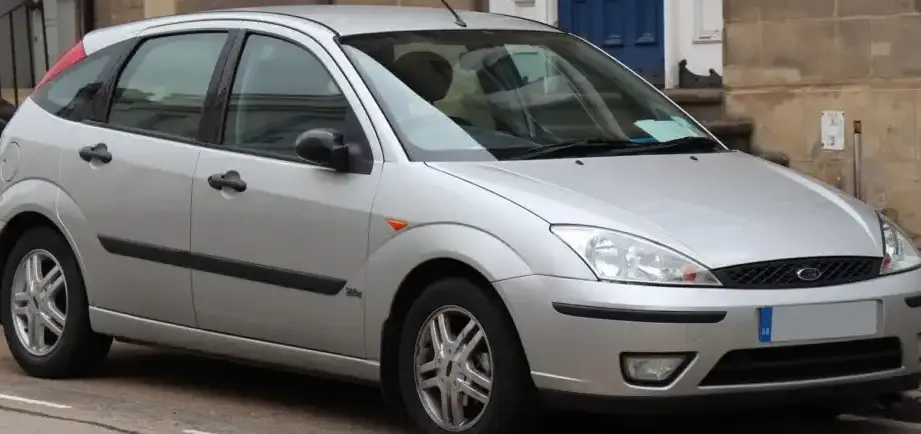
The Ford Focus III Sedan 1.0 EcoBoost (125 hp) start/stop represents a significant entry in the third generation of the globally successful Ford Focus. Produced from 2010 to 2014, this variant was primarily aimed at the European market, where fuel efficiency and smaller displacement engines were highly valued. While the Focus III was sold in North America, the 1.0 EcoBoost engine was not initially offered there, making this configuration more common in other regions. This model occupied the lower-mid range of the Focus III lineup, offering a balance between affordability, fuel economy, and acceptable performance for daily commuting.
Technical Specifications
| Brand | Ford |
| Model | Focus |
| Generation | Focus III Sedan |
| Type (Engine) | 1.0 EcoBoost (125 Hp) start/stop |
| Start of production | 2010 |
| End of production | 2014 |
| Powertrain Architecture | Internal Combustion engine |
| Body type | Sedan |
| Seats | 5 |
| Doors | 4 |
| Fuel consumption (urban) | 6.4 l/100 km (36.8 US mpg, 44.1 UK mpg, 15.6 km/l) |
| Fuel consumption (extra urban) | 4.4 l/100 km (53.5 US mpg, 64.2 UK mpg, 22.7 km/l) |
| Fuel consumption (combined) | 5.1 l/100 km (46.1 US mpg, 55.4 UK mpg, 19.6 km/l) |
| Fuel Type | Petrol (Gasoline) |
| Acceleration 0 – 100 km/h | 11.4 sec |
| Acceleration 0 – 62 mph | 11.4 sec |
| Acceleration 0 – 60 mph | 10.8 sec |
| Maximum speed | 195 km/h (121.17 mph) |
| Emission standard | Euro 5 |
| Power | 125 Hp |
| Torque | 170 Nm (125.39 lb.-ft.) |
| Engine layout | Front, Transverse |
| Engine Model/Code | M1DA |
| Number of cylinders | 3 |
| Engine configuration | Inline |
| Fuel injection system | Direct injection |
| Engine aspiration | Turbocharger, Intercooler |
| Engine oil capacity | 4.1 l (4.33 US qt, 3.61 UK qt) |
| Coolant capacity | 6.3 l (6.66 US qt, 5.54 UK qt) |
| Fuel tank capacity | 55 l (14.53 US gal, 12.1 UK gal) |
| Drivetrain Architecture | Front wheel drive |
| Number of gears | 6 |
| Gearbox type | Manual transmission |
| Assisting systems | ABS (Anti-lock braking system) |
| Steering type | Steering rack and pinion |
| Power steering | Electric Steering |
Powertrain & Engine Architecture
The heart of this Focus variant is the 1.0-liter EcoBoost inline-3 cylinder engine, designated with the engine code M1DA. This engine represented a significant advancement in Ford’s engine technology, utilizing direct fuel injection and a single turbocharger with an intercooler to deliver a surprisingly potent output for its size. The direct injection system allowed for precise fuel delivery, optimizing combustion efficiency and reducing emissions. The turbocharger, carefully matched to the engine’s characteristics, minimized turbo lag and provided a broad torque curve. The engine’s aluminum block contributed to weight savings, further enhancing fuel economy. The 6-speed manual transmission was the standard offering, chosen for its efficiency and driver engagement. The Start/Stop system, a key feature of this variant, automatically shut off the engine when the vehicle came to a halt, reducing idle fuel consumption and emissions.
Driving Characteristics
The 1.0 EcoBoost engine, while not a performance powerhouse, provided adequate power for everyday driving. The 125 hp and 170 Nm (125 lb-ft) of torque allowed for reasonably brisk acceleration, with a 0-60 mph time of around 10.8 seconds. The turbocharger did require some engine speed to build boost, meaning the engine felt more responsive in the mid-range than at very low RPMs. The 6-speed manual transmission was well-matched to the engine’s powerband, allowing drivers to keep the engine in its optimal operating range. Compared to the larger 1.6-liter and 2.0-liter engines available in the Focus III range, this variant prioritized fuel economy over outright performance. It offered a more engaging driving experience than the automatic transmissions offered with the larger engines, but lacked the punch of the higher-output options.
Equipment & Trim Levels
The 1.0 EcoBoost variant typically came equipped with a reasonable level of standard features. These generally included air conditioning, power windows, power door locks, a basic audio system with USB connectivity, and ABS brakes. Interior upholstery was typically cloth, with a functional but not luxurious design. Optional extras included alloy wheels, upgraded audio systems, a navigation system, and parking sensors. The trim level often sat in the mid-range of the Focus III lineup, offering a step up from the base models but lacking the premium features found in the higher-spec versions. The focus was on providing a well-equipped and efficient vehicle at an accessible price point.
Chassis & Braking
The Focus III Sedan utilized a MacPherson strut front suspension and a multi-link rear suspension, providing a good balance between ride comfort and handling. The suspension was tuned to be relatively compliant for everyday driving, but still offered decent body control in corners. Braking systems varied depending on the specific market and trim level. Lower-spec models often featured disc brakes on the front wheels and drum brakes on the rear, while higher-spec models typically had disc brakes all around. The ABS system was standard, providing enhanced braking performance and stability. Stabilizer bars were fitted to both the front and rear axles to reduce body roll during cornering.
Market Reception & Comparison
The 1.0 EcoBoost engine was widely praised by automotive critics for its impressive fuel economy and surprisingly lively performance. The Focus III Sedan 1.0 EcoBoost was seen as a practical and economical choice for drivers who prioritized fuel efficiency and low running costs. Compared to the 1.6-liter gasoline engine, the 1.0 EcoBoost offered similar performance with significantly better fuel economy. It also outperformed the 1.6-liter diesel in terms of refinement and responsiveness. However, it didn’t offer the same level of torque as the diesel, making it less suitable for towing or carrying heavy loads. Reliability proved to be generally good, with the 1.0 EcoBoost engine proving to be a robust and durable unit.
Legacy
The 1.0 EcoBoost engine has become a mainstay in Ford’s lineup, and continues to be offered in various models today. The Focus III Sedan 1.0 EcoBoost remains a popular choice in the used car market, particularly for buyers seeking an affordable and fuel-efficient vehicle. While some early examples may have accumulated high mileage, the engine’s inherent reliability means that well-maintained examples can still provide years of dependable service. The success of this variant helped to establish Ford as a leader in small-displacement, turbocharged engine technology, paving the way for future innovations in fuel efficiency and performance.