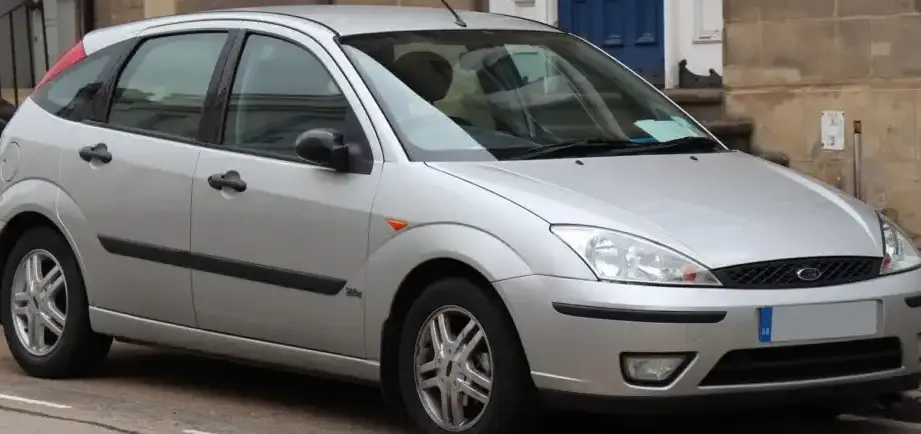
The Ford Focus III Sedan 1.6 EcoBoost with Start/Stop technology, produced from 2010 to 2014, represented a significant step forward for the compact sedan segment. Positioned as a mid-range offering within the broader Focus III lineup, this variant aimed to balance fuel efficiency with respectable performance. It was primarily marketed in Europe and other global markets where sedans remained popular, offering a more practical alternative to the hatchback version. This model was part of the C346 generation of the Focus, built on the Ford C-platform, and aimed to appeal to buyers seeking a modern, technologically advanced, and economical family car.
Technical Specifications
| Brand | Ford |
| Model | Focus |
| Generation | Focus III Sedan |
| Type (Engine) | 1.6 EcoBoost (150 Hp) start/stop |
| Start of production | 2010 |
| End of production | 2014 |
| Powertrain Architecture | Internal Combustion engine |
| Body type | Sedan |
| Seats | 5 |
| Doors | 4 |
| Fuel consumption (urban) | 7.6 l/100 km (30.9 US mpg, 37.2 UK mpg, 13.2 km/l) |
| Fuel consumption (extra urban) | 4.9 l/100 km (48 US mpg, 57.6 UK mpg, 20.4 km/l) |
| Fuel consumption (combined) | 5.9 l/100 km (39.9 US mpg, 47.9 UK mpg, 16.9 km/l) |
| Fuel Type | Petrol (Gasoline) |
| Acceleration 0 – 100 km/h | 8.7 sec |
| Acceleration 0 – 62 mph | 8.7 sec |
| Acceleration 0 – 60 mph | 8.3 sec |
| Maximum speed | 212 km/h (131.73 mph) |
| Power | 150 Hp |
| Engine layout | Front, Transverse |
| Engine Model/Code | JQDA, JQDB |
| Engine configuration | Inline |
| Fuel injection system | Direct injection |
| Engine aspiration | Turbocharger, Intercooler |
| Engine oil capacity | 4.1 l (4.33 US qt, 3.61 UK qt) |
| Coolant capacity | 6.3 l (6.66 US qt, 5.54 UK qt) |
| Engine systems | Start & Stop System |
| Drivetrain Architecture | Front wheel drive, Internal Combustion Engine |
| Number of gears and type of gearbox | 6 gears, manual transmission |
| Assisting systems | ABS (Anti-lock braking system) |
| Steering type | Steering rack and pinion |
Powertrain & Engine Architecture
The heart of this Focus variant is the 1.6-liter EcoBoost engine, specifically the JQDA or JQDB engine code depending on the specific market and emissions regulations. This engine is a turbocharged, direct-injection inline-four cylinder. Direct injection allows for more precise fuel delivery, improving both power and efficiency. The turbocharger, coupled with an intercooler, forces more air into the cylinders, boosting horsepower and torque. The engine utilizes a variable valve timing system to optimize performance across the rev range. The Start/Stop system, a key feature, automatically shuts off the engine when the vehicle is stationary (at a red light, for example) and restarts it instantly when the driver depresses the clutch or brake pedal. This feature contributes significantly to fuel savings in urban driving conditions. The engine is paired with a six-speed manual transmission, offering precise gear changes and contributing to the car’s overall responsiveness.
Driving Characteristics
The 1.6 EcoBoost engine delivers a noticeable step up in performance compared to the naturally aspirated 1.6-liter engine offered in lower trim levels of the Focus III. The turbocharger provides a surge of power in the mid-range, making overtaking maneuvers easier and more confident. While not as potent as the higher-output 2.0-liter EcoBoost variants, the 150 hp engine provides adequate power for everyday driving. The six-speed manual transmission is well-matched to the engine’s characteristics, allowing drivers to keep the engine in its optimal power band. The gear ratios are spaced to provide both good acceleration and reasonable fuel economy at highway speeds. Compared to the 1.6-liter non-turbo engine, the EcoBoost model feels significantly more responsive, and the turbo provides a more engaging driving experience. However, it doesn’t offer the same level of outright performance as the larger 2.0-liter EcoBoost.
Equipment & Trim Levels
The 1.6 EcoBoost trim typically sat in the mid-range of the Focus III Sedan lineup. Standard equipment generally included air conditioning, power windows, power mirrors, a basic audio system with USB connectivity, and ABS brakes. Higher trim levels added features such as alloy wheels, a more advanced audio system with touchscreen display, automatic climate control, rear parking sensors, and cruise control. Interior upholstery was typically cloth, with options for leather upgrades on higher trims. The dashboard layout was generally consistent across the range, featuring a functional and modern design. Optional extras included a panoramic sunroof, navigation system, and various styling packages.
Chassis & Braking
The Focus III Sedan utilizes a MacPherson strut front suspension and a multi-link rear suspension. This setup provides a good balance between ride comfort and handling precision. The suspension was tuned to provide a comfortable ride for everyday driving, while still offering responsive handling when pushed. Braking systems varied slightly depending on the specific trim level and market. Most models were equipped with front disc brakes and rear drum brakes. Higher trim levels often featured rear disc brakes for improved stopping power. ABS (Anti-lock Braking System) was standard across the range, enhancing safety in emergency braking situations. Stabilizer bars were fitted to both the front and rear axles to reduce body roll during cornering.
Market Reception & Comparison
The Ford Focus III Sedan 1.6 EcoBoost received generally positive reviews from automotive critics. The engine was praised for its combination of performance and fuel efficiency. The Start/Stop system was also well-received, although some drivers found it slightly intrusive. Compared to the naturally aspirated 1.6-liter engine, the EcoBoost model offered a significant improvement in performance without a substantial penalty in fuel economy. Compared to the 2.0-liter EcoBoost, the 1.6-liter version was more affordable and offered better fuel economy, but lacked the same level of outright power. Reliability reports were generally favorable, with the EcoBoost engine proving to be reasonably durable. However, like all turbocharged engines, it required regular maintenance and the use of high-quality oil.
Legacy
The 1.6 EcoBoost engine became a mainstay in the Ford lineup for several years, powering a range of models beyond the Focus. The powertrain, while generally reliable, is known to require diligent maintenance, particularly regarding oil changes and turbocharger health. In the used car market, the Focus III Sedan 1.6 EcoBoost represents a good value proposition, offering a blend of practicality, efficiency, and performance. However, potential buyers should be aware of the potential maintenance costs associated with a turbocharged engine and ensure that the vehicle has been properly maintained. The introduction of the EcoBoost engine marked a turning point for Ford, demonstrating its commitment to developing smaller, more efficient engines that didn’t compromise on performance. The Focus III 1.6 EcoBoost remains a popular choice for those seeking a well-rounded and economical compact sedan.