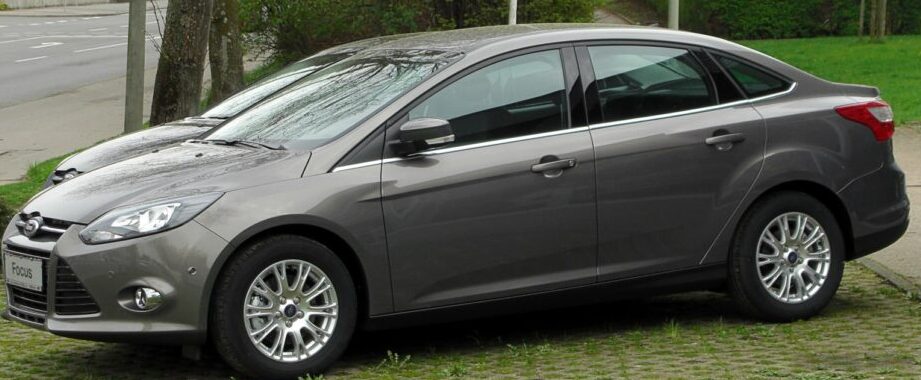
The Ford Focus III Sedan 2.0 TDCi (163 hp) Powershift represents a significant iteration of Ford’s globally successful compact car, produced between 2010 and 2014. This variant, specifically tailored for markets desiring a fuel-efficient and reasonably powerful sedan, occupied a mid-to-upper position within the Focus III sedan lineup. It combined a modern turbodiesel engine with Ford’s dual-clutch Powershift transmission, aiming to deliver a balance of performance, economy, and driving convenience. The Focus III generation, built on the C346 platform (a derivative of the global C-platform), marked a substantial leap forward in terms of interior quality, technology, and driving dynamics compared to its predecessors.
Technical Specifications
| Brand | Ford |
| Model | Focus |
| Generation | Focus III Sedan |
| Type (Engine) | 2.0 TDCi (163 Hp) Powershift |
| Start of production | 2010 |
| End of production | 2014 |
| Powertrain Architecture | Internal Combustion engine |
| Body type | Sedan |
| Seats | 5 |
| Doors | 4 |
| Fuel consumption (urban) | 6.6 l/100 km (35.6 US mpg, 42.8 UK mpg, 15.2 km/l) |
| Fuel consumption (extra urban) | 4.3 l/100 km (54.7 US mpg, 65.7 UK mpg, 23.3 km/l) |
| Fuel consumption (combined) | 5.2 l/100 km (45.2 US mpg, 54.3 UK mpg, 19.2 km/l) |
| Fuel Type | Diesel |
| Acceleration 0 – 100 km/h | 9 sec |
| Acceleration 0 – 62 mph | 9 sec |
| Acceleration 0 – 60 mph | 8.6 sec |
| Maximum speed | 217 km/h (134.84 mph) |
| Power | 163 Hp |
| Engine layout | Front, Transverse |
| Engine Model/Code | TXDB |
| Engine configuration | Inline |
| Fuel injection system | Diesel Commonrail |
| Engine aspiration | Turbocharger, Intercooler |
| Engine oil capacity | 5.7 l (6.02 US qt, 5.02 UK qt) |
| Coolant capacity | 8.5 l (8.98 US qt, 7.48 UK qt) |
| Drivetrain | Front wheel drive |
| Number of gears | 6 |
| Gearbox type | Automatic transmission (Powershift) |
| Assisting systems | ABS (Anti-lock braking system) |
| Steering type | Steering rack and pinion |
Powertrain & Engine Architecture
The heart of this Focus variant is the 2.0-liter TDCi diesel engine, designated with the TXDB engine code. This engine belongs to Ford’s Duratorq family, known for its robust construction and relatively good fuel efficiency. The TXDB features a common-rail direct injection system, delivering fuel at extremely high pressures for optimized combustion. A turbocharger with an intercooler is employed to increase power output and improve torque across the engine’s operating range. The engine utilizes four valves per cylinder (DOHC) and benefits from variable geometry turbocharging (VGT) to enhance responsiveness and reduce turbo lag. The Powershift transmission is a six-speed dual-clutch transmission (DCT), essentially two manual transmissions operating in parallel. This design allows for quick, seamless gear changes and contributes to improved fuel economy compared to a traditional torque-converter automatic.
Driving Characteristics
The 2.0 TDCi Powershift combination delivers a noticeably more refined driving experience than the lower-powered 1.6-liter TDCi variants. The 163 hp output and approximately 258 lb-ft of torque provide ample power for both city driving and highway cruising. Acceleration from 0-60 mph in around 8.6 seconds is respectable for a diesel sedan. The Powershift transmission, when functioning optimally, offers smooth and rapid gear changes, enhancing the overall driving experience. However, early iterations of the Powershift transmission were known to exhibit some jerkiness at low speeds and occasional clutch shudder, issues that Ford addressed with software updates and hardware revisions. The gear ratios are tuned for a balance between fuel efficiency and performance, with a relatively long final drive contributing to good highway economy. Compared to a manual transmission equipped Focus, the Powershift version offers convenience but may slightly diminish fuel economy and driver engagement.
Equipment & Trim Levels
The 2.0 TDCi Powershift typically came in higher trim levels within the Focus III Sedan range, often corresponding to the SEL or Titanium trims in the US market (though trim names varied by region). Standard equipment generally included air conditioning, power windows and locks, a CD/MP3 stereo system, and alloy wheels. Higher trims added features such as automatic climate control, a premium audio system, leather upholstery, heated front seats, and a sunroof. Optional extras included navigation systems, parking sensors, and advanced safety features like lane departure warning and adaptive cruise control. Interior upholstery was typically cloth on lower trims and leather on higher ones, with a generally well-appointed cabin design for its class.
Chassis & Braking
The Focus III Sedan utilizes a MacPherson strut front suspension and a multi-link rear suspension, providing a good balance of ride comfort and handling. The 2.0 TDCi models generally featured slightly stiffer suspension components compared to the base models to cope with the increased weight and power. Braking systems consisted of ventilated front discs and either disc or drum brakes on the rear, depending on the specific trim level. Anti-lock Braking System (ABS) was standard, along with Electronic Brakeforce Distribution (EBD). Steering is rack and pinion, providing precise and responsive handling. Stabilizer bars were fitted to both the front and rear axles to reduce body roll during cornering.
Market Reception & Comparison
The Ford Focus III Sedan 2.0 TDCi Powershift was generally well-received by automotive critics. It was praised for its fuel efficiency, comfortable ride, and refined powertrain. The Powershift transmission, while occasionally criticized for its quirks, was seen as a significant improvement over traditional automatic transmissions. Compared to the 1.6 TDCi variants, the 2.0 TDCi offered a noticeable performance boost, making it a more appealing option for drivers who frequently travel on highways or carry passengers. Against competitors like the Volkswagen Jetta TDI and the Chevrolet Cruze Diesel, the Focus offered a competitive combination of features, performance, and price. Fuel economy figures consistently hovered around 45 mpg combined, making it an attractive option for budget-conscious buyers.
Legacy
The 2.0 TDCi Powershift powertrain has proven to be reasonably reliable, although the Powershift transmission remains the most common source of potential issues. Regular maintenance, including fluid changes and software updates, is crucial for ensuring the longevity of the transmission. Engine reliability is generally good, with the Duratorq engine known for its durability. In the used car market, these Focus Sedans represent a good value proposition, offering a blend of fuel efficiency, practicality, and comfort. However, prospective buyers should be aware of the potential for Powershift transmission issues and thoroughly inspect the vehicle before purchase. The Focus III generation, and this variant in particular, helped solidify Ford’s reputation for building well-rounded and technologically advanced compact cars.