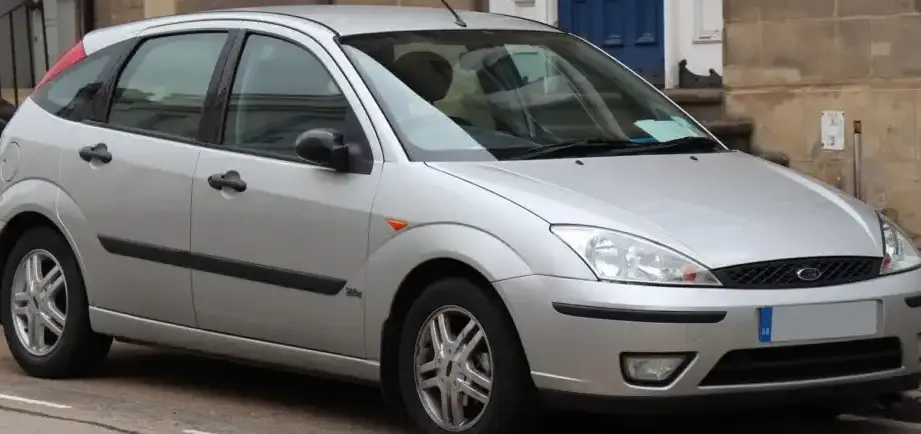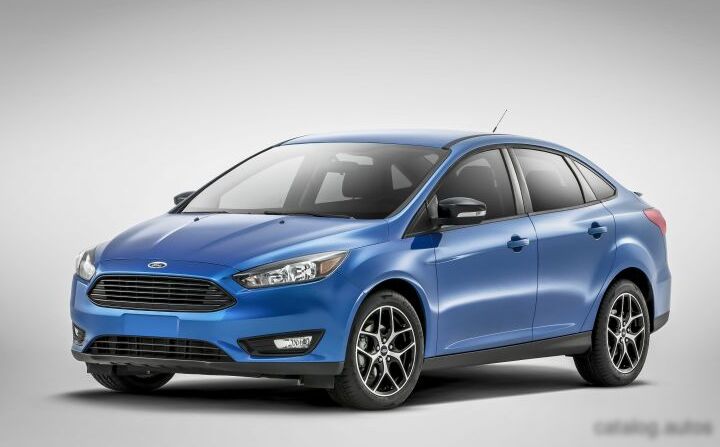
The Ford Focus III Sedan, specifically the 1.6 TDCi variant producing 95 horsepower, was a key offering in the European and select global markets from 2014 to 2018. This model represented a mid-cycle refresh (facelift) of the third-generation Focus, introduced in 2011. Positioned as an entry-level to mid-range option within the Focus Sedan lineup, it aimed to provide fuel efficiency and practicality for everyday commuting and family use. The 1.6 TDCi 95 hp model was particularly popular in regions where diesel fuel was more affordable and where fuel economy was a primary concern for buyers. It sat below the more powerful 1.5 EcoBoost gasoline variants and the higher-output diesel options in terms of performance, but offered a compelling balance of cost and efficiency.
Technical Specifications
| Brand | Ford |
| Model | Focus |
| Generation | Focus III Sedan (facelift 2014) |
| Type (Engine) | 1.6 TDCi (95 Hp) |
| Start of production | 2014 |
| End of production | 2018 |
| Powertrain Architecture | Internal Combustion engine |
| Body type | Sedan |
| Seats | 5 |
| Doors | 4 |
| Fuel consumption (urban) | 5.7 l/100 km (41.3 US mpg, 49.6 UK mpg, 17.5 km/l) |
| Fuel consumption (extra urban) | 3.7 l/100 km (63.6 US mpg, 76.3 UK mpg, 27 km/l) |
| Fuel consumption (combined) | 4.5 l/100 km (52.3 US mpg, 62.8 UK mpg, 22.2 km/l) |
| CO2 emissions | 117 g/km |
| Fuel Type | Diesel |
| Acceleration 0 – 100 km/h | 12.6 sec |
| Acceleration 0 – 62 mph | 12.6 sec |
| Acceleration 0 – 60 mph | 12 sec |
| Maximum speed | 180 km/h (111.85 mph) |
| Emission standard | Euro 6 |
| Weight-to-power ratio | 14.1 kg/Hp, 70.9 Hp/tonne |
| Weight-to-torque ratio | 6.2 kg/Nm, 160.6 Nm/tonne |
| Power | 95 Hp @ 3800 rpm |
| Power per litre | 60.9 Hp/l |
| Torque | 215 Nm @ 1750 rpm (158.58 lb.-ft. @ 1750 rpm) |
| Engine layout | Front, Transverse |
| Engine Model/Code | TZJA, T3DA, T3DB |
| Engine displacement | 1560 cm3 (95.2 cu. in.) |
| Number of cylinders | 4 |
| Engine configuration | Inline |
| Cylinder Bore | 75 mm (2.95 in.) |
| Piston Stroke | 88.3 mm (3.48 in.) |
| Compression ratio | 16:1 |
| Number of valves per cylinder | 2 |
| Fuel injection system | Diesel Commonrail |
| Engine aspiration | Turbocharger, Intercooler |
| Valvetrain | DOHC |
| Engine oil capacity | 3.85 l (4.07 US qt | 3.39 UK qt) |
| Coolant | 7.3 l (7.71 US qt | 6.42 UK qt) |
| Kerb Weight | 1339 kg (2951.99 lbs.) |
| Max. weight | 1900 kg (4188.78 lbs.) |
| Max load | 561 kg (1236.79 lbs.) |
| Trunk (boot) space – minimum | 372 l (13.14 cu. ft.) |
| Fuel tank capacity | 53 l (14 US gal | 11.66 UK gal) |
| Length | 4534 mm (178.5 in.) |
| Width | 1823 mm (71.77 in.) |
| Height | 1484 mm (58.43 in.) |
| Wheelbase | 2648 mm (104.25 in.) |
| Front track | 1544 mm (60.79 in.) |
| Rear (Back) track | 1559 mm (61.38 in.) |
| Minimum turning circle | 11 m (36.09 ft.) |
| Drivetrain Architecture | Front wheel drive |
| Number of gears | 6 gears, manual transmission |
| Front suspension | Independent, type McPherson with coil spring and anti-roll bar |
| Rear suspension | Independent multi-link suspension |
| Front brakes | Disc |
| Rear brakes | Drum |
| Assisting systems | ABS (Anti-lock braking system) |
| Steering type | Steering rack and pinion |
| Tires size | 205/55 R16; 215/50 R17 |
| Wheel rims size | 6.5J x 16; 7.0J x 17 |
Powertrain & Engine Architecture
The heart of this Focus variant is the 1.6-liter TDCi diesel engine, identified by engine codes TZJA, T3DA, and T3DB. This engine belongs to the Duratorq family of diesel engines developed by Ford. It features a common-rail direct injection system, delivering fuel at extremely high pressure for optimized combustion. The engine utilizes a turbocharger with an intercooler to increase power output and efficiency. The valvetrain is a Double Overhead Camshaft (DOHC) configuration with two valves per cylinder. This design contributes to improved breathing and overall engine performance. The 6-speed manual transmission was the standard offering, chosen for its efficiency and driver engagement. The transmission’s gear ratios were tuned to maximize fuel economy and provide adequate acceleration for everyday driving.
Driving Characteristics
The 95 hp output and 215 Nm (158.58 lb-ft) of torque delivered by the 1.6 TDCi engine resulted in a driving experience focused on fuel efficiency rather than outright performance. Acceleration from 0 to 100 km/h (0-62 mph) took approximately 12.6 seconds, and the top speed was limited to 180 km/h (111.85 mph). Compared to the more powerful 1.5 EcoBoost gasoline engines or the higher-output diesel variants, this version felt noticeably slower, particularly during overtaking maneuvers. However, the engine provided adequate torque at low to mid-range RPMs, making it suitable for city driving and highway cruising. The manual transmission allowed for precise control over gear selection, but the relatively long gear ratios prioritized fuel economy over spirited driving.
Equipment & Trim Levels
The 1.6 TDCi 95 hp model typically came equipped with a reasonable level of standard features. These included air conditioning, power windows, power door locks, a basic audio system with USB connectivity, and ABS brakes. Interior upholstery was generally cloth, and the dashboard featured a functional but relatively simple design. Optional extras included alloy wheels, a more advanced audio system, parking sensors, and cruise control. Trim levels varied depending on the specific market, but generally offered incremental upgrades in terms of interior comfort and exterior styling.
Chassis & Braking
The Focus III Sedan featured an independent front suspension with McPherson struts and a coil spring and anti-roll bar. The rear suspension utilized an independent multi-link setup, providing a comfortable ride and good handling characteristics. The front brakes were disc brakes, while the rear brakes were drum brakes – a cost-saving measure common in entry-level models. ABS (Anti-lock Braking System) was standard, enhancing braking performance and safety. The chassis was tuned to provide a balance between comfort and handling, making it suitable for a wide range of driving conditions.
Market Reception & Comparison
The Ford Focus III Sedan 1.6 TDCi 95 hp received generally positive reviews for its fuel efficiency and practicality. Critics praised its comfortable ride and decent handling, but noted its lack of outright performance compared to higher-powered variants. Fuel economy figures of around 4.5 l/100 km (52.3 US mpg) were highly competitive in its class. Compared to the 1.5 EcoBoost gasoline engines, the 1.6 TDCi offered significantly better fuel economy but less power. The higher-output diesel variants provided more performance but came at a higher price point. The 1.6 TDCi appealed to buyers who prioritized fuel efficiency and low running costs over sporty driving dynamics.
Legacy
The 1.6 TDCi engine, while generally reliable, has been known to exhibit some common issues over time, including potential problems with the diesel particulate filter (DPF) and the fuel injection system. Regular maintenance, including timely oil changes and DPF regeneration, is crucial for ensuring long-term reliability. In the used car market, the Focus III Sedan 1.6 TDCi 95 hp remains a popular choice for budget-conscious buyers seeking a fuel-efficient and practical vehicle. Its relatively low running costs and decent reliability make it a viable option for everyday commuting and family transportation. However, potential buyers should be aware of the potential maintenance issues associated with diesel engines and ensure a thorough inspection before purchasing.