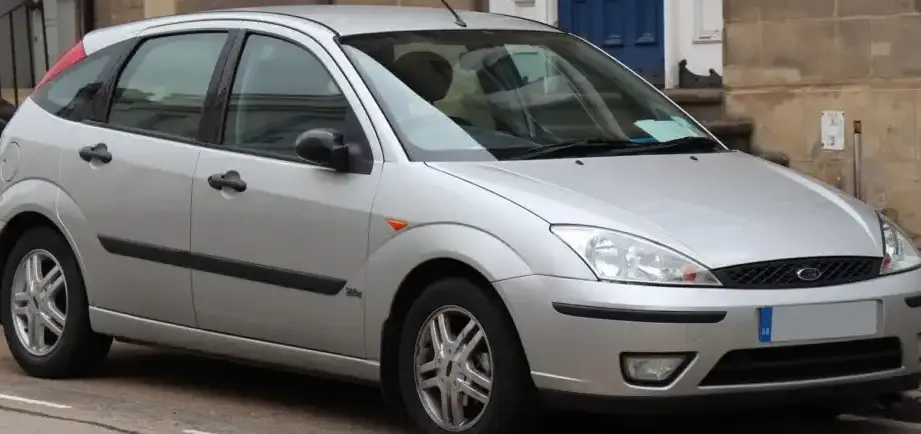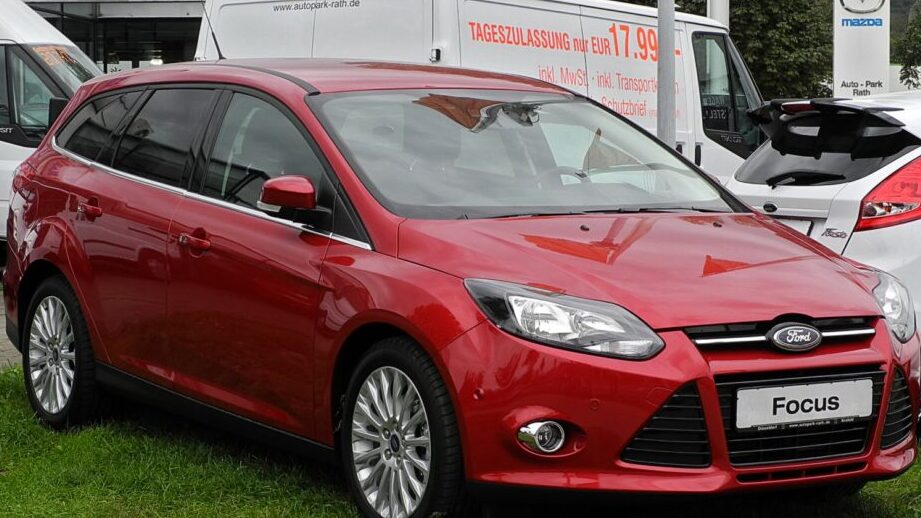
The Ford Focus III Wagon 1.6 EcoBoost (150 hp) was a popular variant of Ford’s globally successful Focus compact car, produced between 2010 and 2014. Positioned as a mid-range offering within the third-generation Focus (Mk3) lineup, it combined a fuel-efficient turbocharged engine with the practicality of a station wagon body style. This model aimed to appeal to families and individuals seeking a versatile vehicle with a balance of performance and economy. It was a key model in Ford of Europe’s strategy to offer a diverse range of Focus variants to cater to varying customer needs.
Technical Specifications
| Brand | Ford |
| Model | Focus |
| Generation | Focus III Wagon |
| Type (Engine) | 1.6 EcoBoost (150 Hp) |
| Start of production | 2010 |
| End of production | 2014 |
| Powertrain Architecture | Internal Combustion engine |
| Body type | Station wagon (estate) |
| Seats | 5 |
| Doors | 5 |
| Fuel consumption (urban) | 7.7 l/100 km (30.5 US mpg) |
| Fuel consumption (extra urban) | 5 l/100 km (47 US mpg) |
| Fuel consumption (combined) | 6 l/100 km (39.2 US mpg) |
| CO2 emissions | 139 g/km |
| Fuel Type | Petrol (Gasoline) |
| Acceleration 0 – 100 km/h | 8.8 sec |
| Acceleration 0 – 62 mph | 8.8 sec |
| Acceleration 0 – 60 mph | 8.4 sec |
| Maximum speed | 210 km/h (130.49 mph) |
| Emission standard | Euro 5 |
| Weight-to-power ratio | 9 kg/Hp |
| Weight-to-torque ratio | 5.7 kg/Nm |
| Power | 150 Hp @ 5700 rpm |
| Torque | 240 Nm @ 1600-4000 rpm (177.01 lb.-ft.) |
| Engine layout | Front, Transverse |
| Engine Model/Code | JQDA, JQDB |
| Engine displacement | 1596 cm3 (97.39 cu. in.) |
| Number of cylinders | 4 |
| Engine configuration | Inline |
| Cylinder Bore | 79 mm (3.11 in.) |
| Piston Stroke | 81.4 mm (3.2 in.) |
| Compression ratio | 10:1 |
| Number of valves per cylinder | 4 |
| Fuel injection system | Direct injection |
| Engine aspiration | Turbocharger, Intercooler |
| Valvetrain | DOHC |
| Engine oil capacity | 4.1 l (4.33 US qt | 3.61 UK qt) |
| Coolant capacity | 6.3 l (6.66 US qt | 5.54 UK qt) |
| Kerb Weight | 1357 kg (2991.67 lbs.) |
| Max. weight | 1900 kg (4188.78 lbs.) |
| Max load | 543 kg (1197.11 lbs.) |
| Trunk (boot) space – minimum | 490 l (17.3 cu. ft.) |
| Trunk (boot) space – maximum | 1516 l (53.54 cu. ft.) |
| Fuel tank capacity | 55 l (14.53 US gal | 12.1 UK gal) |
| Length | 4556 mm (179.37 in.) |
| Width | 1823 mm (71.77 in.) |
| Height | 1505 mm (59.25 in.) |
| Wheelbase | 2648 mm (104.25 in.) |
| Front track | 1544/1559 mm (60.79 in.) |
| Rear (Back) track | 1534/1549 mm (60.39 in.) |
| Minimum turning circle | 11 m (36.09 ft.) |
| Drivetrain | Front wheel drive |
| Number of gears | 6 gears, manual transmission |
INTRODUCTION
The Ford Focus III Wagon 1.6 EcoBoost, launched in 2010, represented a significant step forward in the compact wagon segment. Built on the global C-platform (internally designated 1HX0/A3), it shared its underpinnings with other Ford models like the C-Max and Kuga. The wagon body style offered increased cargo capacity compared to the hatchback, making it a practical choice for families. The 1.6 EcoBoost engine was a key component of Ford’s strategy to offer smaller, more efficient engines with comparable performance to larger displacement units. This particular variant was aimed at buyers who wanted a balance between fuel economy, reasonable performance, and the versatility of a wagon.
Powertrain & Engine Architecture
At the heart of the Focus III Wagon 1.6 EcoBoost lay the JQDA or JQDB engine code, a 1.6-liter inline-four cylinder gasoline engine. This engine was part of Ford’s EcoBoost family, characterized by direct fuel injection and turbocharging. The direct injection system, operating at pressures up to 200 bar, allowed for precise fuel delivery and improved combustion efficiency. The engine featured a twin-scroll turbocharger with an intercooler, which minimized turbo lag and maximized boost pressure. The engine utilized a double overhead camshaft (DOHC) valvetrain with four valves per cylinder, optimizing airflow for increased power output. The 150 hp version of the 1.6 EcoBoost was paired with a six-speed manual transmission, delivering power to the front wheels. The transmission was chosen for its balance of efficiency and driver engagement.
Driving Characteristics
The 1.6 EcoBoost engine provided a noticeable step up in performance compared to the naturally aspirated 1.6-liter engine offered in lower trim levels of the Focus III. While not as powerful as the 2.0-liter or 2.3-liter EcoBoost variants, the 150 hp engine offered sufficient power for everyday driving and highway cruising. The turbocharger provided a noticeable boost in torque at lower engine speeds, resulting in good acceleration from a standstill and during overtaking maneuvers. The six-speed manual transmission allowed drivers to keep the engine in its optimal power band. However, the engine could feel somewhat strained when fully loaded or driving uphill. Compared to the higher-output EcoBoost engines, the 1.6L version prioritized fuel efficiency over outright performance. The gear ratios were tuned for a balance between acceleration and fuel economy, with a relatively long sixth gear for comfortable highway cruising.
Equipment & Trim Levels
The 1.6 EcoBoost variant of the Focus III Wagon was typically offered in mid-range trim levels, such as ‘Trend’ or ‘Titanium’ in European markets. Standard equipment generally included air conditioning, power windows, power mirrors, a CD/MP3 stereo system, and alloy wheels. Higher trim levels added features like automatic climate control, a touchscreen infotainment system, rear parking sensors, and cruise control. Interior upholstery was typically cloth, with options for leather upgrades. Optional extras included a panoramic sunroof, heated front seats, and a premium sound system. Safety features such as ABS, ESP (Electronic Stability Program), and multiple airbags were standard across the range.
Chassis & Braking
The Focus III Wagon featured a fully independent suspension system, with MacPherson struts at the front and a multi-link setup at the rear. This suspension design provided a good balance between ride comfort and handling. The 1.6 EcoBoost variant typically used a slightly softer suspension setup compared to the higher-performance models, prioritizing ride comfort. Braking systems varied depending on the trim level, with lower trims featuring disc brakes at the front and drum brakes at the rear, while higher trims offered disc brakes all around. Anti-lock Braking System (ABS) and Electronic Stability Program (ESP) were standard safety features. Steering was provided by an electric power-assisted steering rack and pinion system.
Market Reception & Comparison
The Ford Focus III Wagon 1.6 EcoBoost was generally well-received by automotive critics. It was praised for its fuel efficiency, comfortable ride, and spacious interior. However, some critics noted that the engine could feel underpowered when fully loaded or driving on steep inclines. Compared to the 1.6-liter naturally aspirated engine, the 1.6 EcoBoost offered a significant improvement in performance and fuel economy. Compared to the higher-output EcoBoost engines, it offered a more affordable price point and better fuel efficiency, but at the expense of outright performance. The 1.6 EcoBoost variant was often seen as a sweet spot in the Focus III Wagon lineup, offering a good balance of practicality, efficiency, and performance.
Legacy
The 1.6 EcoBoost engine proved to be a reliable and durable powertrain when properly maintained. While some early examples experienced issues with carbon buildup on the intake valves (a common issue with direct injection engines), these problems were often addressed through software updates and regular servicing. Today, the Focus III Wagon 1.6 EcoBoost remains a popular choice in the used car market, offering a practical and affordable option for families and individuals. Its fuel efficiency and relatively low running costs make it an attractive alternative to more expensive and less efficient vehicles. The engine’s availability of parts and relatively straightforward maintenance procedures contribute to its continued appeal.