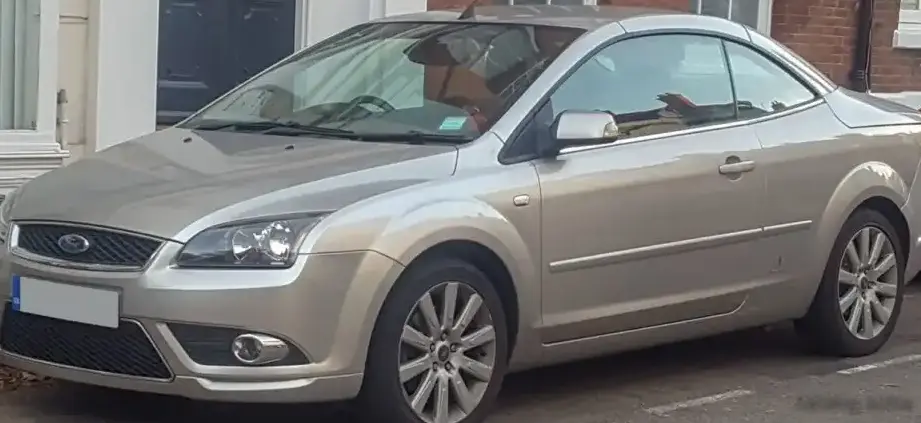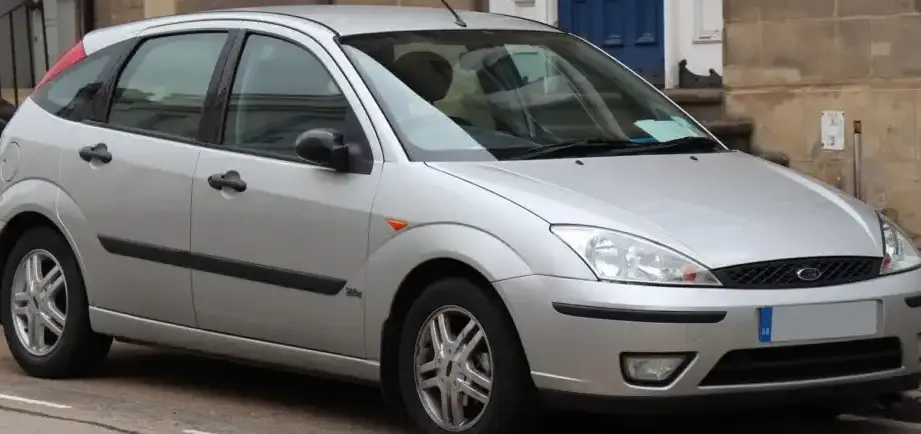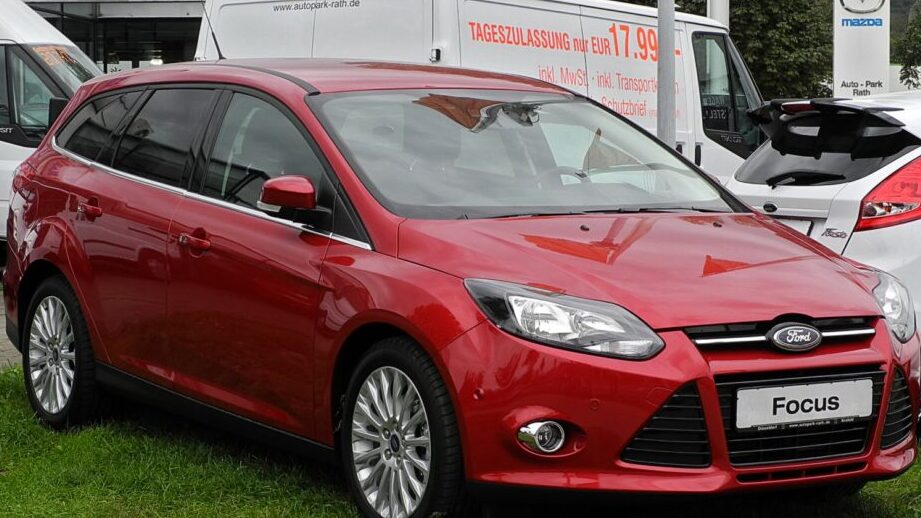
The Ford Focus III Wagon 1.6 Ti-VCT (105 hp) was a variant of the third-generation Ford Focus, produced between 2010 and 2014. Positioned as an entry-level offering within the Focus Wagon range, it aimed to provide affordable and practical transportation for families and individuals. This model occupied a key space in the European market, where compact wagons were – and continue to be – highly popular. It was not officially sold in the North American market, where the Focus was offered primarily as a hatchback during this generation.
Technical Specifications
| Brand | Ford |
| Model | Focus |
| Generation | Focus III Wagon |
| Type (Engine) | 1.6 Ti-VCT (105 Hp) |
| Start of production | 2010 |
| End of production | 2014 |
| Powertrain Architecture | Internal Combustion engine |
| Body type | Station wagon (estate) |
| Seats | 5 |
| Doors | 5 |
| Fuel consumption (urban) | 8.1 l/100 km (39.2 US mpg, 47.1 UK mpg, 16.7 km/l) |
| Fuel consumption (extra urban) | 4.8 l/100 km (49 US mpg, 58.9 UK mpg, 20.8 km/l) |
| Fuel consumption (combined) | 6 l/100 km (39.2 US mpg, 47.1 UK mpg, 16.7 km/l) |
| CO2 emissions | 139 g/km |
| Fuel Type | Petrol (Gasoline) |
| Acceleration 0 – 100 km/h | 12.5 sec |
| Acceleration 0 – 62 mph | 12.5 sec |
| Acceleration 0 – 60 mph | 11.9 sec |
| Maximum speed | 187 km/h (116.2 mph) |
| Emission standard | Euro 5 |
| Weight-to-power ratio | 12.4 kg/Hp, 80.3 Hp/tonne |
| Weight-to-torque ratio | 8.7 kg/Nm, 114.8 Nm/tonne |
| Power | 105 Hp @ 6000 rpm |
| Power per litre | 65.8 Hp/l |
| Torque | 150 Nm @ 4000-4500 rpm (110.63 lb.-ft. @ 4000-4500 rpm) |
| Engine layout | Front, Transverse |
| Engine Model/Code | IQDB |
| Engine displacement | 1596 cm3 (97.39 cu. in.) |
| Number of cylinders | 4 |
| Engine configuration | Inline |
| Cylinder Bore | 79 mm (3.11 in.) |
| Piston Stroke | 81.4 mm (3.2 in.) |
| Compression ratio | 11:1 |
| Number of valves per cylinder | 4 |
| Fuel injection system | Multi-port manifold injection |
| Engine aspiration | Naturally aspirated engine |
| Valvetrain | DOHC |
| Engine oil capacity | 4.1 l (4.33 US qt | 3.61 UK qt) |
| Coolant | 5.8 l (6.13 US qt | 5.1 UK qt) |
| Kerb Weight | 1307 kg (2881.44 lbs.) |
| Max. weight | 1825 kg (4023.44 lbs.) |
| Max load | 518 kg (1141.99 lbs.) |
| Trunk (boot) space – minimum | 490 l (17.3 cu. ft.) |
| Trunk (boot) space – maximum | 1516 l (53.54 cu. ft.) |
| Fuel tank capacity | 55 l (14.53 US gal | 12.1 UK gal) |
| Length | 4556 mm (179.37 in.) |
| Width | 1823 mm (71.77 in.) |
| Height | 1505 mm (59.25 in.) |
| Wheelbase | 2648 mm (104.25 in.) |
| Front track | 1544/1559 mm (60.79 in.) |
| Rear (Back) track | 1534/1549 mm (60.39 in.) |
| Minimum turning circle | 11 m (36.09 ft.) |
| Drivetrain Architecture | Front wheel drive |
| Number of gears | 5 |
| Gearbox type | Manual transmission |
| Assisting systems | ABS (Anti-lock braking system) |
| Steering type | Steering rack and pinion |
| Tires size | 205/55 R16; 205/55 R16; 215/55 R16; 215/50 R17; 235/40 R18 |
| Wheel rims size | 6.5J x 16; 7.0J x 16; 7.0J x 17; 8.0J x 18 |
INTRODUCTION
The Ford Focus III Wagon, launched in 2010, represented a significant step forward for Ford’s compact wagon offering. Built on the global C-platform (also known as the 1HX0/A3 platform, shared with models like the Mazda 3), the third-generation Focus aimed to deliver a more refined driving experience, improved fuel efficiency, and enhanced safety features. The 1.6 Ti-VCT (105 hp) variant was positioned as the entry point to the wagon range, offering a balance of affordability and practicality. It was primarily targeted at buyers seeking a versatile family vehicle with reasonable running costs.
Powertrain & Engine Architecture
The heart of the Focus III Wagon 1.6 Ti-VCT was the IQDB engine code, a 1.6-liter inline-four cylinder gasoline engine. This engine featured Ford’s Twin Independent Variable Camshaft Timing (Ti-VCT) technology, which optimized valve timing for improved performance and fuel economy across the rev range. The Ti-VCT system allowed for independent control of both intake and exhaust valve timing, enhancing cylinder filling and scavenging. Fuel delivery was handled by a multi-port fuel injection system. The engine produced 105 horsepower at 6000 rpm and 150 Nm (110.63 lb-ft) of torque between 4000 and 4500 rpm. The engine’s naturally aspirated design contributed to its smooth power delivery, albeit without the urgency of turbocharged alternatives. The engine was paired with a five-speed manual transmission, which was the standard offering for this trim level. While an automatic transmission was available on other Focus III models, it was not offered with the 1.6 Ti-VCT engine.
Driving Characteristics
The 1.6 Ti-VCT engine, coupled with the five-speed manual transmission, provided adequate performance for everyday driving. Acceleration from 0 to 62 mph (0-100 km/h) took approximately 12.5 seconds, and the top speed was around 116.2 mph (187 km/h). The gear ratios were tuned for fuel efficiency rather than outright performance. The engine felt responsive enough in normal driving conditions, but required downshifting for quicker acceleration, particularly when overtaking. Compared to the higher-output 1.6 EcoBoost or 2.0-liter variants, the 1.6 Ti-VCT felt noticeably less powerful. However, it offered a more linear power delivery and a more forgiving nature for less experienced drivers. The wagon’s suspension provided a comfortable ride, absorbing bumps and imperfections in the road well. Steering was precise and well-weighted, contributing to a confident driving experience.
Equipment & Trim Levels
The 1.6 Ti-VCT variant of the Focus III Wagon typically came with a reasonable level of standard equipment. This included air conditioning, power windows, power door locks, a basic audio system with CD player, and ABS brakes. Safety features such as front and side airbags were also standard. Interior upholstery was typically cloth, and the dashboard featured a functional, if somewhat understated, design. Optional extras included alloy wheels, a more advanced audio system with Bluetooth connectivity, parking sensors, and a sunroof. Trim levels varied slightly depending on the specific market, but the 1.6 Ti-VCT generally represented the base level of equipment for the wagon range.
Chassis & Braking
The Focus III Wagon featured a MacPherson strut front suspension and a multi-link rear suspension. This setup provided a good balance of ride comfort and handling. The 1.6 Ti-VCT variant typically used disc brakes on the front wheels and drum brakes on the rear wheels. ABS (Anti-lock Braking System) was standard, enhancing braking performance and stability. The suspension was tuned to prioritize comfort and stability, rather than sporty handling. Stabilizer bars were fitted to both the front and rear axles to reduce body roll during cornering.
Market Reception & Comparison
The Ford Focus III Wagon 1.6 Ti-VCT was generally well-received by automotive critics as a practical and affordable family vehicle. It was praised for its comfortable ride, spacious interior, and reasonable fuel economy. However, some critics noted that the engine lacked the punch of more powerful alternatives. Compared to the 1.6 EcoBoost or 2.0-liter versions, the 1.6 Ti-VCT offered lower performance but also lower running costs. The 1.6 Ti-VCT was also more affordable to purchase than its higher-powered siblings. In terms of reliability, the 1.6 Ti-VCT engine proved to be generally reliable, although regular maintenance was essential to prevent issues such as timing chain wear.
Legacy
The Ford Focus III Wagon 1.6 Ti-VCT remains a popular choice in the used car market, particularly for buyers seeking an affordable and practical family vehicle. The engine’s relatively simple design and proven reliability make it a relatively easy and inexpensive engine to maintain. While it may not offer the performance of more modern vehicles, it provides a comfortable and dependable driving experience. The availability of spare parts is generally good, and the Focus III Wagon benefits from a large and active owner community. The 1.6 Ti-VCT engine, while not a performance icon, served as a solid and dependable powerplant for a significant number of Focus III Wagons, contributing to the model’s overall success in the European market.