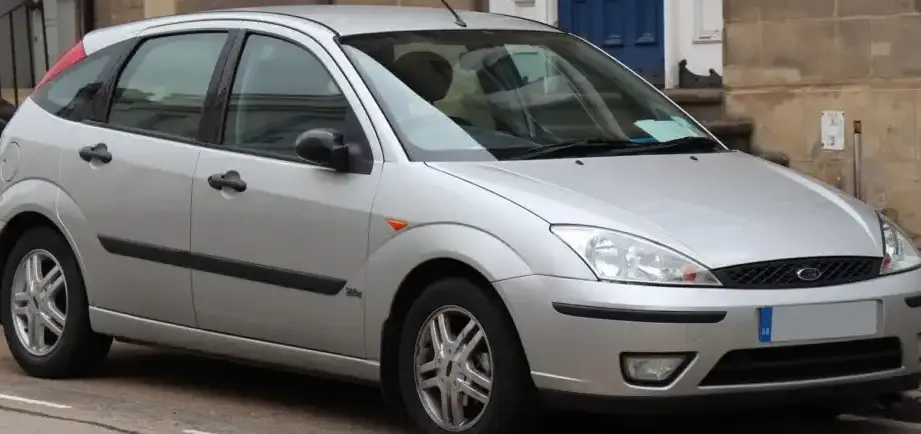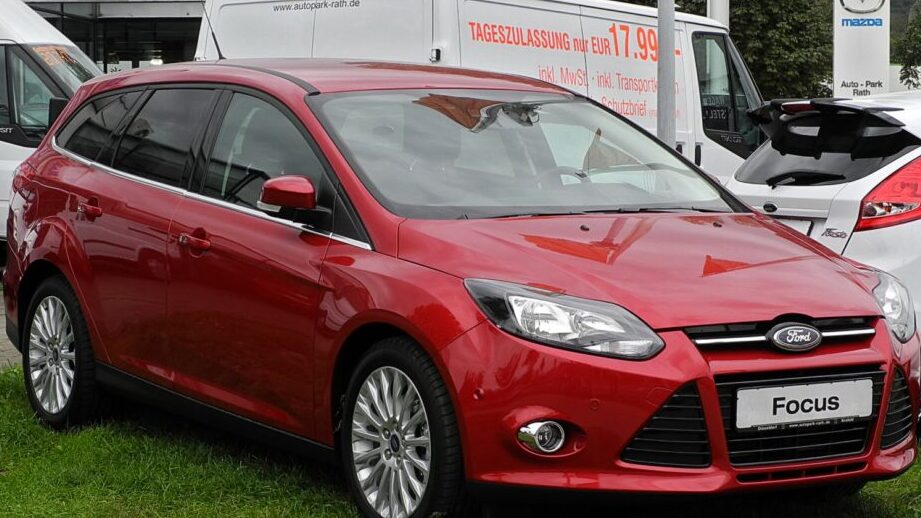
The Ford Focus III Wagon 2.0 TDCi Automatic, produced between 2010 and 2014, represented a practical and fuel-efficient option within the broader third-generation Focus lineup. Positioned as a mid-range offering, it combined the versatility of a station wagon body style with a diesel engine and a convenient automatic transmission. This variant was primarily aimed at European markets where diesel-powered wagons were highly popular, offering a balance between economy, space, and usability for families and individuals needing cargo capacity. It sat within the Focus Wagon range, offering a step up in performance and refinement from the lower-powered 1.6-liter diesel options, while remaining more accessible than the higher-performance petrol variants.
Technical Specifications
| Brand | Ford |
| Model | Focus |
| Generation | Focus III Wagon |
| Type (Engine) | 2.0 TDCi (115 Hp) Automatic |
| Start of production | 2010 |
| End of production | 2014 |
| Powertrain Architecture | Internal Combustion engine |
| Body type | Station wagon (estate) |
| Seats | 5 |
| Doors | 5 |
| Fuel consumption (urban) | 6.8 l/100 km (34.6 US mpg, 41.5 UK mpg, 14.7 km/l) |
| Fuel consumption (extra urban) | 4.4 l/100 km (53.5 US mpg, 64.2 UK mpg, 22.7 km/l) |
| Fuel consumption (combined) | 5.3 l/100 km (44.4 US mpg, 53.3 UK mpg, 18.9 km/l) |
| CO2 emissions | 139 g/km |
| Fuel Type | Diesel |
| Acceleration 0 – 100 km/h | 11.1 sec |
| Acceleration 0 – 62 mph | 11.1 sec |
| Acceleration 0 – 60 mph | 10.5 sec |
| Maximum speed | 196 km/h (121.79 mph) |
| Emission standard | Euro 5 |
| Weight-to-power ratio | 12.8 kg/Hp, 78.2 Hp/tonne |
| Weight-to-torque ratio | 4.9 kg/Nm, 203.9 Nm/tonne |
| Power | 115 Hp @ 3750 rpm |
| Power per litre | 57.6 Hp/l |
| Torque | 300 Nm @ 1500-2250 rpm (221.27 lb.-ft. @ 1500-2250 rpm) |
| Engine layout | Front, Transverse |
| Engine Model/Code | TYDA |
| Engine displacement | 1997 cm3 (121.86 cu. in.) |
| Number of cylinders | 4 |
| Engine configuration | Inline |
| Cylinder Bore | 85 mm (3.35 in.) |
| Piston Stroke | 88 mm (3.46 in.) |
| Compression ratio | 16:1 |
| Number of valves per cylinder | 4 |
| Fuel injection system | Diesel Commonrail |
| Engine aspiration | Turbocharger, Intercooler |
| Valvetrain | DOHC |
| Engine oil capacity | 5.7 l (6.02 US qt | 5.02 UK qt) |
| Coolant | 8.5 l (8.98 US qt | 7.48 UK qt) |
| Kerb Weight | 1471 kg (3243 lbs.) |
| Max. weight | 2050 kg (4519.48 lbs.) |
| Max load | 579 kg (1276.48 lbs.) |
| Trunk (boot) space – minimum | 490 l (17.3 cu. ft.) |
| Trunk (boot) space – maximum | 1516 l (53.54 cu. ft.) |
| Fuel tank capacity | 60 l (15.85 US gal | 13.2 UK gal) |
| Length | 4556 mm (179.37 in.) |
| Width | 1823 mm (71.77 in.) |
| Height | 1505 mm (59.25 in.) |
| Wheelbase | 2648 mm (104.25 in.) |
| Front track | 1544/1559 mm (60.79 in.) |
| Rear (Back) track | 1534/1549 mm (60.39 in.) |
| Minimum turning circle | 11 m (36.09 ft.) |
| Drivetrain Architecture | Front wheel drive |
| Number of gears | 6 |
| Gearbox type | Automatic transmission |
Powertrain & Engine Architecture
The heart of this Focus Wagon is the 2.0-liter TDCi diesel engine, specifically the TYDA variant. This engine belongs to the Ford Duratorque family, known for its robust construction and relatively straightforward maintenance. The TYDA engine utilizes a common rail direct injection system, delivering fuel at extremely high pressures for optimized combustion. A turbocharger with an intercooler is employed to boost power and torque, providing a noticeable improvement over naturally aspirated diesel engines. The engine features a double overhead camshaft (DOHC) valvetrain with four valves per cylinder, enhancing breathing and contributing to its power output. The six-speed automatic transmission, a crucial component of this variant, is a conventional torque converter automatic. While not known for being the sportiest transmission, it provides smooth shifts and ease of use, particularly in urban driving conditions. The transmission’s gear ratios are tuned for fuel efficiency and comfortable cruising, rather than outright acceleration.
Driving Characteristics
The 115 horsepower and 300 Nm (221 lb-ft) of torque delivered by the 2.0 TDCi engine, coupled with the six-speed automatic, resulted in a practical, if not exhilarating, driving experience. Acceleration from 0-60 mph took around 10.5 seconds, making it competitive with other diesel wagons in its class. The automatic transmission, while smooth, did exhibit some typical characteristics of older torque converter automatics – a slight delay in response and a tendency to ‘hunt’ for gears on inclines. Compared to the manual transmission versions of the same engine, the automatic offered less driver engagement but greater convenience. The higher-output 163 hp versions of the 2.0 TDCi provided significantly more performance, but at the cost of increased fuel consumption and a higher price point. The torque curve was relatively flat, providing good pulling power from low engine speeds, making it well-suited for carrying loads or towing small trailers.
Equipment & Trim Levels
The 2.0 TDCi Automatic typically came equipped with a reasonable level of standard features. These generally included air conditioning, power windows and mirrors, a basic audio system with CD player, and alloy wheels. Higher trim levels, such as Titanium, added features like automatic climate control, rain-sensing wipers, rear parking sensors, and upgraded interior upholstery. Interior materials were generally durable and functional, reflecting the car’s practical focus. Optional extras included a panoramic sunroof, navigation system, and leather seats. Safety features such as ABS, ESP (Electronic Stability Program), and multiple airbags were standard across the range.
Chassis & Braking
The Focus III Wagon utilized a MacPherson strut front suspension and a multi-link rear suspension, providing a good balance between ride comfort and handling. The suspension was tuned to prioritize comfort, resulting in a relatively soft ride quality. Braking systems varied depending on the trim level. Lower trims often featured disc brakes at the front and drum brakes at the rear, while higher trims upgraded to disc brakes all around. Anti-lock Braking System (ABS) was standard. Stabilizer bars were fitted front and rear to reduce body roll during cornering.
Market Reception & Comparison
The Ford Focus III Wagon 2.0 TDCi Automatic was generally well-received by automotive critics as a practical and economical choice. Its fuel economy of around 44.4 US mpg combined was a major selling point, particularly in Europe where fuel prices were high. Critics praised its spacious interior and versatile cargo area. However, some noted that the automatic transmission wasn’t as responsive as the manual gearbox, and the overall driving experience wasn’t particularly sporty. Compared to rivals like the Volkswagen Golf Wagon and Opel/Vauxhall Astra Sports Tourer, the Focus offered a competitive package in terms of price, space, and fuel efficiency.
Legacy
The 2.0 TDCi engine, in general, proved to be a reliable unit, although like any diesel engine, it’s susceptible to issues related to the fuel injection system and turbocharger. The automatic transmission, while generally durable, can require more frequent servicing than the manual gearbox. Today, used examples of the Focus III Wagon 2.0 TDCi Automatic are readily available and represent a relatively affordable option for those seeking a practical and economical estate car. Proper maintenance, including regular oil changes and fuel filter replacements, is crucial for ensuring the longevity of this powertrain. Its reputation for fuel efficiency and practicality continues to make it a popular choice in the used car market.