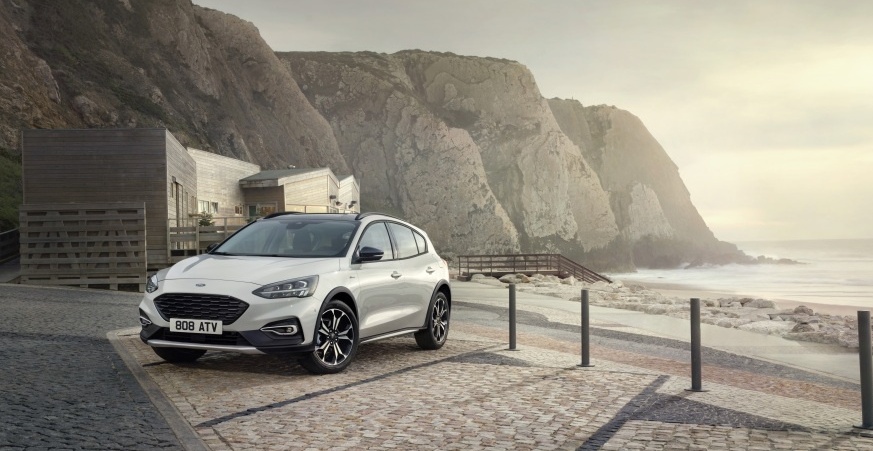
The Ford Focus IV Active Hatchback 2.0 EcoBlue (150 hp) Automatic, produced from 2019 to 2021, represents a specific configuration within the fourth generation of Ford’s globally successful Focus compact car. Positioned as a crossover variant within the Focus IV lineup, the Active model aimed to blend the practicality of a hatchback with a slightly raised ride height and rugged styling cues. This particular engine and transmission combination – the 2.0-liter EcoBlue diesel paired with an eight-speed automatic – offered a balance between fuel efficiency, reasonable performance, and ease of driving, targeting buyers seeking a versatile and comfortable daily driver. It was sold primarily in the European market, where diesel engines remained popular due to favorable taxation and fuel economy.
Technical Specifications
| Brand | Ford |
| Model | Focus |
| Generation | Focus IV Active Hatchback |
| Type (Engine) | 2.0 EcoBlue (150 Hp) Automatic |
| Start of production | 2019 |
| End of production | 2021 |
| Powertrain Architecture | Internal Combustion engine |
| Body type | Crossover |
| Seats | 5 |
| Doors | 5 |
| Fuel consumption (urban) | 5.3-5.6 l/100 km (44.4 – 42 US mpg) |
| Fuel consumption (extra urban) | 3.9-4.1 l/100 km (60.3 – 57.4 US mpg) |
| Fuel consumption (combined) | 4.4-4.6 l/100 km (53.5 – 51.1 US mpg) |
| CO2 emissions | 114-121 g/km |
| Fuel Type | Diesel |
| Acceleration 0 – 100 km/h | 9.3 sec |
| Acceleration 0 – 62 mph | 9.3 sec |
| Acceleration 0 – 60 mph | 8.8 sec |
| Maximum speed | 207 km/h (128.62 mph) |
| Emission standard | Euro 6d-Temp |
| Weight-to-power ratio | 9.6 kg/Hp |
| Weight-to-torque ratio | 3.9 kg/Nm |
| Power | 150 Hp |
| Torque | 370 Nm (272.9 lb.-ft.) |
| Engine Model/Code | YLDC |
| Number of cylinders | 4 |
| Engine configuration | Inline |
| Fuel injection system | Diesel Commonrail |
| Engine aspiration | Turbocharger, Intercooler |
| Engine oil capacity | 6.4 l (6.76 US qt | 5.63 UK qt) |
| Coolant capacity | 11.6 l (12.26 US qt | 10.21 UK qt) |
| Kerb Weight | 1443 kg (3181.27 lbs.) |
| Max. weight | 2045 kg (4508.45 lbs.) |
| Max load | 602 kg (1327.18 lbs.) |
| Trunk (boot) space – minimum | 273 l (9.64 cu. ft.) |
| Trunk (boot) space – maximum | 1320 l (46.62 cu. ft.) |
| Fuel tank capacity | 47 l (12.42 US gal | 10.34 UK gal) |
| AdBlue tank capacity | 10.5 l (2.77 US gal | 2.31 UK gal) |
| Permitted trailer load with brakes (12%) | 1600 kg (3527.4 lbs.) |
| Permitted trailer load without brakes | 750 kg (1653.47 lbs.) |
| Permitted towbar download | 90 kg (198.42 lbs.) |
| Length | 4397 mm (173.11 in.) |
| Width | 1844 mm (72.6 in.) |
| Width including mirrors | 1979 mm (77.91 in.) |
| Height | 1483 mm (58.39 in.) |
| Wheelbase | 2700 mm (106.3 in.) |
| Minimum turning circle | 10.7 m (35.1 ft.) |
| Drivetrain Architecture | Front wheel drive |
| Number of gears | 8 |
| Gearbox type | Automatic transmission |
| Front brakes | Disc |
| Rear brakes | Disc |
| Tire size | 215/55 R17 |
| Wheel rims size | 7J x 17 |
Introduction
The Ford Focus IV Active 2.0 EcoBlue Automatic, launched in 2019, was a key component of Ford’s strategy to broaden the appeal of the Focus range. The fourth-generation Focus (introduced in 2018) was built on the C2 platform (also known as 1HX0/A3), offering improvements in interior space, technology, and driving dynamics over its predecessor. The Active trim level, specifically, aimed to capitalize on the growing popularity of small crossovers by offering a slightly more rugged appearance and a marginally higher ground clearance. The 2.0 EcoBlue engine with the eight-speed automatic transmission was positioned as a mid-range offering, providing a balance between performance, fuel economy, and convenience.
Powertrain & Engine Architecture
The heart of this Focus variant is the 2.0-liter YLDC EcoBlue diesel engine. This engine is part of Ford’s EcoBlue family, known for its focus on efficiency and reduced emissions. It features a cast iron block, aluminum cylinder head, and a common-rail direct fuel injection system operating at pressures up to 2,500 bar. The engine utilizes a variable geometry turbocharger (VGT) and an intercooler to optimize performance and efficiency. The eight-speed automatic transmission, sourced from Aisin, replaced the previous six-speed unit, offering smoother shifts and improved fuel economy. This transmission features a torque converter and electronically controlled gear changes. The EcoBlue engine also incorporates Selective Catalytic Reduction (SCR) technology utilizing AdBlue to reduce NOx emissions, ensuring compliance with stringent Euro 6d-Temp emission standards.
Driving Characteristics
The 150 hp and 370 Nm of torque delivered by the 2.0 EcoBlue engine, coupled with the eight-speed automatic, provided adequate performance for everyday driving. Acceleration from 0-60 mph took approximately 8.8 seconds, and top speed was rated at 128.62 mph. While not a particularly sporty configuration, the engine offered sufficient power for overtaking and highway cruising. The automatic transmission generally shifted smoothly, although some drivers noted a slight hesitation during kickdown. Compared to the higher-output 1.5 EcoBlue or the petrol-powered variants, this 2.0L diesel offered a more relaxed driving experience, prioritizing fuel efficiency and low-end torque over outright speed. The Active trim’s slightly raised suspension provided a more comfortable ride on uneven surfaces, but also resulted in a bit more body roll during cornering compared to the standard Focus hatchback.
Equipment & Trim Levels
The Active trim level came standard with features such as alloy wheels, roof rails, and unique exterior styling elements. Inside, the cabin featured comfortable cloth seats, a leather-wrapped steering wheel, and a Ford SYNC 3 infotainment system with an 8-inch touchscreen. Standard safety equipment included lane-keeping assist, pre-collision assist with pedestrian and cyclist detection, and automatic emergency braking. Optional extras included a panoramic sunroof, heated seats, and a premium sound system. The interior design was generally functional and well-built, although the materials used were not as premium as those found in higher-end trims.
Chassis & Braking
The Focus IV Active utilized a MacPherson strut front suspension and a multi-link rear suspension. The Active trim featured a slightly raised ride height compared to the standard Focus hatchback, providing increased ground clearance. The braking system consisted of disc brakes on all four wheels, with ABS (Anti-lock Braking System) and Electronic Stability Control (ESC) as standard features. The steering was precise and well-weighted, providing a good level of feedback to the driver. The suspension was tuned to provide a comfortable ride, but also offered reasonable handling characteristics.
Market Reception & Comparison
The Ford Focus IV Active 2.0 EcoBlue Automatic received generally positive reviews from automotive critics. It was praised for its fuel efficiency, comfortable ride, and practical interior. However, some reviewers noted that the diesel engine was somewhat noisy and that the automatic transmission could be hesitant at times. Compared to the 1.0 EcoBoost petrol engine, the 2.0 EcoBlue offered significantly more torque and better fuel economy, but at the expense of refinement. The 1.5 EcoBlue diesel provided a similar level of performance but with slightly lower fuel consumption. The Active trim, in general, was seen as a good value proposition for buyers seeking a versatile and practical compact crossover.
Legacy
The 2.0 EcoBlue engine, while generally reliable, has been known to exhibit issues with the diesel particulate filter (DPF) if not driven on longer journeys regularly. The eight-speed Aisin automatic transmission has proven to be a durable unit, but requires regular fluid changes to maintain optimal performance. In the used car market, the Focus IV Active 2.0 EcoBlue Automatic represents a sensible choice for buyers seeking a fuel-efficient and practical compact crossover. Its combination of comfort, practicality, and reasonable running costs makes it a popular option, although potential buyers should be aware of the potential DPF issues and ensure the vehicle has been properly maintained.