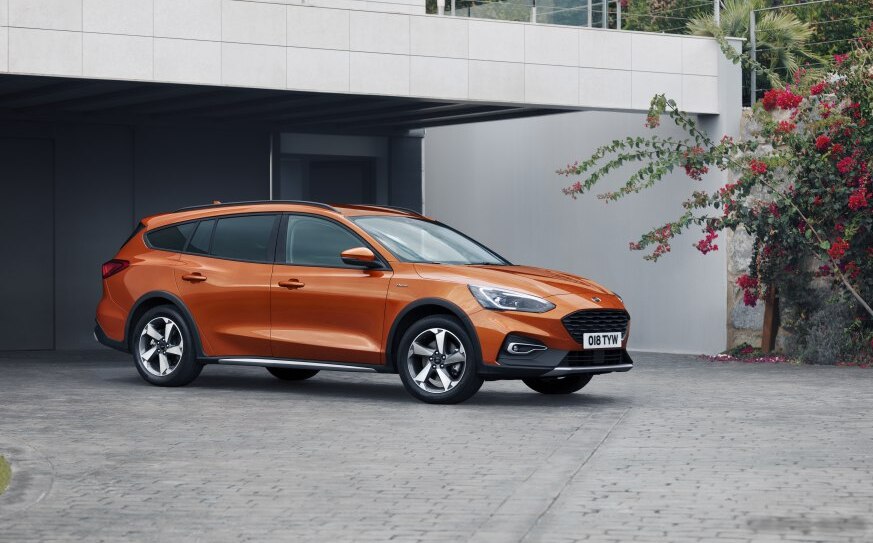
The Ford Focus IV Active Wagon 1.0 EcoBoost (155 hp) Mild Hybrid represents a specific configuration within the fourth generation of the globally successful Ford Focus. Produced from 2020 to 2021, this variant combined a downsized, turbocharged gasoline engine with mild hybrid technology, packaged within the more rugged, crossover-inspired Active Wagon body style. It was positioned as a fuel-efficient and versatile option within the Focus lineup, appealing to buyers seeking a practical family vehicle with a touch of adventure. This model primarily targeted the European market, where the Active Wagon body style was particularly popular, offering a blend of hatchback practicality and increased ground clearance.
Technical Specifications
| Brand | Ford |
| Model | Focus |
| Generation | Focus IV Active Wagon |
| Type (Engine) | 1.0 EcoBoost (155 Hp) Mild Hybrid |
| Start of production | 2020 |
| End of production | 2021 |
| Powertrain Architecture | MHEV (Mild Hybrid Electric Vehicle) |
| Body type | Crossover |
| Seats | 5 |
| Doors | 5 |
| Fuel consumption at Low speed (WLTP) | 6.3 l/100 km (37.3 US mpg, 44.8 UK mpg, 15.9 km/l) |
| Fuel consumption at Medium speed (WLTP) | 4.9 l/100 km (48 US mpg, 57.6 UK mpg, 20.4 km/l) |
| Fuel consumption at high speed (WLTP) | 4.5 l/100 km (52.3 US mpg, 62.8 UK mpg, 22.2 km/l) |
| Fuel consumption at very high speed (WLTP) | 5.9 l/100 km (39.9 US mpg, 47.9 UK mpg, 16.9 km/l) |
| Combined fuel consumption (WLTP) | 5.4 l/100 km (43.6 US mpg, 52.3 UK mpg, 18.5 km/l) |
| CO2 emissions (WLTP) | 121 g/km |
| Fuel consumption (economy) – urban (NEDC) | 4.7-5.1 l/100 km (50 – 46.1 US mpg, 60.1 – 55.4 UK mpg, 21.3 – 19.6 km/l) |
| Fuel consumption (economy) – extra urban (NEDC) | 3.6-3.9 l/100 km (65.3 – 60.3 US mpg, 78.5 – 72.4 UK mpg, 27.8 – 25.6 km/l) |
| Fuel consumption (economy) – combined (NEDC) | 4.1-4.5 l/100 km (57.4 – 52.3 US mpg, 68.9 – 62.8 UK mpg, 24.4 – 22.2 km/l) |
| CO2 emissions (NEDC) | 94-104 g/km |
| Fuel Type | Petrol (Gasoline) |
| Acceleration 0 – 100 km/h | 9.7 sec |
| Acceleration 0 – 62 mph | 9.7 sec |
| Acceleration 0 – 60 mph | 9.2 sec |
| Maximum speed | 205 km/h (127.38 mph) |
| Emission standard | Euro 6d-ISC-FCM |
| Weight-to-power ratio | 8.5 kg/Hp, 118.1 Hp/tonne |
| Weight-to-torque ratio | 6.9 kg/Nm, 144.7 Nm/tonne |
| Power | 155 Hp @ 6000 rpm |
| Power per litre | 155.2 Hp/l |
| Torque | 190 Nm @ 1900-5500 rpm (140.14 lb.-ft. @ 1900-5500 rpm) |
| Engine layout | Front, Transverse |
| Engine Model/Code | M0DC |
| Engine displacement | 999 cm3 (60.96 cu. in.) |
| Number of cylinders | 3 |
| Engine configuration | Inline |
| Cylinder Bore | 71.9 mm (2.83 in.) |
| Piston Stroke | 82 mm (3.23 in.) |
| Number of valves per cylinder | 4 |
| Fuel injection system | Direct injection |
| Engine aspiration | Turbocharger, Intercooler |
| Valvetrain | DOHC |
| Engine oil capacity | 4.5 l (4.76 US qt, 3.96 UK qt) |
| Coolant | 5.5 l (5.81 US qt, 4.84 UK qt) |
| Kerb Weight | 1313 kg (2894.67 lbs.) |
| Max. weight | 1940 kg (4276.97 lbs.) |
| Max load | 627 kg (1382.3 lbs.) |
| Trunk (boot) space – minimum | 608 l (21.47 cu. ft.) |
| Trunk (boot) space – maximum | 1653 l (58.38 cu. ft.) |
| Fuel tank capacity | 52 l (13.74 US gal, 11.44 UK gal) |
| Max. roof load | 75 kg (165.35 lbs.) |
| Permitted trailer load with brakes (12%) | 1000 kg (2204.62 lbs.) |
| Permitted trailer load without brakes | 690 kg (1521.19 lbs.) |
| Permitted towbar download | 90 kg (198.42 lbs.) |
| Length | 4693 mm (184.76 in.) |
| Width | 1844 mm (72.6 in.) |
| Width including mirrors | 1979 mm (77.91 in.) |
| Height | 1504 mm (59.21 in.) |
| Wheelbase | 2700 mm (106.3 in.) |
| Front track | 1582 mm (62.28 in.) |
| Rear (Back) track | 1576 mm (62.05 in.) |
| Front overhang | 918 mm (36.14 in.) |
| Rear overhang | 1075 mm (42.32 in.) |
| Ride height (ground clearance) | 149-163 mm (5.87 – 6.42 in.) |
| Minimum turning circle (turning diameter) | 11 m (36.09 ft.) |
| Drivetrain Architecture | ICE and electric motor drive the front wheels in mixed mode |
| Drive wheel | Front wheel drive |
| Number of gears and type of gearbox | 6 gears, manual transmission |
| Front suspension | Independent type McPherson, Transverse stabilizer |
| Rear suspension | Independent multi-link suspension |
| Front brakes | Ventilated discs, 282×27 mm |
| Rear brakes | Disc, 271×12 mm |
| Assisting systems | ABS (Anti-lock braking system) |
| Steering type | Steering rack and pinion |
| Power steering | Electric Steering |
| Tires size | 215/55 R 17 |
| Wheel rims size | 7 J x 17 |
INTRODUCTION
The Ford Focus IV Active Wagon 1.0 EcoBoost (155 hp) Mild Hybrid, launched in 2020, was a key component of Ford’s refreshed Focus lineup. Built on the C2 platform (also known as the 1HX0/A3 platform shared with other Ford and related vehicles), this variant aimed to capitalize on the growing demand for compact, fuel-efficient crossovers. The Active Wagon designation signified a slightly raised ride height and rugged styling cues, differentiating it from the standard Focus hatchback and wagon models. The inclusion of mild hybrid technology was a first for the Focus, demonstrating Ford’s commitment to improving fuel economy and reducing emissions. This particular engine and transmission combination occupied a mid-range position in the Focus Active Wagon lineup, offering a balance between performance, efficiency, and affordability.
Powertrain & Engine Architecture
At the heart of this Focus Active Wagon lies the Ford M0DC 1.0 EcoBoost engine, a three-cylinder, turbocharged gasoline engine. This engine is part of Ford’s EcoBoost family, known for its downsizing and turbocharging technologies. The 1.0-liter displacement (999 cc / 60.96 cu. in.) belies its output of 155 horsepower at 6000 rpm and 190 Nm (140.14 lb.-ft.) of torque between 1900 and 5500 rpm. The engine utilizes direct fuel injection and a double overhead camshaft (DOHC) valvetrain with four valves per cylinder. The turbocharger, coupled with an intercooler, provides a significant boost in power and torque. The mild hybrid system consists of a 48-volt belt-driven integrated starter generator (BiSG) which assists the engine during acceleration and allows for extended engine-off coasting, improving fuel efficiency. This system isn’t capable of fully electric drive, but it recovers energy during braking and stores it in a small battery. The engine is paired with a 6-speed manual transmission, delivering power to the front wheels.
Driving Characteristics
The 1.0 EcoBoost 155 hp engine, while relatively small, provides adequate performance for everyday driving. Acceleration from 0-100 km/h (0-62 mph) takes approximately 9.7 seconds. The turbocharger provides a noticeable boost in power, but there is some turbo lag at lower engine speeds. The 6-speed manual transmission is well-matched to the engine, offering precise shifts and a reasonable spread of gear ratios. Compared to higher-output versions of the Focus, such as those with larger engines, this variant feels less powerful, particularly when fully loaded or tackling steep inclines. However, it excels in urban environments and on winding roads, where its nimble handling and responsive steering are appreciated. The mild hybrid system contributes to a smoother driving experience, particularly during stop-start traffic, and helps to reduce fuel consumption.
Equipment & Trim Levels
The Active Wagon trim level generally included features such as a unique exterior styling package with black cladding, roof rails, and increased ground clearance. Standard interior features typically included a touchscreen infotainment system with Apple CarPlay and Android Auto compatibility, air conditioning, power windows, and a multi-function steering wheel. Higher trim levels offered options such as a larger touchscreen, navigation system, heated seats, a panoramic sunroof, and advanced driver-assistance systems like adaptive cruise control and lane-keeping assist. Upholstery was typically cloth, with leather options available on higher-spec models. The Active trim also often included specific interior accents and badging.
Chassis & Braking
The Focus Active Wagon utilizes an independent McPherson strut suspension at the front and an independent multi-link suspension at the rear, providing a comfortable and controlled ride. The Active trim featured a slightly stiffer suspension setup compared to the standard Focus, enhancing handling and stability. Brakes consisted of ventilated discs at the front (282×27 mm) and solid discs at the rear (271×12 mm). Anti-lock Braking System (ABS) was standard. The steering system is an electric power-assisted rack and pinion, offering precise and responsive steering feel.
Market Reception & Comparison
The Ford Focus IV Active Wagon 1.0 EcoBoost (155 hp) Mild Hybrid was generally well-received by automotive critics. It was praised for its fuel efficiency, comfortable ride, and practical interior. However, some reviewers noted that the engine could feel strained when pushed hard, and the turbo lag was noticeable. Compared to other trims in the Focus lineup, such as the 1.5 EcoBoost, this variant offered a more affordable entry point with comparable fuel economy. Against competitors like the Volkswagen Golf Active and Skoda Octavia Scout, the Focus Active Wagon offered a compelling combination of value, practicality, and driving dynamics.
Legacy
The 1.0 EcoBoost engine has proven to be a relatively reliable powertrain, although some early models experienced issues with timing belt failures. Regular maintenance, including oil changes and timing belt replacements, is crucial for ensuring long-term reliability. On the used car market, the Focus Active Wagon 1.0 EcoBoost (155 hp) Mild Hybrid remains a popular choice for buyers seeking a fuel-efficient and versatile family vehicle. Its combination of practicality, affordability, and modern technology continues to make it a competitive option in the compact crossover segment.