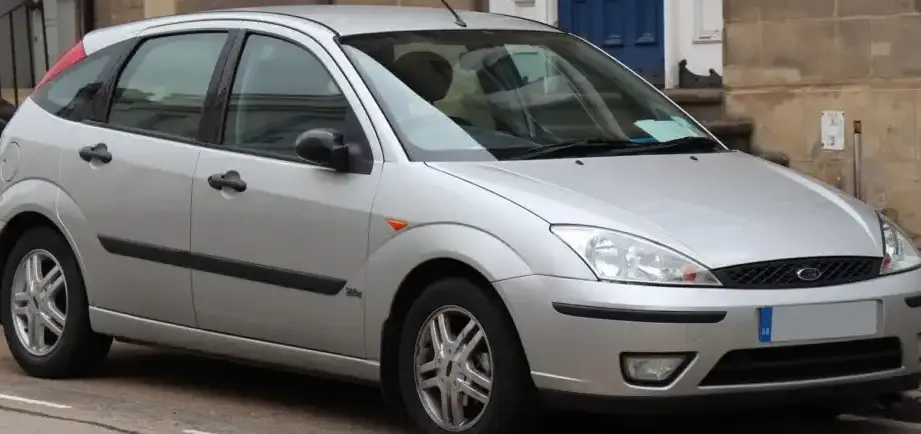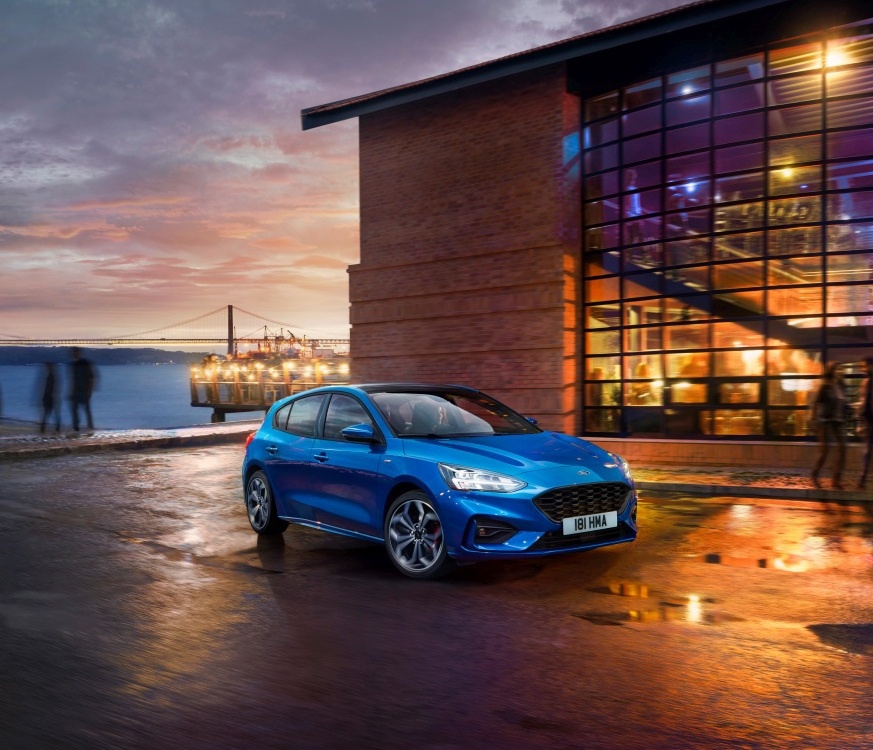
The Ford Focus IV Hatchback 1.0 EcoBoost (125 hp) Mild Hybrid represents a significant iteration in Ford’s globally successful Focus line. Introduced in April 2020 and remaining in production through 2021, this variant was positioned as an efficient and technologically advanced option within the fourth-generation Focus (Mk4) range, built on the C2 platform. It aimed to balance fuel economy with acceptable performance, appealing to buyers seeking a practical and modern hatchback. This particular configuration was primarily sold in the European market, where smaller displacement engines and fuel efficiency are highly valued. The “Mild Hybrid” designation indicates the inclusion of a 48-volt electrical system designed to assist the gasoline engine, improving fuel consumption and reducing emissions.
Technical Specifications
| Brand | Ford |
| Model | Focus |
| Generation | Focus IV Hatchback |
| Type (Engine) | 1.0 EcoBoost (125 Hp) Mild Hybrid |
| Start of production | April, 2020 |
| End of production | 2021 |
| Powertrain Architecture | MHEV (Mild Hybrid Electric Vehicle) |
| Body type | Hatchback |
| Seats | 5 |
| Doors | 5 |
| Fuel consumption at Low speed (WLTP) | 6.5 l/100 km (36.2 US mpg) |
| Fuel consumption at Medium speed (WLTP) | 5 l/100 km (47 US mpg) |
| Fuel consumption at high speed (WLTP) | 4.3 l/100 km (54.7 US mpg) |
| Fuel consumption at very high speed (WLTP) | 5.4 l/100 km (43.6 US mpg) |
| Combined fuel consumption (WLTP) | 5.1 l/100 km (46.1 US mpg) |
| CO2 emissions (WLTP) | 116 g/km |
| Fuel Type | Petrol (Gasoline) |
| Acceleration 0 – 100 km/h | 10 sec |
| Acceleration 0 – 62 mph | 10 sec |
| Acceleration 0 – 60 mph | 9.5 sec |
| Maximum speed | 200 km/h (124.27 mph) |
| Emission standard | Euro 6d-ISC-FCM |
| Weight-to-power ratio | 10.2 kg/Hp |
| Weight-to-torque ratio | 7.5 kg/Nm |
| Power | 125 Hp @ 6000 rpm |
| Torque | 170 Nm @ 1400-4500 rpm (125.39 lb.-ft.) |
| Engine layout | Front, Transverse |
| Engine Model/Code | B7DC |
| Engine displacement | 999 cm3 (60.96 cu. in.) |
| Number of cylinders | 3 |
| Engine configuration | Inline |
| Cylinder Bore | 71.9 mm (2.83 in.) |
| Piston Stroke | 82 mm (3.23 in.) |
| Number of valves per cylinder | 4 |
| Fuel injection system | Direct injection |
| Engine aspiration | Turbocharger, Intercooler |
| Valvetrain | DOHC |
| Engine oil capacity | 4.5 l (4.76 US qt | 3.96 UK qt) |
| Coolant | 5.5 l (5.81 US qt | 4.84 UK qt) |
| Kerb Weight | 1269 kg (2797.67 lbs.) |
| Max. weight | 1890 kg (4166.74 lbs.) |
| Max load | 621 kg (1369.07 lbs.) |
| Trunk (boot) space – minimum | 375 l (13.24 cu. ft.) |
| Trunk (boot) space – maximum | 1354 l (47.82 cu. ft.) |
| Fuel tank capacity | 52 l (13.74 US gal | 11.44 UK gal) |
| Length | 4378 mm (172.36 in.) |
| Width | 1825 mm (71.85 in.) |
| Height | 1452 mm (57.17 in.) |
| Wheelbase | 2700 mm (106.3 in.) |
| Front track | 1572 mm (61.89 in.) |
| Rear track | 1553 mm (61.14 in.) |
| Front brakes | Ventilated discs, 282×27 mm |
| Rear brakes | Disc, 271×12 mm |
| Tires size | 205/60 R 16 |
Powertrain & Engine Architecture
At the heart of the Focus IV 1.0 EcoBoost Mild Hybrid lies the B7DC engine, a 999cc, three-cylinder turbocharged gasoline engine. This engine is part of Ford’s EcoBoost family, known for its combination of small displacement, turbocharging, and direct fuel injection. The direct injection system, coupled with a twin-scroll turbocharger, allows for precise fuel delivery and efficient combustion. The engine utilizes a double overhead camshaft (DOHC) valvetrain with four valves per cylinder, optimizing gas flow for improved performance. The mild hybrid system incorporates a 48-volt belt-driven integrated starter generator (BiSG) which provides regenerative braking and electric assist during acceleration. This system isn’t capable of fully electric driving, but it helps to reduce engine load and improve fuel economy. The engine is paired with a 6-speed manual transmission, delivering power to the front wheels.
Driving Characteristics
The 125 hp output of the 1.0 EcoBoost engine, combined with the mild hybrid assist, provides adequate performance for everyday driving. Acceleration from 0-60 mph takes approximately 9.5 seconds, and top speed is rated at 124 mph. While not a particularly sporty configuration, the engine delivers a usable 170 Nm of torque between 1400-4500 rpm, providing sufficient pulling power for overtaking and navigating city streets. Compared to higher-output versions of the Focus IV, such as the 1.5 EcoBoost, this variant offers a more relaxed driving experience, prioritizing fuel efficiency over outright speed. The manual transmission provides a direct connection to the engine, allowing for precise gear changes, but the mild hybrid system’s assistance is most noticeable during start-stop situations and light acceleration.
Equipment & Trim Levels
The 1.0 EcoBoost Mild Hybrid was typically offered in mid-range trim levels, such as Trend and Titanium, depending on the specific market. Standard equipment generally included air conditioning, a touchscreen infotainment system with Apple CarPlay and Android Auto compatibility, alloy wheels, and a suite of safety features including ABS, ESP, and multiple airbags. Higher trim levels added features like automatic climate control, heated seats, a larger touchscreen display, and advanced driver-assistance systems such as adaptive cruise control and lane-keeping assist. Interior upholstery was typically cloth, with options for leather upgrades on higher trims.
Chassis & Braking
The Focus IV utilizes an independent McPherson strut suspension at the front and an independent multi-link suspension at the rear, providing a comfortable and controlled ride. The 1.0 EcoBoost variant typically featured a slightly softer suspension setup compared to higher-performance models to prioritize ride comfort. Braking duties are handled by ventilated discs at the front and solid discs at the rear. The braking system is assisted by ABS and Electronic Stability Program (ESP) to enhance safety and control. Steering is provided by an electric power steering system, offering light and precise steering feel.
Market Reception & Comparison
The Ford Focus IV 1.0 EcoBoost Mild Hybrid was generally well-received by automotive critics for its fuel efficiency and comfortable ride. It offered a compelling alternative to diesel-powered hatchbacks, particularly in light of increasing scrutiny surrounding diesel emissions. Compared to the 1.5 EcoBoost variant, the 1.0 EcoBoost offered significantly better fuel economy, but at the expense of some performance. The mild hybrid system contributed to lower CO2 emissions, making it an attractive option for environmentally conscious buyers. Reliability reports suggest that the 1.0 EcoBoost engine is generally reliable, although some owners have reported issues with the turbocharger and fuel injection system.
Legacy
The Ford Focus IV 1.0 EcoBoost Mild Hybrid represents a step towards electrification in Ford’s lineup. While the mild hybrid system is a relatively simple implementation, it paved the way for more advanced hybrid and electric powertrains in subsequent Ford models. On the used car market, these Focus models are generally considered a good value, offering a blend of practicality, fuel efficiency, and modern features. The 1.0 EcoBoost engine’s relatively small size and simple design make it relatively inexpensive to maintain, although regular servicing is essential to ensure long-term reliability. The Focus IV remains a popular choice for buyers seeking a well-rounded and affordable hatchback.