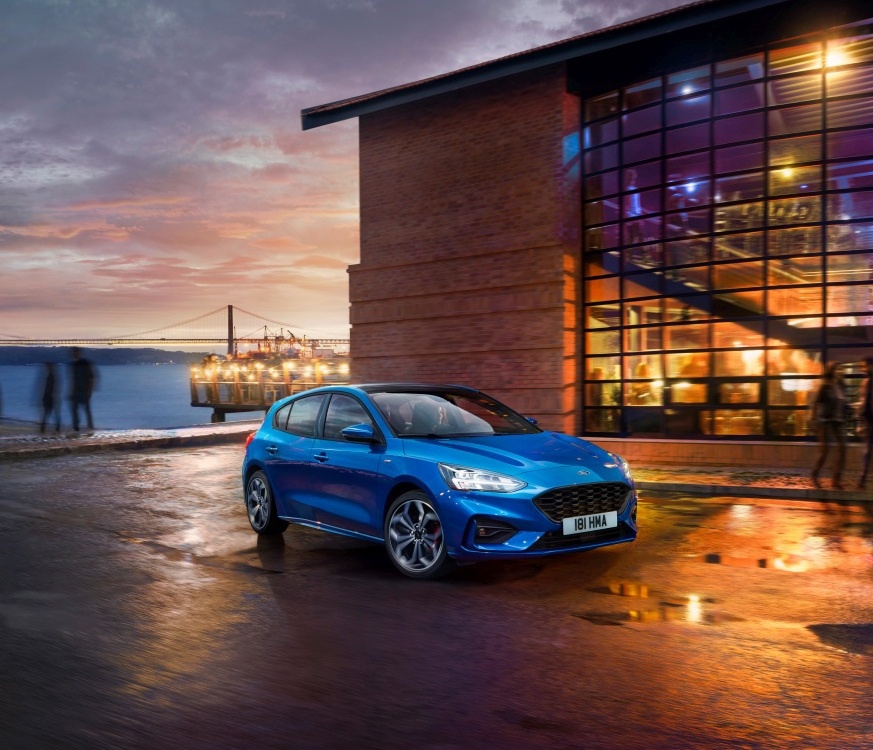
The Ford Focus IV Hatchback, produced from 2018 to 2019, represented the fourth generation of Ford’s globally successful compact car. Within the fourth generation’s lifecycle, the 1.0 EcoBoost 85 hp variant occupied the entry-level position in many European markets, offering a fuel-efficient and affordable option for buyers. This model, powered by a turbocharged three-cylinder engine, was designed to appeal to drivers prioritizing economy and practicality over outright performance. It played a significant role in Ford’s strategy to offer a diverse range of powertrains within the Focus IV lineup, catering to a broad spectrum of customer needs. While not widely sold in the US market, the Focus IV was a key competitor in the European C-segment, battling rivals like the Volkswagen Golf, Opel Astra, and Peugeot 308.
Technical Specifications
| Brand | Ford |
| Model | Focus |
| Generation | Focus IV Hatchback |
| Type (Engine) | 1.0 EcoBoost (85 Hp) |
| Start of production | September, 2018 |
| End of production | August, 2019 |
| Powertrain Architecture | Internal Combustion engine |
| Body type | Hatchback |
| Seats | 5 |
| Doors | 5 |
| Fuel consumption (urban) | 6 l/100 km (39.2 US mpg, 47.1 UK mpg, 16.7 km/l) |
| Fuel consumption (extra urban) | 4.2 l/100 km (56 US mpg, 67.3 UK mpg, 23.8 km/l) |
| Fuel consumption (combined) | 4.8 l/100 km (49 US mpg, 58.9 UK mpg, 20.8 km/l) |
| CO2 emissions | 110 g/km |
| Fuel Type | Petrol (Gasoline) |
| Acceleration 0 – 100 km/h | 13.5 sec |
| Acceleration 0 – 62 mph | 13.5 sec |
| Acceleration 0 – 60 mph | 12.8 sec |
| Maximum speed | 177 km/h (109.98 mph) |
| Emission standard | Euro 6 d |
| Weight-to-power ratio | 14.7 kg/Hp, 68.2 Hp/tonne |
| Weight-to-torque ratio | 7.3 kg/Nm, 136.3 Nm/tonne |
| Power | 85 Hp @ 4000-6000 rpm |
| Power per litre | 85.1 Hp/l |
| Torque | 170 Nm @ 1400-3500 rpm (125.39 lb.-ft. @ 1400-3500 rpm) |
| Engine layout | Front, Transverse |
| Engine Model/Code | SFDC |
| Engine displacement | 999 cm3 (60.96 cu. in.) |
| Number of cylinders | 3 |
| Engine configuration | Inline |
| Cylinder Bore | 71.9 mm (2.83 in.) |
| Piston Stroke | 82 mm (3.23 in.) |
| Compression ratio | 10.5:1 |
| Number of valves per cylinder | 4 |
| Fuel injection system | Direct injection |
| Engine aspiration | Turbocharger, Intercooler |
| Valvetrain | DOHC |
| Engine oil capacity | 4.5 l (4.76 US qt | 3.96 UK qt) |
| Coolant | 5.5 l (5.81 US qt | 4.84 UK qt) |
| Kerb Weight | 1247 kg (2749.16 lbs.) |
| Max. weight | 1855 kg (4089.57 lbs.) |
| Max load | 608 kg (1340.41 lbs.) |
| Trunk (boot) space – minimum | 375 l (13.24 cu. ft.) |
| Trunk (boot) space – maximum | 1354 l (47.82 cu. ft.) |
| Fuel tank capacity | 52 l (13.74 US gal | 11.44 UK gal) |
| Max. roof load | 75 kg (165.35 lbs.) |
| Permitted trailer load with brakes (12%) | 1100 kg (2425.08 lbs.) |
| Permitted trailer load without brakes | 660 kg (1455.05 lbs.) |
| Permitted towbar download | 90 kg (198.42 lbs.) |
| Length | 4378 mm (172.36 in.) |
| Width | 1825 mm (71.85 in.) |
| Width with mirrors folded | 1848 mm (72.76 in.) |
| Width including mirrors | 1979 mm (77.91 in.) |
| Height | 1454 mm (57.24 in.) |
| Wheelbase | 2700 mm (106.3 in.) |
| Front track | 1572 mm (61.89 in.) |
| Rear (Back) track | 1553 mm (61.14 in.) |
| Front overhang | 909 mm (35.79 in.) |
| Rear overhang | 769 mm (30.28 in.) |
| Ride height (ground clearance) | 112-135 mm (4.41 – 5.31 in.) |
| Drag coefficient (Cd) | 0.27 |
| Minimum turning circle (turning diameter) | 11.0 m (36.09 ft.) |
| Drivetrain Architecture | The Internal combustion engine (ICE) drives the front wheels of the vehicle. |
| Drive wheel | Front wheel drive |
| Number of gears and type of gearbox | 6 gears, manual transmission |
| Front brakes | Ventilated discs |
| Rear brakes | Disc |
| Assisting systems | ABS (Anti-lock braking system) |
| Steering type | Steering rack and pinion |
| Power steering | Electric Steering |
| Tires size | 195/65 R16; 205/60 R16; 215/50 R17; 235/40 R18 |
| Wheel rims size | 6.5J x 16; 7J x 17; 8J x 18 |
INTRODUCTION
The Ford Focus IV Hatchback 1.0 EcoBoost 85 hp, launched in September 2018, served as the entry point to the fourth-generation Focus range in many European markets. Built on the C2 platform (also known as the 1HX0/A3 platform, shared with models like the Mazda 3), this variant was specifically engineered to deliver exceptional fuel economy and affordability. It was positioned below the more powerful EcoBoost variants (125 hp and above) and the diesel options, targeting buyers who prioritized running costs over performance. Production of this specific configuration concluded in August 2019, as Ford refined its Focus lineup.
Powertrain & Engine Architecture
The heart of this Focus variant is the 1.0 EcoBoost SFDC engine, a highly advanced three-cylinder petrol engine. This engine utilizes direct fuel injection, a single scroll turbocharger, and variable valve timing (DOHC) to maximize efficiency and power output. The engine code ‘SFDC’ denotes a specific calibration of the 1.0 EcoBoost, tuned for 85 horsepower. The engine’s compact size and lightweight construction contribute to the vehicle’s overall balance. The 6-speed manual transmission was standard, chosen for its efficiency and driver engagement. The transmission’s gear ratios are optimized for fuel economy, with a relatively long final drive. The engine’s turbocharger provides a boost in torque at lower engine speeds, helping to offset the limitations of its small displacement.
Driving Characteristics
The 1.0 EcoBoost 85 hp Focus delivers a driving experience focused on practicality and efficiency. Acceleration is modest, taking approximately 13.5 seconds to reach 62 mph (100 km/h). The engine feels responsive enough for everyday driving, but requires downshifting for overtaking maneuvers. The manual transmission provides precise gear changes, and the relatively long gear ratios contribute to a smooth and comfortable ride. Compared to the 125 hp EcoBoost or diesel variants, this version feels noticeably less powerful, particularly when fully loaded. However, its lighter weight and efficient engine contribute to excellent fuel economy, making it ideal for urban commuting and long-distance journeys.
Equipment & Trim Levels
The 1.0 EcoBoost 85 hp typically came equipped with a base level of features, including air conditioning, power front windows, a basic audio system with Bluetooth connectivity, and stability control. Interior upholstery was typically cloth, and the dashboard featured a simple, functional design. Optional extras included alloy wheels, a touchscreen infotainment system, rear parking sensors, and cruise control. Trim levels varied slightly depending on the market, but generally, this variant represented the most affordable entry point into the Focus IV range.
Chassis & Braking
The Focus IV utilizes a MacPherson strut front suspension and a multi-link rear suspension, providing a good balance between ride comfort and handling. The 1.0 EcoBoost variant typically featured smaller diameter wheels and tires compared to higher-spec models, contributing to a slightly softer ride. Braking systems consisted of ventilated discs on the front wheels and solid discs on the rear. Anti-lock Braking System (ABS) was standard. The suspension setup was tuned to prioritize comfort and stability, rather than outright sportiness.
Market Reception & Comparison
The 1.0 EcoBoost 85 hp Focus received generally positive reviews for its fuel efficiency and affordability. Critics praised its nimble handling and comfortable ride, but noted its lack of outright performance. Compared to the 125 hp EcoBoost variant, the 85 hp version offered significantly lower running costs but sacrificed acceleration and overall driving enjoyment. The diesel variants provided even better fuel economy but came with a higher purchase price and potential maintenance costs. This variant appealed to buyers seeking a practical and economical hatchback for everyday use.
Legacy
The 1.0 EcoBoost engine, in its various iterations, has proven to be a reliable and durable powertrain. While some early versions of the engine experienced issues with coolant leaks, these were largely addressed through design revisions. The 85 hp variant, being a lower-stressed version, is generally considered to be particularly robust. In the used car market, these models represent a good value proposition, offering a blend of fuel efficiency, practicality, and affordability. However, potential buyers should ensure that the vehicle has been properly maintained and that any outstanding recalls have been addressed.