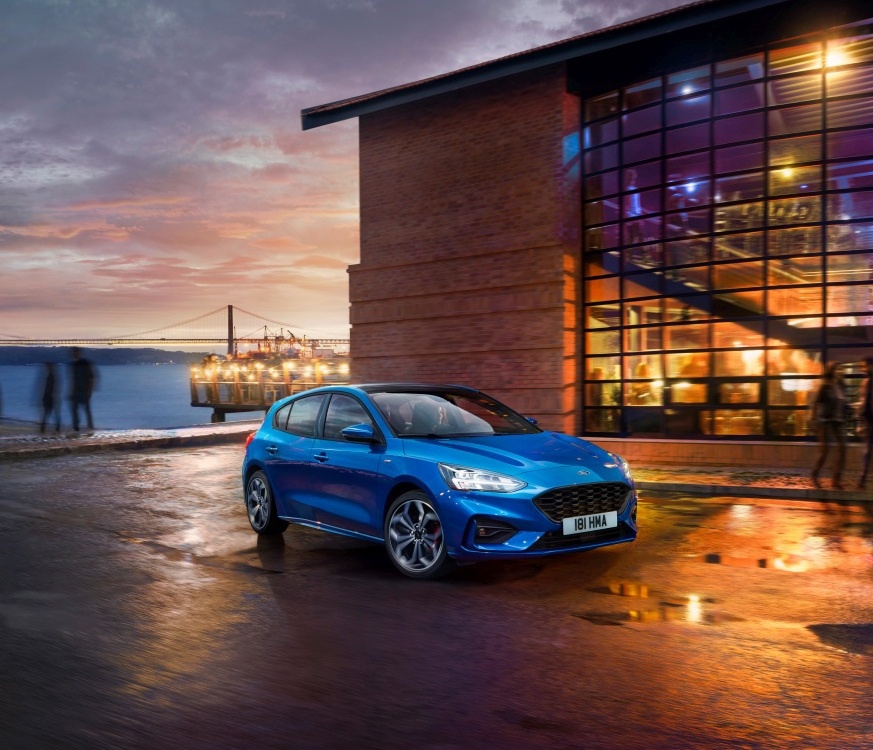
The Ford Focus IV Hatchback ST 2.0 EcoBlue (190 hp) was a performance-oriented variant of the fourth-generation Ford Focus, produced from June 2019 to 2021. Positioned as a sporty diesel option within the Focus lineup, it aimed to deliver a blend of performance and fuel efficiency. This model occupied a niche between the more mainstream Focus trims and the higher-performance gasoline-powered ST models, offering a unique driving experience for enthusiasts seeking a diesel-powered hot hatch. It was primarily marketed in Europe, where diesel engines held a significant market share, and represented Ford’s attempt to cater to that demand with a sporty offering.
Technical Specifications
| Brand | Ford |
| Model | Focus |
| Generation | Focus IV Hatchback |
| Type (Engine) | ST 2.0 EcoBlue (190 Hp) |
| Start of production | June, 2019 |
| End of production | 2021 |
| Powertrain Architecture | Internal Combustion engine |
| Body type | Hatchback |
| Seats | 5 |
| Doors | 5 |
| Fuel consumption (urban) | 5.9 l/100 km (39.9 US mpg, 47.9 UK mpg, 16.9 km/l) |
| Fuel consumption (extra urban) | 4.2 l/100 km (56 US mpg, 67.3 UK mpg, 23.8 km/l) |
| Fuel consumption (combined) | 4.8 l/100 km (49 US mpg, 58.9 UK mpg, 20.8 km/l) |
| CO2 emissions | 125 g/km |
| Fuel Type | Diesel |
| Acceleration 0 – 100 km/h | 7.6 sec |
| Acceleration 0 – 62 mph | 7.6 sec |
| Acceleration 0 – 60 mph | 7.2 sec |
| Maximum speed | 220 km/h (136.7 mph) |
| Emission standard | Euro 6d-TEMP |
| Weight-to-power ratio | 7.8 kg/Hp, 129 Hp/tonne |
| Weight-to-torque ratio | 3.7 kg/Nm, 271.6 Nm/tonne |
| Power | 190 Hp @ 3500 rpm |
| Torque | 400 Nm @ 2000 rpm (295.02 lb.-ft. @ 2000 rpm) |
| Engine layout | Front, Transverse |
| Engine Model/Code | YMDA |
| Number of cylinders | 4 |
| Engine configuration | Inline |
| Fuel injection system | Diesel Commonrail |
| Engine aspiration | Turbocharger, Intercooler |
| Engine oil capacity | 6.4 l (6.76 US qt | 5.63 UK qt) |
| Coolant capacity | 12.6 l (13.31 US qt | 11.09 UK qt) |
| Kerb Weight | 1473 kg (3247.41 lbs) |
| Max. weight | 2040 kg (4497.43 lbs) |
| Max load | 567 kg (1250.02 lbs) |
| Trunk (boot) space – minimum | 273 l (9.64 cu. ft) |
| Trunk (boot) space – maximum | 1250 l (44.14 cu. ft) |
| Fuel tank capacity | 47 l (12.42 US gal | 10.34 UK gal) |
| Permitted trailer load with brakes (12%) | 1800 kg (3968.32 lbs) |
| Permitted trailer load without brakes | 750 kg (1653.47 lbs) |
| Permitted towbar download | 90 kg (198.42 lbs) |
| Length | 4388 mm (172.76 in) |
| Width | 1825 mm (71.85 in) |
| Width with mirrors folded | 1848 mm (72.76 in) |
| Width including mirrors | 1979 mm (77.91 in) |
| Height | 1458 mm (57.4 in) |
| Wheelbase | 2700 mm (106.3 in) |
| Minimum turning circle | 10.7 m (35.1 ft) |
| Drivetrain | Front wheel drive |
| Number of gears | 6 gears, manual transmission |
| Steering type | Steering rack and pinion |
| Power steering | Electric Steering |
| Tires size | 235/40 R18 |
| Wheel rims size | 8J x 18 |
INTRODUCTION
The Ford Focus IV, launched in 2018, represented a significant evolution for the popular compact car. The ST 2.0 EcoBlue, introduced in 2019, was a diesel-powered variant designed to appeal to European drivers who favored diesel’s fuel efficiency and torque. It slotted into the Focus IV range as a performance-oriented option, offering a step up from the standard models but remaining distinct from the full-fledged, gasoline-powered Focus ST. The “EcoBlue” designation signified Ford’s latest generation of diesel engines, emphasizing reduced emissions and improved economy. Production of this specific variant continued until 2021, coinciding with shifts in Ford’s European model strategy.
Powertrain & Engine Architecture
At the heart of the Focus ST 2.0 EcoBlue was the YMDA engine, a 2.0-liter inline-four cylinder diesel engine. This engine was part of Ford’s EcoBlue family, known for its advanced combustion technology and focus on efficiency. The YMDA featured a common-rail direct fuel injection system, delivering fuel at extremely high pressures for optimized combustion. A turbocharger with an intercooler was employed to boost power output, providing 190 horsepower at 3500 rpm and a substantial 400 Nm (295 lb-ft) of torque from as low as 2000 rpm. This torque figure was a key selling point, offering strong acceleration and effortless cruising. The engine also incorporated features like variable geometry turbocharging (VGT) to optimize performance across the rev range. The engine was paired with a six-speed manual transmission, chosen for its driver engagement and efficiency.
Driving Characteristics
The 190 hp diesel engine, coupled with the six-speed manual gearbox, provided a distinctly different driving experience compared to the gasoline-powered Focus ST. While lacking the outright top-end punch of the petrol engine, the EcoBlue offered strong mid-range acceleration thanks to its abundant torque. This made it particularly well-suited for everyday driving and overtaking maneuvers. The gear ratios were tuned to maximize efficiency and provide responsive acceleration. Compared to lower-powered Focus diesel variants, the ST 2.0 EcoBlue felt noticeably more energetic and engaging. However, it didn’t quite match the agility and responsiveness of the gasoline ST, which prioritized a more dynamic driving experience. The diesel engine’s weight also contributed to a slightly different weight balance, impacting handling characteristics.
Equipment & Trim Levels
The Focus ST 2.0 EcoBlue typically came with a generous level of standard equipment. Interior features included sport seats upholstered in a combination of cloth and leather-style material, a leather-wrapped steering wheel, and aluminum pedals. The dashboard featured a modern design with an 8-inch touchscreen infotainment system compatible with Apple CarPlay and Android Auto. Standard safety features included lane-keeping assist, pre-collision assist with pedestrian and cyclist detection, and automatic emergency braking. Optional extras included a panoramic sunroof, heated front seats, and a premium sound system. The ST trim level also included unique exterior styling cues, such as a rear spoiler, sport suspension, and distinctive alloy wheels.
Chassis & Braking
The Focus ST 2.0 EcoBlue utilized the standard Focus IV chassis, which was already known for its good handling characteristics. The suspension was tuned to provide a balance between comfort and sportiness, offering a slightly firmer ride than the standard Focus models. The front suspension featured independent MacPherson struts, while the rear suspension employed a multi-link setup. Braking duties were handled by disc brakes on all four wheels, providing ample stopping power. The ST trim level often included larger brake rotors and upgraded brake pads for improved performance. Stabilizer bars were fitted front and rear to reduce body roll during cornering.
Market Reception & Comparison
The Ford Focus ST 2.0 EcoBlue received generally positive reviews from automotive critics. It was praised for its fuel efficiency, strong torque, and comfortable ride. However, some reviewers noted that it lacked the outright excitement of the gasoline-powered ST. Compared to other diesel-powered hot hatches, such as the Volkswagen Golf GTD, the Focus ST 2.0 EcoBlue offered a competitive combination of performance, economy, and value. The Golf GTD was often seen as the benchmark in this segment, offering a more refined driving experience but at a higher price point. In terms of reliability, the EcoBlue engine proved to be generally dependable, although some owners reported issues with the diesel particulate filter (DPF) system, a common concern with modern diesel engines.
Legacy
The Ford Focus ST 2.0 EcoBlue represents a unique chapter in the Focus story, catering to a specific demand for a sporty diesel hatchback. While Ford has since shifted its focus away from diesel engines in many markets, the EcoBlue variant remains a popular choice on the used car market, particularly for drivers seeking a fuel-efficient and torquey vehicle. The YMDA engine, while not without its potential issues (like DPF concerns), has proven to be relatively robust when properly maintained. The Focus ST 2.0 EcoBlue stands as a testament to Ford’s willingness to experiment with different powertrain options to meet the diverse needs of its customers.