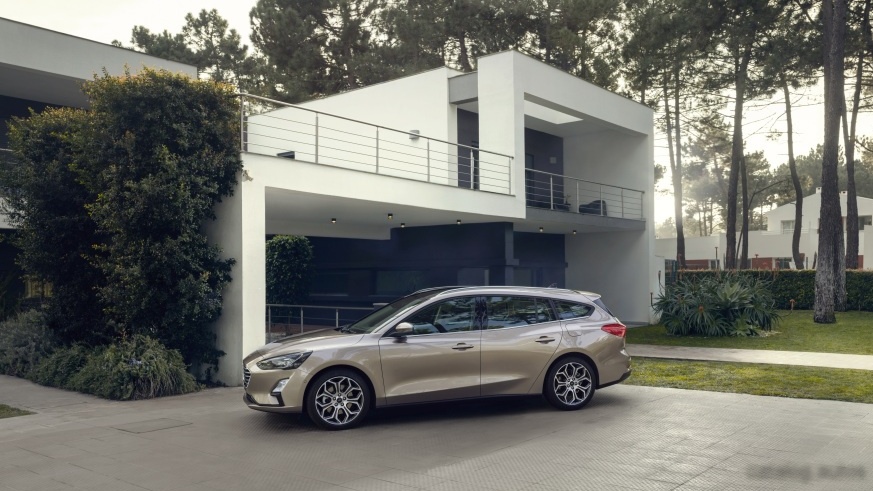
The Ford Focus IV Wagon 1.0 EcoBoost (85 hp) was a variant of the fourth-generation Ford Focus, produced from September 2018 to August 2019. Positioned as an entry-level offering within the Focus IV Wagon lineup, it aimed to provide affordable and fuel-efficient transportation for families and individuals. This model represented Ford’s continued effort to offer a range of powertrain options to cater to diverse consumer needs in the European market, where the Focus was a consistently strong seller. The 1.0 EcoBoost engine, while small in displacement, was a key component of Ford’s downsizing strategy, utilizing turbocharging to deliver acceptable performance with reduced emissions.
Technical Specifications
| Brand | Ford |
| Model | Focus |
| Generation | Focus IV Wagon |
| Type (Engine) | 1.0 EcoBoost (85 Hp) |
| Start of production | September, 2018 |
| End of production | August, 2019 |
| Powertrain Architecture | Internal Combustion engine |
| Body type | Station wagon (estate) |
| Seats | 5 |
| Doors | 5 |
| Fuel consumption (urban) | 6 l/100 km (39.2 US mpg, 47.1 UK mpg, 16.7 km/l) |
| Fuel consumption (extra urban) | 4.3 l/100 km (54.7 US mpg, 65.7 UK mpg, 23.3 km/l) |
| Fuel consumption (combined) | 4.9 l/100 km (48 US mpg, 57.6 UK mpg, 20.4 km/l) |
| CO2 emissions | 111 g/km |
| Fuel Type | Petrol (Gasoline) |
| Acceleration 0 – 100 km/h | 13.9 sec |
| Acceleration 0 – 62 mph | 13.9 sec |
| Acceleration 0 – 60 mph | 13.2 sec |
| Maximum speed | 175 km/h (108.74 mph) |
| Emission standard | Euro 6 d |
| Weight-to-power ratio | 15.4 kg/Hp, 65 Hp/tonne |
| Weight-to-torque ratio | 7.7 kg/Nm, 130 Nm/tonne |
| Power | 85 Hp @ 4000-6000 rpm |
| Power per litre | 85.1 Hp/l |
| Torque | 170 Nm @ 1400-3500 rpm (125.39 lb.-ft. @ 1400-3500 rpm) |
| Engine layout | Front, Transverse |
| Engine Model/Code | SFDC |
| Engine displacement | 999 cm3 (60.96 cu. in.) |
| Number of cylinders | 3 |
| Engine configuration | Inline |
| Cylinder Bore | 71.9 mm (2.83 in.) |
| Piston Stroke | 82 mm (3.23 in.) |
| Compression ratio | 10.5:1 |
| Number of valves per cylinder | 4 |
| Fuel injection system | Direct injection |
| Engine aspiration | Turbocharger, Intercooler |
| Valvetrain | DOHC |
| Engine oil capacity | 4.5 l (4.76 US qt | 3.96 UK qt) |
| Coolant | 5.5 l (5.81 US qt | 4.84 UK qt) |
| Kerb Weight | 1308 kg (2883.65 lbs.) |
| Max. weight | 1925 kg (4243.9 lbs.) |
| Max load | 617 kg (1360.25 lbs.) |
| Trunk (boot) space – minimum | 608 l (21.47 cu. ft.) |
| Trunk (boot) space – maximum | 1653 l (58.38 cu. ft.) |
| Fuel tank capacity | 52 l (13.74 US gal | 11.44 UK gal) |
| Max. roof load | 75 kg (165.35 lbs.) |
| Permitted trailer load with brakes (12%) | 1000 kg (2204.62 lbs.) |
| Permitted trailer load without brakes | 690 kg (1521.19 lbs.) |
| Permitted towbar download | 90 kg (198.42 lbs.) |
| Length | 4668 mm (183.78 in.) |
| Width | 1825 mm (71.85 in.) |
| Width with mirrors folded | 1848 mm (72.76 in.) |
| Width including mirrors | 1979 mm (77.91 in.) |
| Height | 1481 mm (58.31 in.) |
| Wheelbase | 2700 mm (106.3 in.) |
| Front track | 1572 mm (61.89 in.) |
| Rear (Back) track | 1566 mm (61.65 in.) |
| Front overhang | 909 mm (35.79 in.) |
| Rear overhang | 1059 mm (41.69 in.) |
| Ride height (ground clearance) | 115-134 mm (4.53 – 5.28 in.) |
| Drag coefficient (Cd) | 0.28 |
| Minimum turning circle (turning diameter) | 11.0 m (36.09 ft.) |
| Drivetrain Architecture | The Internal combustion engine (ICE) drives the front wheels of the vehicle. |
| Drive wheel | Front wheel drive |
| Number of gears and type of gearbox | 6 gears, manual transmission |
| Front brakes | Ventilated discs |
| Rear brakes | Disc |
| Assisting systems | ABS (Anti-lock braking system) |
| Steering type | Steering rack and pinion |
| Power steering | Electric Steering |
| Tires size | 195/65 R16; 205/60 R16; 215/50 R17; 235/40 R18 |
| Wheel rims size | 6.5J x 16; 7J x 17; 8J x 18 |
INTRODUCTION
The Ford Focus IV Wagon 1.0 EcoBoost (85 hp) was a key part of Ford’s strategy to offer a versatile and economical vehicle to European buyers. Introduced as part of the fourth-generation Focus range (launched in 2018), the wagon body style provided increased practicality compared to the hatchback. This particular variant, powered by the 1.0-liter EcoBoost engine producing 85 horsepower, served as the entry point into the Focus Wagon lineup. It was designed to appeal to budget-conscious customers who still desired the space and functionality of a station wagon. The Focus IV platform (internally designated as C346) represented a significant overhaul of the Focus, incorporating advancements in chassis design, safety technology, and powertrain efficiency.
Powertrain & Engine Architecture
The heart of this Focus variant is the 1.0 EcoBoost engine, specifically the SFDC engine code. This is a three-cylinder, 1.0-liter (999cc) turbocharged gasoline engine. It utilizes direct fuel injection, a technology that improves fuel efficiency and reduces emissions by injecting fuel directly into the combustion chamber. The engine also features a twin-scroll turbocharger, which helps to minimize turbo lag and provide a more responsive driving experience. The valvetrain is a Double Overhead Camshaft (DOHC) design with four valves per cylinder, optimizing airflow for improved performance. The engine’s relatively small displacement and turbocharging contribute to its fuel efficiency. This variant was exclusively offered with a six-speed manual transmission, designed to maximize fuel economy and provide adequate performance for everyday driving. The transmission’s gear ratios are tuned for efficiency, prioritizing lower engine speeds at highway cruising.
Driving Characteristics
The 85 hp 1.0 EcoBoost engine, paired with the six-speed manual transmission, delivers adequate, though not exhilarating, performance. Acceleration from 0-60 mph takes approximately 13.2 seconds, and the top speed is around 108.74 mph. The engine’s torque output of 170 Nm (125 lb-ft) is available from 1400-3500 rpm, providing reasonable pulling power for overtaking and climbing hills. However, drivers will likely need to downshift frequently to maintain momentum, especially when fully loaded. Compared to higher-output versions of the 1.0 EcoBoost (100 hp or 125 hp) or other engine options like the 1.5 EcoBoost or diesel variants, this version feels noticeably less powerful. The manual transmission offers precise shifts, but the overall driving experience is geared towards efficiency rather than sporty performance.
Equipment & Trim Levels
The 1.0 EcoBoost (85 hp) variant typically came with a base level of equipment, focusing on essential features. Standard equipment generally included air conditioning, power windows, power door mirrors, a basic audio system with Bluetooth connectivity, and steel wheels with wheel covers. Safety features such as ABS, Electronic Stability Control (ESC), and multiple airbags were also standard. Higher trim levels, such as Trend or Titanium, offered additional features like alloy wheels, a more advanced infotainment system with touchscreen display, cruise control, and parking sensors. Optional extras included a panoramic sunroof, heated seats, and a premium sound system.
Chassis & Braking
The Focus IV Wagon utilizes a MacPherson strut front suspension and a multi-link rear suspension, providing a good balance between ride comfort and handling. The suspension setup is tuned to be relatively comfortable for everyday driving, but it also offers decent body control in corners. The braking system consists of ventilated discs on the front wheels and solid discs on the rear wheels. ABS (Anti-lock Braking System) is standard, enhancing braking performance and stability. The steering is electric power-assisted, providing light and precise steering feel.
Market Reception & Comparison
The 1.0 EcoBoost (85 hp) variant of the Focus IV Wagon was generally well-received by critics as an affordable and fuel-efficient option. However, some reviewers noted that the engine could feel underpowered, especially when the vehicle is fully loaded or traveling uphill. Compared to the more powerful 1.0 EcoBoost variants, this version offered lower running costs but sacrificed some performance. The diesel variants, while more expensive to purchase, provided superior fuel economy and torque. The 1.0 EcoBoost 85hp was often seen as a sensible choice for urban commuters and families prioritizing fuel efficiency over outright performance.
Legacy
The 1.0 EcoBoost engine has proven to be a relatively reliable powertrain, although some early models experienced issues with timing belt durability. Regular maintenance, including oil changes and timing belt replacements (as per Ford’s recommended service intervals), is crucial for ensuring long-term reliability. In the used car market, the 1.0 EcoBoost (85 hp) Focus Wagon represents a good value proposition for buyers seeking an affordable and economical station wagon. Its fuel efficiency and practicality make it a suitable choice for families and individuals who prioritize running costs over performance. While not the most exciting version of the Focus, it remains a competent and dependable vehicle.