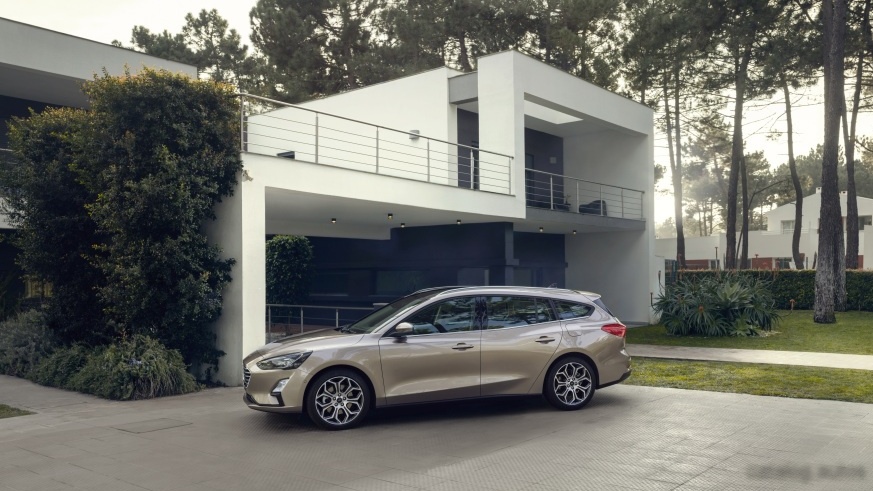
The Ford Focus IV Wagon 1.5 EcoBoost (150 hp) represents a significant iteration in Ford’s long-running Focus line, specifically within the fourth generation (2018-2021) of the compact wagon. Positioned as a mid-range offering, this variant aimed to balance fuel efficiency, practicality, and a reasonable level of performance for the European and North American markets. It served as a bridge between the more economical base engines and the higher-performance ST models, appealing to families and individuals seeking a versatile vehicle for daily commuting and longer journeys. This particular engine and drivetrain combination was a popular choice, offering a good compromise for buyers who didn’t require the outright performance of the ST or the lower cost of the base engine.
Technical Specifications
| Brand | Ford |
| Model | Focus |
| Generation | Focus IV Wagon |
| Type (Engine) | 1.5 EcoBoost (150 Hp) |
| Start of production | September, 2018 |
| End of production | 2021 |
| Powertrain Architecture | Internal Combustion engine |
| Body type | Station wagon (estate) |
| Seats | 5 |
| Doors | 5 |
| Fuel consumption (urban) | 7.0-7.2 l/100 km (33.6 – 32.7 US mpg) |
| Fuel consumption (extra urban) | 4.7-4.8 l/100 km (50 – 49 US mpg) |
| Fuel consumption (combined) | 5.5-5.7 l/100 km (42.8 – 41.3 US mpg) |
| CO2 emissions | 125-129 g/km |
| Fuel Type | Petrol (Gasoline) |
| Acceleration 0 – 100 km/h | 9 sec |
| Acceleration 0 – 62 mph | 9 sec |
| Acceleration 0 – 60 mph | 8.6 sec |
| Maximum speed | 208 km/h (129.25 mph) |
| Emission standard | Euro 6 d |
| Weight-to-power ratio | 8.9 kg/Hp |
| Weight-to-torque ratio | 5.6 kg/Nm |
| Power | 150 Hp @ 6000 rpm |
| Torque | 240 Nm @ 1600 rpm (177.01 lb.-ft. @ 1600 rpm) |
| Engine layout | Front, Transverse |
| Engine Model/Code | YZDA |
| Engine displacement | 1497 cm3 (91.35 cu. in.) |
| Number of cylinders | 3 |
| Engine configuration | Inline |
| Cylinder Bore | 84 mm (3.31 in.) |
| Piston Stroke | 90 mm (3.54 in.) |
| Compression ratio | 11:1 |
| Number of valves per cylinder | 4 |
| Fuel injection system | Direct injection |
| Engine aspiration | Turbocharger, Intercooler |
| Valvetrain | DOHC |
| Engine oil capacity | 5.05 l (5.34 US qt | 4.44 UK qt) |
| Coolant | 5.55 l (5.86 US qt | 4.88 UK qt) |
| Kerb Weight | 1333 kg (2938.76 lbs.) |
| Max. weight | 1950 kg (4299.01 lbs.) |
| Max load | 617 kg (1360.25 lbs.) |
| Trunk (boot) space – minimum | 608 l (21.47 cu. ft.) |
| Trunk (boot) space – maximum | 1653 l (58.38 cu. ft.) |
| Fuel tank capacity | 52 l (13.74 US gal | 11.44 UK gal) |
| Max. roof load | 75 kg (165.35 lbs.) |
| Permitted trailer load with brakes (12%) | 1500 kg (3306.93 lbs.) |
| Permitted trailer load without brakes | 700 kg (1543.24 lbs.) |
| Permitted towbar download | 90 kg (198.42 lbs.) |
| Length | 4667-4668 mm (183.74 – 183.78 in.) |
| Width | 1825 mm (71.85 in.) |
| Width with mirrors folded | 1848 mm (72.76 in.) |
| Width including mirrors | 1979 mm (77.91 in.) |
| Height | 1459-1469 mm (57.44 – 57.83 in.) |
| Wheelbase | 2700 mm (106.3 in.) |
| Front track | 1572 mm (61.89 in.) |
| Rear (Back) track | 1566 mm (61.65 in.) |
| Front overhang | 909 mm (35.79 in.) |
| Rear overhang | 1059 mm (41.69 in.) |
| Ride height (ground clearance) | 115-134 mm (4.53 – 5.28 in.) |
| Drag coefficient (Cd) | 0.28 |
| Minimum turning circle (turning diameter) | 11.0 m (36.09 ft.) |
| Drivetrain Architecture | Front wheel drive |
| Number of gears and type of gearbox | 6 gears, manual transmission |
| Front brakes | Ventilated discs |
| Rear brakes | Disc |
| Assisting systems | ABS (Anti-lock braking system) |
| Steering type | Steering rack and pinion |
| Power steering | Electric Steering |
| Tires size | 195/65 R16; 205/60 R16; 215/50 R17; 235/40 R18 |
| Wheel rims size | 6.5J x 16; 7J x 17; 8J x 18 |
Powertrain & Engine Architecture
The heart of this Focus variant is the 1.5-liter EcoBoost inline-three cylinder engine, bearing the Ford internal code YZDA. This engine is a member of Ford’s EcoBoost family, characterized by turbocharging and direct fuel injection. The direct injection system, coupled with the turbocharger, allows for precise fuel delivery and increased power output from a relatively small displacement. The engine utilizes a dual overhead camshaft (DOHC) valvetrain with four valves per cylinder, optimizing airflow for improved efficiency and performance. The turbocharger is an integral part of the design, providing a boost in power and torque, particularly at lower engine speeds. The 1.5 EcoBoost engine is known for its responsiveness and relatively smooth operation despite its three-cylinder configuration. The engine is transversely mounted at the front of the vehicle, driving the front wheels. The six-speed manual transmission was the standard offering, providing a balance between fuel economy and driver engagement.
Driving Characteristics
The 150 hp EcoBoost engine, paired with the six-speed manual transmission, delivers a respectable driving experience. Acceleration from 0-60 mph takes approximately 8.6 seconds, making it suitable for everyday driving and occasional highway passing maneuvers. The turbocharger provides a noticeable boost in power, especially in the mid-range, offering good responsiveness. While not as quick as the higher-output ST models, the 1.5 EcoBoost provides sufficient power for most drivers. The manual transmission offers precise shifts and allows for greater driver control. The gear ratios are well-matched to the engine’s powerband, providing good acceleration in each gear. Compared to the base engine options, the 1.5 EcoBoost offers a significant improvement in performance. However, it doesn’t quite match the sporty feel of the ST models.
Equipment & Trim Levels
The 1.5 EcoBoost variant typically came equipped with a reasonable level of standard features. These included air conditioning, power windows and mirrors, a basic audio system with USB connectivity, and steel wheels with wheel covers. Higher trim levels, such as SE and Titanium, added features like alloy wheels, a touchscreen infotainment system with Apple CarPlay and Android Auto compatibility, automatic climate control, and advanced safety features like lane departure warning and automatic emergency braking. Interior upholstery was typically cloth, with higher trims offering leather options. Optional extras included a panoramic sunroof, navigation system, and premium sound system.
Chassis & Braking
The Focus IV Wagon utilizes a MacPherson strut front suspension and a multi-link rear suspension, providing a comfortable and controlled ride. The suspension is tuned to balance handling and ride comfort, making it suitable for a variety of road conditions. The braking system consists of ventilated discs at the front and solid discs at the rear. Anti-lock braking system (ABS) is standard, enhancing safety and control during emergency braking situations. The steering is electric power-assisted, providing light and precise steering feel.
Market Reception & Comparison
The Ford Focus IV Wagon 1.5 EcoBoost (150 hp) was generally well-received by automotive critics. It was praised for its fuel efficiency, comfortable ride, and responsive engine. However, some critics noted that the three-cylinder engine could be slightly rough at idle. Compared to other trims in the Focus lineup, the 1.5 EcoBoost offered a good balance between performance and fuel economy. It was more economical than the ST models but offered significantly more power than the base engine options. Fuel economy figures of around 42.8-41.3 US mpg combined made it an attractive option for drivers seeking a fuel-efficient wagon.
Legacy
The 1.5 EcoBoost engine has proven to be a relatively reliable powertrain, although some owners have reported issues with the timing belt and water pump. Regular maintenance, including timely oil changes and coolant flushes, is crucial for ensuring long-term reliability. In the used car market, the Focus IV Wagon 1.5 EcoBoost (150 hp) remains a popular choice, offering a practical and fuel-efficient option for families and individuals. Its combination of practicality, fuel economy, and reasonable performance continues to make it a competitive option in the compact wagon segment.