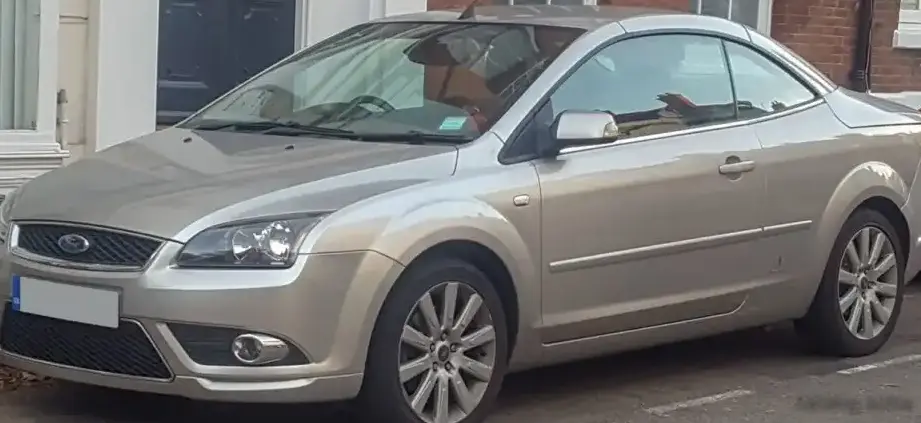
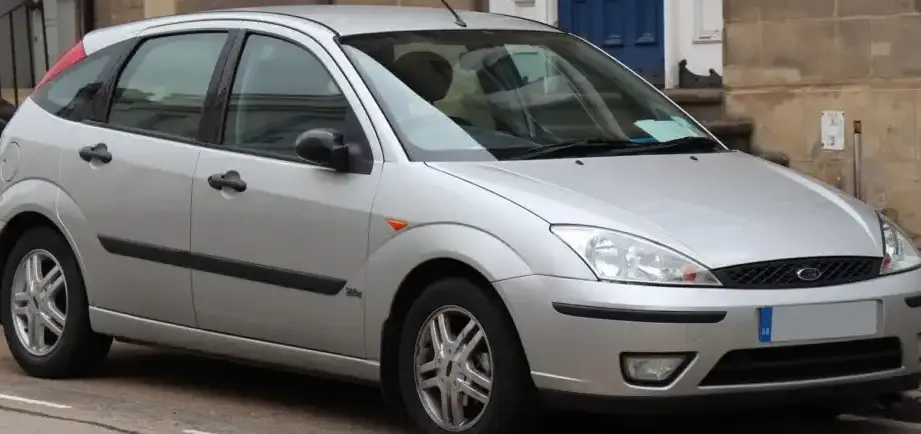
The Ford Focus IV Wagon, specifically the 1.0 EcoBoost 125 horsepower variant introduced with the 2022 facelift, represents a key offering in Ford’s European and global compact wagon lineup. Production began in January 2022, building upon the established fourth-generation Focus (introduced in 2018) which rides on the C2 platform, also known as the 1HX0/A3 platform. This particular engine and transmission combination aimed to balance fuel efficiency with acceptable performance for everyday driving, positioning itself as a mainstream option within the broader Focus range. It was primarily marketed towards buyers seeking a practical, economical, and reasonably equipped family vehicle.
Technical Specifications
| Brand | Ford |
| Model | Focus |
| Generation | Focus IV Wagon (facelift 2022) |
| Type (Engine) | 1.0 EcoBoost (125 Hp) |
| Start of production | January, 2022 |
| Powertrain Architecture | Internal Combustion engine |
| Body type | Station wagon (estate) |
| Seats | 5 |
| Doors | 5 |
| Fuel consumption at Low speed (WLTP) | 6.8-7.5 l/100 km (34.6 – 31.4 US mpg, 41.5 – 37.7 UK mpg, 14.7 – 13.3 km/l) |
| Fuel consumption at Medium speed (WLTP) | 5.3-6.3 l/100 km (44.4 – 37.3 US mpg, 53.3 – 44.8 UK mpg, 18.9 – 15.9 km/l) |
| Fuel consumption at high speed (WLTP) | 4.8-5.7 l/100 km (49 – 41.3 US mpg, 58.9 – 49.6 UK mpg, 20.8 – 17.5 km/l) |
| Fuel consumption at very high speed (WLTP) | 5.8-6.8 l/100 km (40.6 – 34.6 US mpg, 48.7 – 41.5 UK mpg, 17.2 – 14.7 km/l) |
| Combined fuel consumption (WLTP) | 5.5-6.4 l/100 km (42.8 – 36.8 US mpg, 51.4 – 44.1 UK mpg, 18.2 – 15.6 km/l) |
| CO2 emissions (WLTP) | 125-146 g/km |
| Fuel Type | Petrol (Gasoline) |
| Acceleration 0 – 100 km/h | 10.5 sec |
| Acceleration 0 – 62 mph | 10.5 sec |
| Acceleration 0 – 60 mph | 10 sec |
| Maximum speed | 198 km/h (123.03 mph) |
| Emission standard | Euro 6d-ISC-FCM |
| Weight-to-power ratio | 10.6 kg/Hp, 94.8 Hp/tonne |
| Weight-to-torque ratio | 7.8 kg/Nm, 128.9 Nm/tonne |
| Power | 125 Hp @ 6000 rpm |
| Power per litre | 125.1 Hp/l |
| Torque | 170-1400-4500 Nm (125.39 – 1032.59 lb.-ft.) |
| Engine layout | Front, Transverse |
| Engine Model/Code | B7DA |
| Engine displacement | 999 cm3 (60.96 cu. in.) |
| Number of cylinders | 3 |
| Engine configuration | Inline |
| Cylinder Bore | 71.9 mm (2.83 in.) |
| Piston Stroke | 82 mm (3.23 in.) |
| Compression ratio | 10.5:1 |
| Number of valves per cylinder | 4 |
| Fuel injection system | Direct injection |
| Engine aspiration | Turbocharger, Intercooler |
| Valvetrain | DOHC, Ti-VCT |
| Engine oil capacity | 4.5 l (4.76 US qt | 3.96 UK qt) |
| Coolant | 5.5 l (5.81 US qt | 4.84 UK qt) |
| Kerb Weight | 1319 kg (2907.9 lbs.) |
| Max. weight | 1950 kg (4299.01 lbs.) |
| Max load | 631 kg (1391.12 lbs.) |
| Trunk (boot) space – minimum | 635 l (22.42 cu. ft.) |
| Trunk (boot) space – maximum | 1653 l (58.38 cu. ft.) |
| Fuel tank capacity | 52 l (13.74 US gal | 11.44 UK gal) |
| Max. roof load | 75 kg (165.35 lbs.) |
| Permitted trailer load with brakes (12%) | 1000 kg (2204.62 lbs.) |
| Permitted trailer load without brakes | 695 kg (1532.21 lbs.) |
| Permitted towbar download | 90 kg (198.42 lbs.) |
| Length | 4672 mm (183.94 in.) |
| Width | 1825 mm (71.85 in.) |
| Width with mirrors folded | 1848 mm (72.76 in.) |
| Width including mirrors | 1979 mm (77.91 in.) |
| Height | 1487-1497 mm (58.54 – 58.94 in.) |
| Wheelbase | 2700 mm (106.3 in.) |
| Drivetrain Architecture | The Internal combustion engine (ICE) drives the front wheels of the vehicle. |
| Drive wheel | Front wheel drive |
| Number of gears and type of gearbox | 6 gears, manual transmission |
| Front suspension | Independent type McPherson |
| Rear suspension | Independent multi-link suspension |
| Front brakes | Ventilated discs, 282×27 mm |
| Rear brakes | Disc, 282×27 mm |
| Assisting systems | ABS (Anti-lock braking system) |
| Steering type | Steering rack and pinion |
| Power steering | Electric Steering |
| Tires size | 250/60 R16; 215/50 R17 |
| Wheel rims size | 6.5J x 16; 7J x 17 |
Powertrain & Engine Architecture
The heart of this Focus variant is the Ford 1.0 EcoBoost engine, specifically the B7DA code. This is a three-cylinder, 999cc turbocharged gasoline engine. It utilizes direct fuel injection, a technology that improves fuel efficiency and reduces emissions by injecting fuel directly into the combustion chamber. The engine also features Ford’s Ti-VCT (Twin Independent Variable Camshaft Timing) system, which optimizes valve timing for improved performance and efficiency across the rev range. The turbocharger, coupled with an intercooler, helps to boost power output despite the small displacement. The engine is transversely mounted at the front of the vehicle. The 125 horsepower version of the 1.0 EcoBoost produces 170 Nm (approximately 125 lb-ft) of torque between 1400 and 4500 rpm. This engine is paired with a six-speed manual transmission, delivering power to the front wheels.
Driving Characteristics
The 1.0 EcoBoost 125 hp Focus Wagon offers a respectable driving experience, though it’s not designed for outright performance. Acceleration from 0-60 mph takes around 10 seconds, and top speed is around 123 mph. The turbocharger provides a noticeable boost in power, but the engine can feel somewhat strained when fully loaded or climbing hills. The six-speed manual transmission is well-matched to the engine, allowing drivers to keep the engine in its optimal power band. Compared to higher-output versions of the Focus, such as those with the 1.5 EcoBoost engine, this variant feels less responsive. However, it offers significantly better fuel economy. The gear ratios are tuned for efficiency, prioritizing fuel savings over rapid acceleration.
Equipment & Trim Levels
The 1.0 EcoBoost 125 hp variant typically came equipped as a mid-range trim level, often designated as ‘Trend’ or ‘ST-Line’ depending on the market. Standard features generally included air conditioning, a touchscreen infotainment system with Bluetooth connectivity, alloy wheels, and a suite of safety features such as ABS, ESP, and multiple airbags. Optional extras could include a rear-view camera, parking sensors, heated seats, and a panoramic sunroof. Interior upholstery was typically cloth, with higher trims offering partial leather options. The dashboard layout was consistent across the Focus IV range, featuring a clean and modern design.
Chassis & Braking
The Focus IV Wagon utilizes an independent McPherson strut suspension at the front and an independent multi-link suspension at the rear. This setup provides a good balance between ride comfort and handling. The 1.0 EcoBoost variant, being lighter than its higher-powered siblings, benefits from slightly more agile handling. Brakes are disc brakes on all four wheels, with ventilated discs at the front for improved heat dissipation. ABS (Anti-lock Braking System) is standard. Stabilizer bars are fitted to both the front and rear axles to reduce body roll during cornering.
Market Reception & Comparison
The 1.0 EcoBoost 125 hp Focus Wagon was generally well-received by critics as a practical and economical choice. It was praised for its fuel efficiency and comfortable ride. However, some reviewers noted that the engine could feel underpowered, especially when the vehicle is fully loaded. Compared to the 1.5 EcoBoost variants, the 1.0 EcoBoost offered lower running costs but less performance. Against diesel alternatives, such as the 1.5 EcoBlue, it offered a lower purchase price but potentially higher fuel costs depending on driving style and mileage.
Legacy
The 1.0 EcoBoost engine has proven to be a relatively reliable powertrain, although some early versions were prone to issues with timing belt failures. Later iterations, including those found in the 2022 facelifted Focus, addressed these concerns. In the used car market, the 1.0 EcoBoost 125 hp Focus Wagon represents a good value proposition for buyers seeking an affordable and fuel-efficient family car. Maintenance costs are generally reasonable, and parts availability is good. Its continued popularity demonstrates its appeal as a practical and economical choice in the compact wagon segment.