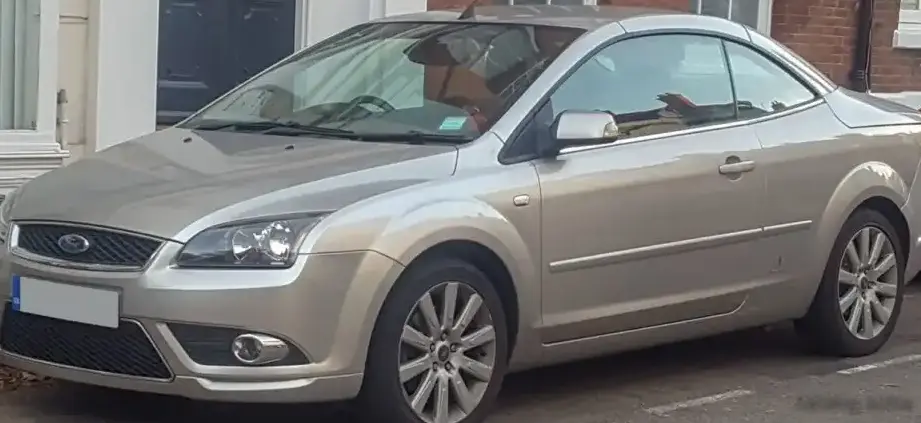
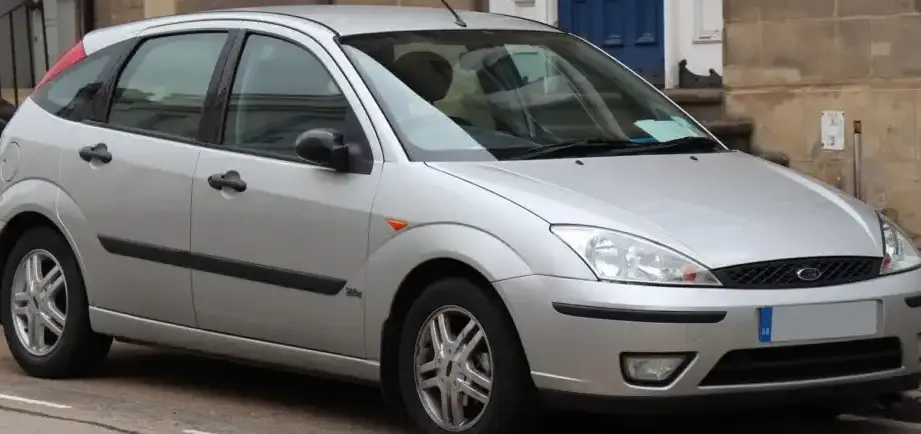
The Ford Focus IV Wagon (facelift 2022) 1.0 EcoBoost 125 hp Mild Hybrid represents a significant iteration within the fourth generation of Ford’s globally successful Focus compact. Introduced in January 2022 as part of the facelift for the Mk4 Focus, this variant aimed to balance fuel efficiency with reasonable performance, catering to a broad segment of the European wagon market. Positioned as a mid-range offering, it slotted between the base specification models and the more powerful EcoBoost variants. The Focus IV series, built on the C2 platform (also known as the 1HX0/A3 platform shared with other Ford models), aimed to improve upon its predecessor with increased space, improved dynamics, and a wider range of technology.
Technical Specifications
| Brand | Ford |
| Model | Focus |
| Generation | Focus IV Wagon (facelift 2022) |
| Type (Engine) | 1.0 EcoBoost (125 Hp) Mild Hybrid |
| Start of production | January, 2022 |
| Powertrain Architecture | MHEV (Mild Hybrid Electric Vehicle) |
| Body type | Station wagon (estate) |
| Seats | 5 |
| Doors | 5 |
| Fuel consumption at Low speed (WLTP) | 6.3-6.9 l/100 km (37.3 – 34.1 US mpg) |
| Fuel consumption at Medium speed (WLTP) | 5.1-5.8 l/100 km (46.1 – 40.6 US mpg) |
| Fuel consumption at high speed (WLTP) | 4.7-5.4 l/100 km (50 – 43.6 US mpg) |
| Fuel consumption at very high speed (WLTP) | 5.6-6.6 l/100 km (42 – 35.6 US mpg) |
| Combined fuel consumption (WLTP) | 5.3-6.1 l/100 km (44.4 – 38.6 US mpg) |
| CO2 emissions (WLTP) | 120-138 g/km |
| Fuel Type | Petrol (Gasoline) |
| Acceleration 0 – 100 km/h | 10.4 sec |
| Acceleration 0 – 62 mph | 10.4 sec |
| Acceleration 0 – 60 mph | 9.9 sec |
| Maximum speed | 198 km/h (123.03 mph) |
| Emission standard | Euro 6d-ISC-FCM |
| Weight-to-power ratio | 10.7 kg/Hp |
| Weight-to-torque ratio | 7.9 kg/Nm |
| Electric motor power | 16 Hp |
| Power | 125 Hp @ 6000 rpm |
| Torque | 170 Nm (125.39 – 1032.59 lb.-ft.) @ 1400-4500 rpm |
| Engine layout | Front, Transverse |
| Engine Model/Code | B7DC |
| Engine displacement | 999 cm3 (60.96 cu. in.) |
| Number of cylinders | 3 |
| Engine configuration | Inline |
| Cylinder Bore | 71.9 mm (2.83 in.) |
| Piston Stroke | 82 mm (3.23 in.) |
| Compression ratio | 10.5:1 |
| Number of valves per cylinder | 4 |
| Fuel injection system | Direct injection |
| Engine aspiration | Turbocharger, Intercooler |
| Valvetrain | DOHC, Ti-VCT |
| Engine oil capacity | 4.5 l (4.76 US qt | 3.96 UK qt) |
| Coolant | 5.5 l (5.81 US qt | 4.84 UK qt) |
| Kerb Weight | 1338 kg (2949.79 lbs.) |
| Max. weight | 1970 kg (4343.11 lbs.) |
| Max load | 632 kg (1393.32 lbs.) |
| Trunk (boot) space – minimum | 635 l (22.42 cu. ft.) |
| Trunk (boot) space – maximum | 1653 l (58.38 cu. ft.) |
| Fuel tank capacity | 52 l (13.74 US gal | 11.44 UK gal) |
| Max. roof load | 75 kg (165.35 lbs.) |
| Permitted trailer load with brakes (12%) | 1000 kg (2204.62 lbs.) |
| Permitted trailer load without brakes | 705 kg (1554.26 lbs.) |
| Permitted towbar download | 90 kg (198.42 lbs.) |
| Length | 4672 mm (183.94 in.) |
| Width | 1825 mm (71.85 in.) |
| Width with mirrors folded | 1848 mm (72.76 in.) |
| Width including mirrors | 1979 mm (77.91 in.) |
| Height | 1487-1497 mm (58.54 – 58.94 in.) |
| Wheelbase | 2700 mm (106.3 in.) |
| Drive wheel | Front wheel drive |
| Number of gears and type of gearbox | 6 gears, manual transmission |
| Front suspension | Independent type McPherson |
| Rear suspension | Independent multi-link suspension |
| Front brakes | Ventilated discs, 282×27 mm |
| Rear brakes | Disc, 282×27 mm |
| Tires size | 250/60 R16; 215/50 R17 |
| Wheel rims size | 6.5J x 16; 7J x 17 |
Powertrain & Engine Architecture
The heart of this Focus variant is the 1.0 EcoBoost B7DC engine, a three-cylinder turbocharged gasoline engine. This engine is part of Ford’s EcoBoost family, known for its downsizing and turbocharging technology aimed at improving fuel economy without sacrificing performance. The 125 hp output is achieved through a single scroll turbocharger, direct fuel injection, and variable valve timing (Ti-VCT). The mild-hybrid system incorporates a 48-volt starter-generator, enabling features like regenerative braking and extended engine-off periods during coasting and deceleration. This system adds a modest 16 hp of power assist. The engine’s compact size and transverse mounting contribute to efficient packaging within the Focus’s engine bay. The transmission is a 6-speed manual gearbox, chosen for its efficiency and driver engagement.
Driving Characteristics
The 1.0 EcoBoost 125 hp version of the Focus Wagon offers a balanced driving experience. While not overtly sporty, it provides sufficient power for everyday driving and highway cruising. Acceleration from 0-60 mph takes approximately 9.9 seconds, and top speed is rated at 123 mph. The turbocharger provides a noticeable boost in power, but the engine can feel slightly strained when fully loaded or climbing steep hills. The manual transmission offers precise shifts, and the gear ratios are well-matched to the engine’s power delivery. Compared to higher-output EcoBoost variants, this version prioritizes fuel economy over outright performance. The mild-hybrid system contributes to smoother starts and stops, and the regenerative braking helps to improve fuel efficiency in urban driving conditions.
Equipment & Trim Levels
The 1.0 EcoBoost 125 hp Mild Hybrid typically came equipped with a reasonable level of standard features. These included air conditioning, a touchscreen infotainment system with Apple CarPlay and Android Auto compatibility, Bluetooth connectivity, and a suite of driver-assistance systems such as lane-keeping assist and automatic emergency braking. Interior upholstery was typically cloth, with options for upgraded materials available. Common optional extras included a panoramic sunroof, heated seats, and a premium sound system. Trim levels varied by market, but generally, this engine was offered in mid-range trims, offering a good balance of features and affordability.
Chassis & Braking
The Focus IV Wagon utilizes an independent McPherson strut suspension at the front and an independent multi-link suspension at the rear. This setup provides a comfortable ride and good handling characteristics. The chassis is relatively lightweight, contributing to the car’s agility. Braking is handled by ventilated discs at the front and solid discs at the rear. Anti-lock braking system (ABS) and electronic stability control (ESC) are standard features. The steering is electric power-assisted, providing a light and responsive feel.
Market Reception & Comparison
The 1.0 EcoBoost 125 hp Mild Hybrid Focus Wagon was generally well-received by automotive critics. It was praised for its fuel efficiency, comfortable ride, and spacious interior. However, some reviewers noted that the engine could feel underpowered when fully loaded or driving on challenging terrain. Compared to the 1.5 EcoBoost variants, this version offered lower running costs but less performance. Against diesel-powered rivals, it provided a more refined driving experience but potentially higher fuel bills depending on driving style. The mild-hybrid system was seen as a positive step towards improving fuel economy and reducing emissions.
Legacy
The 1.0 EcoBoost engine has proven to be a reliable and durable powertrain, although some early versions were prone to issues with timing belt wear. The mild-hybrid system has also generally proven reliable. In the used car market, the 1.0 EcoBoost 125 hp Focus Wagon represents a sensible and affordable option for buyers seeking a practical and fuel-efficient family car. Its combination of space, comfort, and technology makes it a competitive choice in the compact wagon segment. Maintenance costs are generally reasonable, and parts availability is good. The Focus IV series, including this variant, remains a popular choice for those seeking a well-rounded and dependable vehicle.