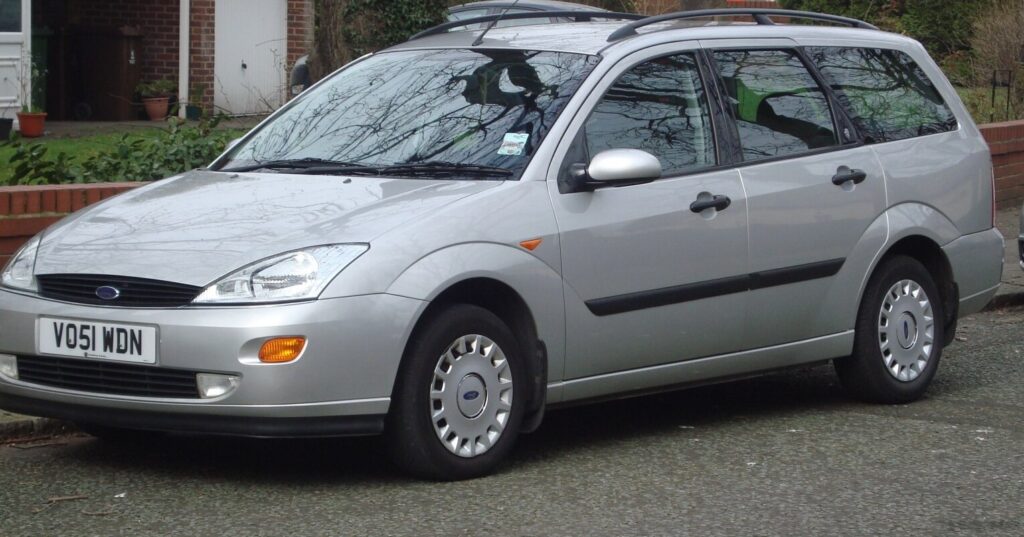
The Ford Focus Turnier I 2.0 16V, produced between 2001 and 2005, represented a significant offering in the European compact estate (wagon) market. Positioned as a more practical variant of the popular first-generation Focus, the Turnier – known as the Focus Estate in some markets – provided increased cargo capacity without sacrificing the Focus’s renowned handling characteristics. This particular 2.0-liter, 16-valve engine producing 130 horsepower, coupled with a five-speed manual transmission, occupied a mid-range position within the Turnier lineup, offering a balance between performance and fuel economy. It served as a step up from the base 1.6-liter models and a more affordable alternative to the high-performance ST versions that would arrive later.
Technical Specifications
| Brand | Ford |
| Model | Focus |
| Generation | Focus Turnier I |
| Type (Engine) | 2.0 16V (130 Hp) |
| Start of production | 2001 |
| End of production | 2005 |
| Powertrain Architecture | Internal Combustion engine |
| Body type | Station wagon (estate) |
| Seats | 5 |
| Doors | 5 |
| Fuel consumption (urban) | 11.9 l/100 km (19.8 US mpg, 23.7 UK mpg, 8.4 km/l) |
| Fuel consumption (extra urban) | 6.2 l/100 km (37.9 US mpg, 45.6 UK mpg, 16.1 km/l) |
| Fuel consumption (combined) | 8.7 l/100 km (27 US mpg, 32.5 UK mpg, 11.5 km/l) |
| Fuel Type | Petrol (Gasoline) |
| Acceleration 0 – 100 km/h | 9.6 sec |
| Acceleration 0 – 62 mph | 9.6 sec |
| Acceleration 0 – 60 mph | 9.1 sec |
| Maximum speed | 201 km/h (124.9 mph) |
| Weight-to-power ratio | 9.8 kg/Hp, 101.6 Hp/tonne |
| Weight-to-torque ratio | 7.4 kg/Nm, 135.3 Nm/tonne |
| Power | 130 Hp @ 5500 rpm |
| Power per litre | 65.4 Hp/l |
| Torque | 173 Nm @ 4250 rpm (127.6 lb.-ft. @ 4250 rpm) |
| Engine layout | Front, Transverse |
| Engine Model/Code | EDDC, EDDB, EDDD, EDDF |
| Engine displacement | 1988 cm3 (121.32 cu. in.) |
| Number of cylinders | 4 |
| Engine configuration | Inline |
| Cylinder Bore | 84.8 mm (3.34 in.) |
| Piston Stroke | 88 mm (3.46 in.) |
| Compression ratio | 10:1 |
| Number of valves per cylinder | 4 |
| Fuel injection system | Multi-port manifold injection |
| Engine aspiration | Naturally aspirated engine |
| Valvetrain | DOHC |
| Engine oil capacity | 4.25 l (4.49 US qt | 3.74 UK qt) |
| Coolant capacity | 5.75 l (6.08 US qt | 5.06 UK qt) |
| Kerb Weight | 1279 kg (2819.71 lbs.) |
| Max. weight | 1715 kg (3780.93 lbs.) |
| Max load | 436 kg (961.22 lbs.) |
| Trunk (boot) space – minimum | 520 l (18.36 cu. ft.) |
| Trunk (boot) space – maximum | 1580 l (55.8 cu. ft.) |
| Fuel tank capacity | 55 l (14.53 US gal | 12.1 UK gal) |
| Length | 4465 mm (175.79 in.) |
| Width | 1702 mm (67.01 in.) |
| Height | 1535 mm (60.43 in.) |
| Wheelbase | 2615 mm (102.95 in.) |
| Front track | 1494 mm (58.82 in.) |
| Rear track | 1488 mm (58.58 in.) |
| Drivetrain Architecture | Front wheel drive |
| Number of gears | 5 |
| Gearbox type | Manual transmission |
| Front suspension | Wishbone |
| Rear suspension | Coil spring |
| Front brakes | Ventilated discs |
| Rear brakes | Disc |
| Assisting systems | ABS (Anti-lock braking system) |
| Steering type | Steering rack and pinion |
| Power steering | Hydraulic Steering |
| Tires size | 195/60 R15 |
Powertrain & Engine Architecture
The heart of the Focus Turnier I 2.0 16V is the Ford Zetec-E engine, specifically the EDDC, EDDB, EDDD, or EDDF variant depending on the specific market and year. This 1.988-liter inline-four cylinder engine features a dual overhead camshaft (DOHC) valvetrain with four valves per cylinder, contributing to its relatively high output for its displacement. The engine utilizes multi-port fuel injection, delivering fuel directly into the intake ports. This system, while not as advanced as direct injection found in later engines, provided good fuel economy and responsive performance. The engine’s 84.8mm bore and 88mm stroke contribute to a balanced design. The five-speed manual transmission offered with this engine was a robust unit, known for its smooth shifting and durability. Gear ratios were tuned to provide a good balance between acceleration and highway cruising, with a relatively long fifth gear to aid fuel efficiency.
Driving Characteristics
The 2.0-liter 16V engine in the Focus Turnier I provided a noticeable step up in performance compared to the smaller 1.6-liter options. Acceleration to 60 mph took approximately 9.1 seconds, and the car could reach a top speed of around 125 mph. While not a sports car, the 130 horsepower engine provided ample power for everyday driving and overtaking maneuvers. The manual transmission allowed for greater driver control and engagement compared to the optional automatic. The Turnier’s suspension, tuned for comfort and handling, provided a stable and predictable ride. Compared to the higher-performance ST variants, the 2.0-liter model offered a more relaxed driving experience, prioritizing usability and fuel economy over outright speed.
Equipment & Trim Levels
The 2.0-liter Focus Turnier I typically came equipped with a reasonable level of standard features. These included power steering, ABS brakes, front airbags, and central locking. Interior appointments generally consisted of cloth upholstery, with options for upgraded materials available. Trim levels varied by market, but common options included air conditioning, electric windows, a CD player, and alloy wheels. The Turnier’s estate body style naturally offered a significant advantage in terms of cargo space, with 18.36 cubic feet of space behind the rear seats and up to 55.8 cubic feet with the rear seats folded down.
Chassis & Braking
The Focus Turnier I utilized a front-wheel-drive layout with independent front suspension (wishbone) and a semi-independent coil spring rear suspension. The front brakes were ventilated discs, providing good stopping power, while the rear brakes were solid discs. The chassis was designed to provide a good balance between ride comfort and handling precision. The steering was a hydraulic rack and pinion system, offering responsive and accurate steering feel. The standard tire size was 195/60 R15, providing a good compromise between grip and ride comfort.
Market Reception & Comparison
The Ford Focus Turnier I 2.0 16V was generally well-received by automotive critics. It was praised for its spacious interior, practical estate body style, and enjoyable driving dynamics. Compared to rivals like the Vauxhall/Opel Astra Estate and Volkswagen Golf Estate, the Focus offered a more engaging driving experience and a more modern interior design. Fuel economy was considered reasonable for its class, although not exceptional. Reliability was generally good, although some owners reported minor issues with the electrical system. The 2.0-liter engine offered a good balance between performance and fuel economy, making it a popular choice for families and drivers who needed a practical and versatile vehicle.
Legacy
The Ford Focus Turnier I 2.0 16V remains a relatively common sight on used car markets today. The Zetec-E engine is known for its durability and relatively straightforward maintenance. While age-related issues such as corrosion and wear and tear are common, parts availability is generally good. The Turnier’s practical estate body style continues to appeal to buyers looking for a spacious and versatile vehicle. The 2.0-liter engine, while not the most powerful option, provides a reliable and enjoyable driving experience, making it a solid choice for those seeking a classic Ford estate.