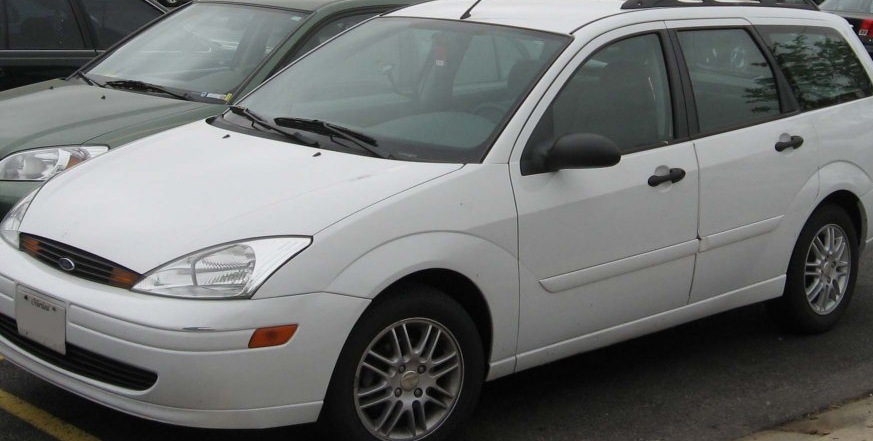
The Ford Focus Turnier 2.0i 16V SE, produced between 1999 and 2004, represents a significant offering in the first generation (Mk1) Focus lineup, specifically tailored for the European market and, to a lesser extent, available in other regions. As a station wagon (estate) variant, the Turnier prioritized practicality and cargo space, appealing to families and those requiring versatile vehicle. The 2.0i 16V SE trim sat in the mid-range of the Focus offerings, providing a balance between performance, features, and affordability. It was positioned above the base models with smaller engines and below the more performance-oriented ST variants that would arrive later in the Focus’s lifecycle. This model was built on the Ford C170 platform, also known as the Focus platform.
Technical Specifications
| Brand | Ford |
| Model | Focus |
| Generation | Focus Turnier (USA) |
| Type | 2.0i 16V SE (131 Hp) |
| Start of production | 1999 |
| End of production | 2004 |
| Powertrain Architecture | Internal Combustion engine |
| Body type | Station wagon (estate) |
| Seats | 5 |
| Doors | 5 |
| Fuel consumption (urban) | 9.4 l/100 km (25 US mpg) |
| Fuel consumption (extra urban) | 6.9 l/100 km (34.1 US mpg) |
| Fuel Type | Petrol (Gasoline) |
| Maximum speed | 180 km/h (111.85 mph) |
| Weight-to-power ratio | 9.7 kg/Hp |
| Weight-to-torque ratio | 7 kg/Nm |
| Power | 131 Hp @ 5300 rpm |
| Power per litre | 65.9 Hp/l |
| Torque | 183 Nm @ 4500 rpm (134.97 lb.-ft. @ 4500 rpm) |
| Engine layout | Front, Transverse |
| Engine Model/Code | Zetec / C20HDEZ |
| Engine displacement | 1988 cm3 (121.32 cu. in.) |
| Number of cylinders | 4 |
| Engine configuration | Inline |
| Cylinder Bore | 84.8 mm (3.34 in.) |
| Piston Stroke | 88 mm (3.46 in.) |
| Compression ratio | 9.6:1 |
| Number of valves per cylinder | 4 |
| Fuel injection system | Multi-port manifold injection |
| Engine aspiration | Naturally aspirated engine |
| Engine oil capacity | 4.25 l (4.49 US qt | 3.74 UK qt) |
| Coolant capacity | 5.75 l (6.08 US qt | 5.06 UK qt) |
| Kerb Weight | 1275 kg (2810.89 lbs.) |
| Trunk (boot) space – minimum | 1062 l (37.5 cu. ft.) |
| Trunk (boot) space – maximum | 1580 l (55.8 cu. ft.) |
| Fuel tank capacity | 50 l (13.21 US gal | 11 UK gal) |
| Length | 4526 mm (178.19 in.) |
| Width | 1699 mm (66.89 in.) |
| Height | 1448 mm (57.01 in.) |
| Wheelbase | 2616 mm (102.99 in.) |
| Front track | 1491 mm (58.7 in.) |
| Rear track | 1486 mm (58.5 in.) |
| Drivetrain Architecture | Front wheel drive |
| Number of gears | 5 |
| Gearbox type | Manual transmission |
| Front suspension | Coil spring |
| Rear suspension | Transverse stabilizer |
| Front brakes | Disc |
| Rear brakes | Drum |
| Assisting systems | ABS (Anti-lock braking system) |
| Steering type | Steering rack and pinion |
| Power steering | Hydraulic Steering |
| Tires size | 195/60 R15 |
Powertrain & Engine Architecture
The heart of the Focus Turnier 2.0i 16V SE is the Zetec engine, specifically the C20HDEZ variant. This 1.988-liter inline-four cylinder engine utilizes a naturally aspirated configuration and a multi-port fuel injection system. The 16-valve cylinder head, with four valves per cylinder, contributes to improved breathing and higher-end power delivery. The engine’s 9.6:1 compression ratio strikes a balance between efficiency and performance. The engine was known for its relative simplicity and durability. The five-speed manual transmission was the standard offering, providing drivers with good control over the engine’s power band. The transmission’s gear ratios were tuned for a blend of acceleration and fuel economy, prioritizing everyday usability over outright performance.
Driving Characteristics
The 2.0i 16V SE offered a noticeable step up in performance compared to the lower-displacement engines available in the Focus range. While not a sports car, the 131 horsepower and 135 lb-ft of torque provided adequate acceleration for most driving situations. The five-speed manual transmission allowed drivers to keep the engine in its optimal power range, resulting in a responsive driving experience. Compared to the 1.6-liter models, the 2.0i felt more relaxed on the highway and offered more effortless overtaking capability. However, it didn’t possess the punch of the later Focus ST models or the fuel efficiency of the diesel variants. The steering was precise and well-weighted, contributing to a confident feel behind the wheel.
Equipment & Trim Levels
The “SE” designation indicated a mid-level trim package. Standard equipment typically included power windows, central locking, a basic audio system, and air conditioning. Interior upholstery was usually cloth, with a relatively simple dashboard layout. Optional extras could include alloy wheels, upgraded audio systems, and a sunroof. The Turnier estate body style itself added to the practicality, offering a generous 37.5 to 55.8 cubic feet of cargo space with the rear seats folded down. The interior, while functional, was not particularly luxurious, focusing on durability and ease of use.
Chassis & Braking
The Focus Mk1 utilized a MacPherson strut front suspension and a multi-link rear suspension, providing a good balance between ride comfort and handling. The front brakes were ventilated discs, offering adequate stopping power, while the rear brakes were drums. This configuration was typical for vehicles in this weight class during that era. Anti-lock Braking System (ABS) was standard, enhancing safety by preventing wheel lockup during hard braking. The suspension was tuned for a comfortable ride, but also provided reasonably controlled handling. Stabilizer bars were fitted to both the front and rear axles to reduce body roll during cornering.
Market Reception & Comparison
The Ford Focus Turnier 2.0i 16V SE was generally well-received by automotive critics. It was praised for its practicality, comfortable ride, and decent performance. However, some reviewers noted that the interior was somewhat basic compared to some of its competitors. In terms of fuel economy, the 2.0i model fell somewhere in the middle of the Focus range, offering less efficiency than the smaller engines but more than the higher-performance variants. Compared to rivals like the Volkswagen Golf Estate and Opel/Vauxhall Astra Estate, the Focus offered a competitive package in terms of price, features, and driving dynamics.
Legacy
The Zetec engine, in its various forms, proved to be a reliable and durable powerplant. The 2.0i 16V variant, while not the most exciting engine in the Focus lineup, offered a good balance of performance and reliability. Today, well-maintained examples of the Focus Turnier 2.0i 16V SE are becoming increasingly sought after by classic car enthusiasts and those looking for a practical and affordable used vehicle. Common issues include wear and tear on suspension components and potential corrosion, particularly in regions with harsh winters. However, the engine itself is generally considered to be robust and capable of high mileage with proper maintenance. The Focus Turnier, in general, helped establish Ford as a major player in the European compact estate market.