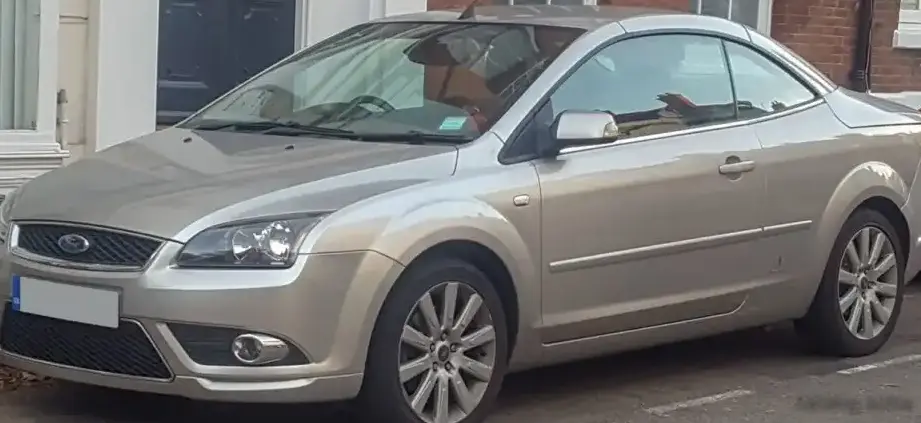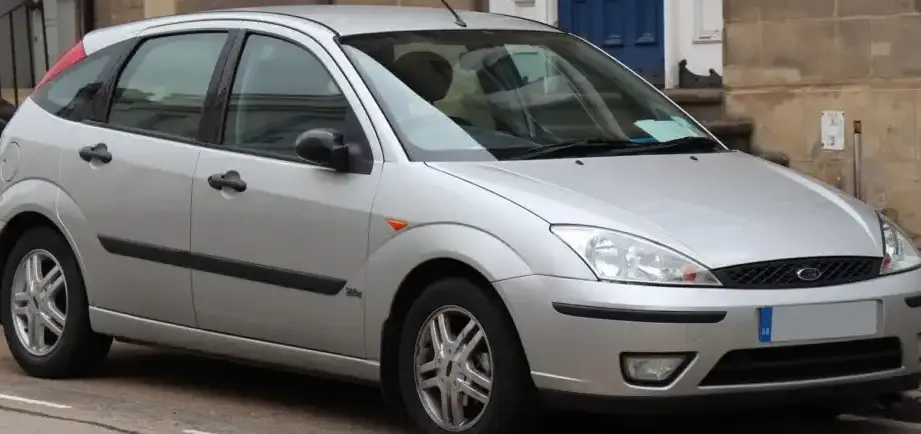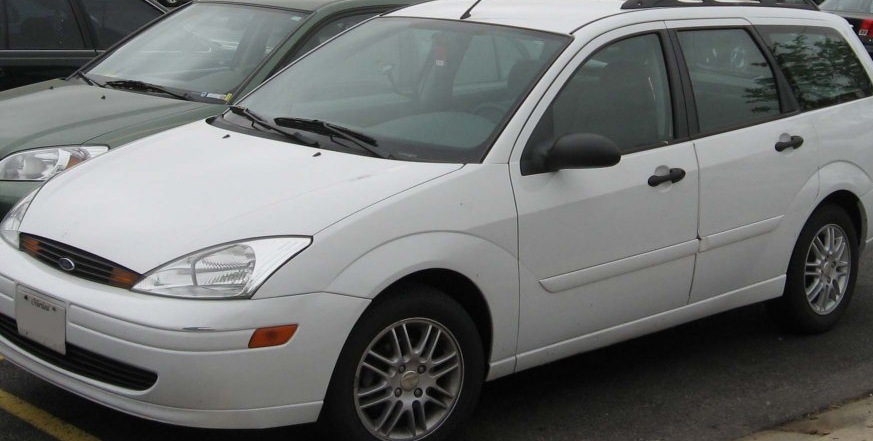
The Ford Focus Turnier 2.0i 16V SE Automatic, produced between 1999 and 2004, represented a practical and reasonably well-equipped offering within the first generation (Mk1) Focus range, specifically tailored for the North American market. Positioned as a mid-range trim level, it aimed to provide a balance between affordability, comfort, and performance for families and individuals needing a versatile station wagon. The Turnier body style, essentially a European estate or wagon, was less common in the US than the hatchback or sedan versions of the Focus, making this variant somewhat of a niche offering. It was built on the Ford C170 platform, shared with the Escort, but represented a significant leap forward in terms of refinement and driving dynamics.
Technical Specifications
| Brand | Ford |
| Model | Focus |
| Generation | Focus Turnier (USA) |
| Type | 2.0i 16V SE (131 Hp) Automatic |
| Start of production | 1999 |
| End of production | 2004 |
| Powertrain Architecture | Internal Combustion engine |
| Body type | Station wagon (estate) |
| Seats | 5 |
| Doors | 5 |
| Fuel consumption (urban) | 9.4 l/100 km (25 US mpg) |
| Fuel consumption (extra urban) | 7.6 l/100 km (30.9 US mpg) |
| Fuel Type | Petrol (Gasoline) |
| Maximum speed | 180 km/h (111.85 mph) |
| Weight-to-power ratio | 9.7 kg/Hp |
| Weight-to-torque ratio | 7 kg/Nm |
| Power | 131 Hp @ 5300 rpm |
| Power per litre | 65.9 Hp/l |
| Torque | 183 Nm @ 4500 rpm (134.97 lb.-ft. @ 4500 rpm) |
| Engine layout | Front, Transverse |
| Engine Model/Code | Zetec / C20HDEZ |
| Engine displacement | 1988 cm3 (121.32 cu. in.) |
| Number of cylinders | 4 |
| Engine configuration | Inline |
| Cylinder Bore | 84.8 mm (3.34 in.) |
| Piston Stroke | 88 mm (3.46 in.) |
| Compression ratio | 9.6:1 |
| Number of valves per cylinder | 4 |
| Fuel injection system | Multi-port manifold injection |
| Engine aspiration | Naturally aspirated engine |
| Engine oil capacity | 4.25 l (4.49 US qt | 3.74 UK qt) |
| Coolant capacity | 5.75 l (6.08 US qt | 5.06 UK qt) |
| Kerb Weight | 1275 kg (2810.89 lbs.) |
| Trunk (boot) space – minimum | 1062 l (37.5 cu. ft.) |
| Trunk (boot) space – maximum | 1580 l (55.8 cu. ft.) |
| Fuel tank capacity | 50 l (13.21 US gal | 11 UK gal) |
| Length | 4526 mm (178.19 in.) |
| Width | 1699 mm (66.89 in.) |
| Height | 1448 mm (57.01 in.) |
| Wheelbase | 2616 mm (102.99 in.) |
| Front track | 1491 mm (58.7 in.) |
| Rear track | 1486 mm (58.5 in.) |
| Drivetrain Architecture | Front wheel drive |
| Number of gears | 4 |
| Gearbox type | Automatic transmission |
| Front suspension | Coil spring |
| Rear suspension | Transverse stabilizer |
| Front brakes | Disc |
| Rear brakes | Drum |
| Assisting systems | ABS (Anti-lock braking system) |
| Steering type | Steering rack and pinion |
| Power steering | Hydraulic Steering |
| Tires size | 195/60 R15 |
| Wheel rims size | 15 |
Powertrain & Engine Architecture
The heart of the Focus Turnier 2.0i SE Automatic was the Zetec 2.0-liter inline-four cylinder engine, designated with the code C20HDEZ. This engine was a significant upgrade over the smaller 1.8-liter options available in other Focus trims. It featured a dual overhead camshaft (DOHC) design with four valves per cylinder, contributing to its respectable power output. Fuel delivery was handled by a multi-port fuel injection system, providing precise fuel metering for improved efficiency and performance. The engine’s 9.6:1 compression ratio was a compromise between performance and the ability to run on readily available gasoline grades. Paired with this engine was a four-speed automatic transmission. While not the most modern transmission available at the time, it provided smooth and convenient shifting, appealing to buyers prioritizing ease of use over outright performance. The transmission was tuned for comfortable cruising rather than aggressive acceleration.
Driving Characteristics
The 2.0i Automatic Focus Turnier offered a comfortable and predictable driving experience. With 131 horsepower and 135 lb-ft of torque, acceleration was adequate for everyday driving, but it wasn’t particularly sporty. The automatic transmission, while smooth, did sap some of the engine’s potential, resulting in a 0-60 mph time estimated around 10-11 seconds. Compared to the five-speed manual version of the same engine, the automatic felt noticeably slower. The gear ratios were optimized for fuel economy and relaxed highway cruising. The Focus’s independent front suspension and torsion beam rear suspension provided a good balance between ride comfort and handling, though it wasn’t as sharp or engaging as some of its European rivals. The power steering was light and easy to use, making it maneuverable in urban environments.
Equipment & Trim Levels
The “SE” designation indicated a mid-level trim package. Standard features typically included air conditioning, power windows and locks, a CD player, and basic cloth upholstery. The Turnier also benefited from the wagon’s inherent practicality, offering a generous 37.5 cubic feet of cargo space behind the rear seats, expandable to 55.8 cubic feet with the rear seats folded down. Optional extras could include alloy wheels, a sunroof, upgraded audio systems, and side airbags. The interior design was functional and relatively simple, prioritizing usability over luxury.
Chassis & Braking
The Focus Turnier utilized a MacPherson strut front suspension and a torsion beam rear suspension. This setup was a cost-effective solution that provided a reasonable level of ride comfort and handling. Braking duties were handled by disc brakes at the front and drum brakes at the rear. Anti-lock Braking System (ABS) was standard, enhancing safety by preventing wheel lockup during hard braking. The steering system employed a rack-and-pinion setup with hydraulic power assistance, providing responsive and precise steering feel. The 15-inch wheels were typically fitted with 195/60 R15 tires, offering a good balance between grip and ride comfort.
Market Reception & Comparison
The Focus Turnier 2.0i Automatic received generally positive reviews, particularly for its practicality, comfortable ride, and reasonable fuel economy. Critics noted that the automatic transmission dulled the engine’s performance somewhat, and that the interior, while functional, lacked the sophistication of some competitors. Compared to the 1.8-liter versions, the 2.0i offered a noticeable improvement in performance, making it a more suitable choice for drivers who frequently carried passengers or cargo. Fuel economy was respectable, averaging around 25 mpg in the city and 31 mpg on the highway. Reliability was generally good, although some owners reported minor issues with the automatic transmission over time.
Legacy
The Ford Focus Turnier 2.0i Automatic, while not a high-performance variant, remains a reasonably well-regarded vehicle in the used car market. Its combination of practicality, comfort, and affordability has made it a popular choice for budget-conscious buyers. The Zetec 2.0-liter engine is known for its durability, and with proper maintenance, it can provide many years of reliable service. However, potential buyers should be aware of the possibility of transmission issues, and it’s advisable to have the vehicle inspected by a qualified mechanic before purchase. The Turnier, as a wagon variant, has gained a following among those seeking a versatile and spacious vehicle that stands out from the more common Focus hatchback and sedan models.