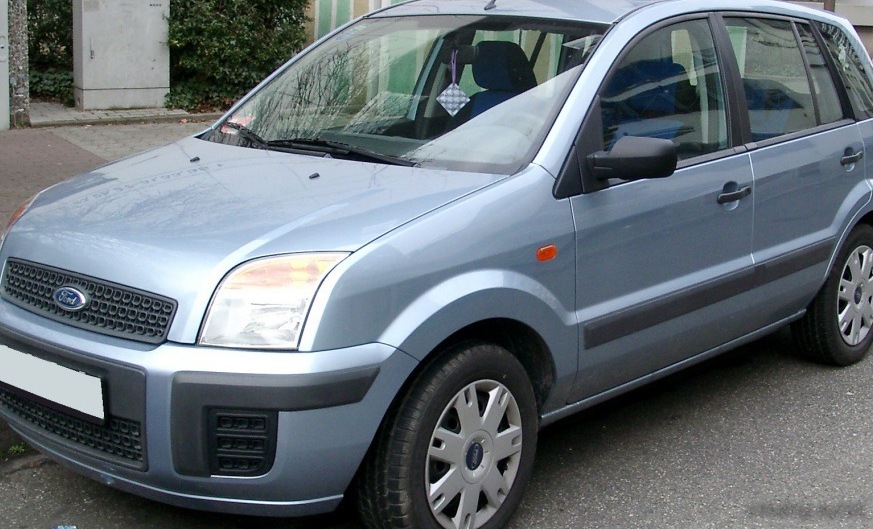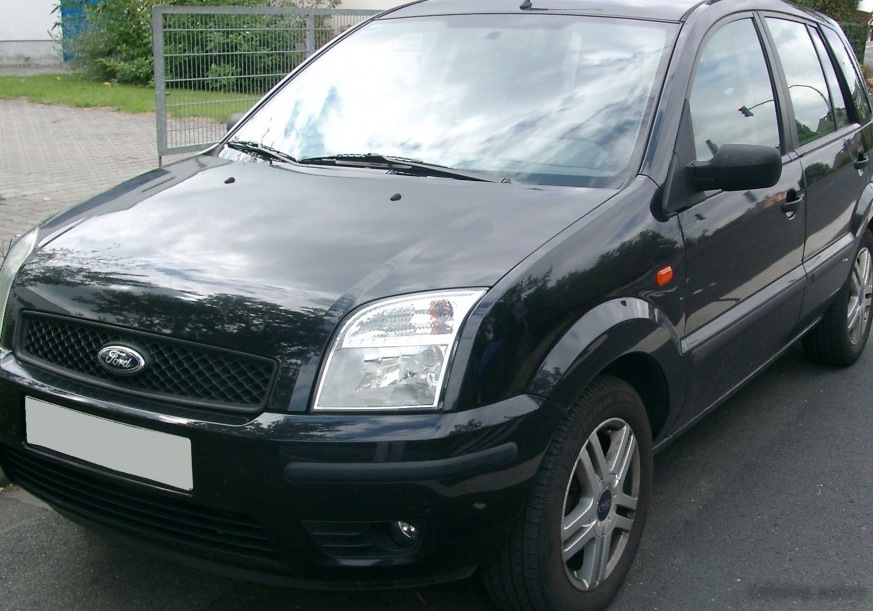
The Ford Fusion, launched in 2002, represented Ford’s entry into the European compact hatchback market. Designed to replace the Escort, the Fusion aimed to offer a more modern and refined driving experience. The 1.2-liter variant, producing 75 horsepower, was introduced as the entry-level model, targeting budget-conscious buyers and those prioritizing fuel efficiency. Produced from 2002 to 2005, this version played a crucial role in establishing the Fusion’s presence in a competitive segment. It was built on Ford’s C-segment platform, shared with other models like the Focus.
Technical Specifications
| Brand | Ford |
| Model | Fusion |
| Generation | Fusion I |
| Type (Engine) | 1.2 (75 Hp) |
| Start of production | 2002 |
| End of production | 2005 |
| Powertrain Architecture | Internal Combustion engine |
| Body type | Hatchback |
| Seats | 5 |
| Doors | 5 |
| Fuel consumption (urban) | 8.7 l/100 km (27 US mpg) |
| Fuel consumption (extra urban) | 5.2 l/100 km (45.2 US mpg) |
| Fuel Type | Petrol (Gasoline) |
| Acceleration 0 – 100 km/h | 15.5 sec |
| Acceleration 0 – 62 mph | 15.5 sec |
| Acceleration 0 – 60 mph | 14.7 sec |
| Maximum speed | 159 km/h (98.8 mph) |
| Weight-to-power ratio | 14.3 kg/Hp |
| Weight-to-torque ratio | 9.8 kg/Nm |
| Power | 75 Hp @ 5500 rpm |
| Torque | 110 Nm @ 4200 rpm (81.13 lb.-ft. @ 4200 rpm) |
| Engine layout | Front, Transverse |
| Engine Model/Code | FUJA, FUJB |
| Engine displacement | 1242 cm3 (75.79 cu. in.) |
| Number of cylinders | 4 |
| Engine configuration | Inline |
| Cylinder Bore | 71.9 mm (2.83 in.) |
| Piston Stroke | 76.5 mm (3.01 in.) |
| Compression ratio | 10:1 |
| Number of valves per cylinder | 4 |
| Fuel injection system | Multi-port manifold injection |
| Engine aspiration | Naturally aspirated engine |
| Valvetrain | OHC |
| Engine oil capacity | 3.8 l (4.02 US qt | 3.34 UK qt) |
| Coolant | 5 l (5.28 US qt | 4.4 UK qt) |
| Kerb Weight | 1075 kg (2369.97 lbs.) |
| Max. weight | 1605 kg (3538.42 lbs.) |
| Max load | 530 kg (1168.45 lbs.) |
| Trunk (boot) space – minimum | 337 l (11.9 cu. ft.) |
| Trunk (boot) space – maximum | 1175 l (41.49 cu. ft.) |
| Fuel tank capacity | 45 l (11.89 US gal | 9.9 UK gal) |
| Length | 4020 mm (158.27 in.) |
| Width | 1708 mm (67.24 in.) |
| Height | 1503 mm (59.17 in.) |
| Wheelbase | 2488 mm (97.95 in.) |
| Front track | 1472 mm (57.95 in.) |
| Rear (Back) track | 1435 mm (56.5 in.) |
| Drivetrain Architecture | Front wheel drive |
| Number of gears and type of gearbox | 5 gears, manual transmission |
| Front suspension | Spring Strut |
| Rear suspension | Coil spring |
| Front brakes | Disc |
| Rear brakes | Drum |
| Steering type | Steering rack and pinion |
| Power steering | Hydraulic Steering |
| Tires size | 195/60 R15 |
Powertrain & Engine Architecture
The heart of the Fusion 1.2 was the Duratec 1.25-liter inline-four cylinder engine, designated FUJA or FUJB depending on minor variations. This engine was a relatively simple design, utilizing a single overhead camshaft (SOHC) and multi-point fuel injection. The engine’s 75 horsepower output at 5500 rpm and 81 lb-ft of torque at 4200 rpm were modest, but sufficient for urban driving and shorter trips. The engine featured a compression ratio of 10:1. The five-speed manual transmission was the standard offering, providing a reasonable spread of gears for maximizing fuel economy and managing the engine’s limited power. The transmission was a conventional setup, designed for durability and ease of maintenance.
Driving Characteristics
The Fusion 1.2, with its 75 horsepower and relatively lightweight body (approximately 2370 lbs), offered adequate, though not exhilarating, performance. Acceleration from 0-60 mph took around 14.7 seconds, and top speed was limited to around 99 mph. The engine felt strained at higher speeds or when carrying a full load. The five-speed manual transmission helped to keep the engine in its optimal power band, but frequent downshifts were necessary for overtaking or climbing hills. Compared to the more powerful 1.4 or 1.6-liter versions of the Fusion, the 1.2 felt noticeably slower. However, it provided a more economical and forgiving driving experience, particularly for novice drivers.
Equipment & Trim Levels
The 1.2-liter Fusion typically served as the base model, and as such, came with a fairly basic level of equipment. Standard features generally included power steering, central locking, front airbags, and an adjustable steering column. Interior upholstery was typically cloth, and the dashboard featured a simple, functional design. Optional extras included air conditioning, alloy wheels, and a radio/CD player. Higher trim levels, such as the Zetec, offered more comprehensive equipment lists, including features like electric windows, upgraded upholstery, and body-colored bumpers.
Chassis & Braking
The Fusion’s chassis featured a MacPherson strut front suspension and a coil spring rear suspension. This setup provided a comfortable ride, although handling was not particularly sporty. The front brakes were discs, while the rear brakes were drums – a cost-saving measure common in entry-level models. The hydraulic power steering provided light and easy steering, making it well-suited for urban driving. The relatively narrow 195/60 R15 tires contributed to the car’s fuel efficiency but offered limited grip in wet or slippery conditions.
Market Reception & Comparison
The Ford Fusion 1.2 was generally well-received as an affordable and practical hatchback. Critics praised its comfortable ride, spacious interior, and fuel efficiency. However, the engine’s lack of power was a common criticism. Compared to rivals like the Volkswagen Polo or the Renault Clio, the Fusion 1.2 offered a competitive price point but lacked the refinement or performance of some of its competitors. Fuel economy was a strong point, averaging around 45 mpg on the extra-urban cycle. Reliability was generally good, although some owners reported minor issues with the engine’s cooling system.
Legacy
The Ford Fusion 1.2, while not a performance icon, remains a popular choice in the used car market due to its affordability and low running costs. The Duratec 1.25-liter engine is known for its durability, and parts are readily available. While it may not appeal to drivers seeking a sporty driving experience, the Fusion 1.2 provides a reliable and economical mode of transportation for those on a budget. Its simplicity and ease of maintenance make it a good option for first-time car owners or those looking for a practical city car.