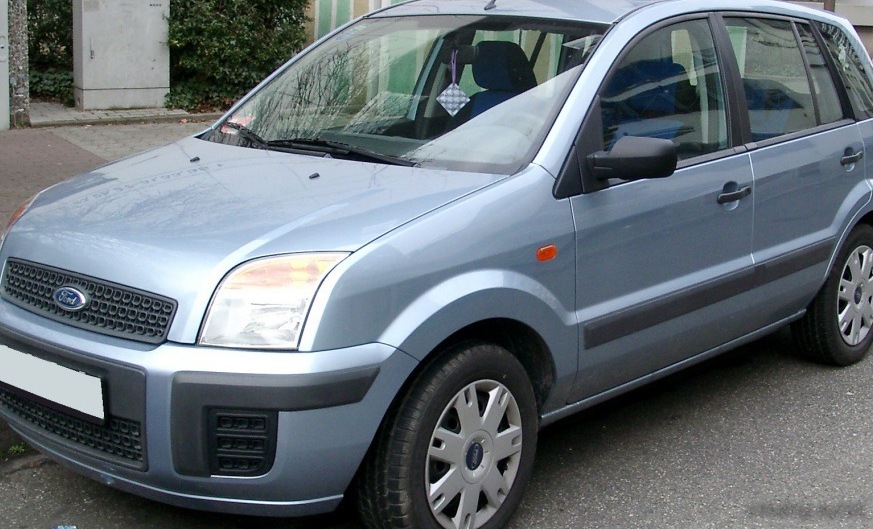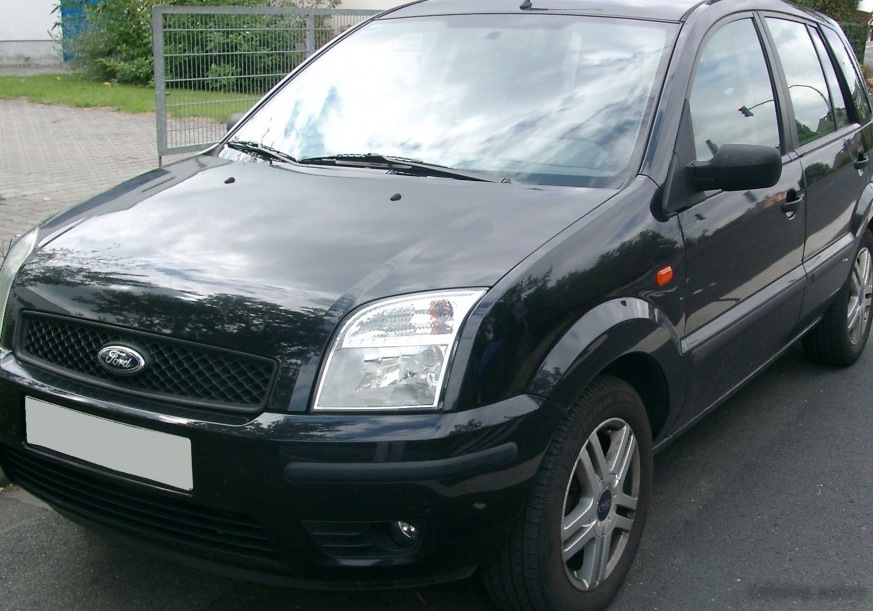
The Ford Fusion, launched in Europe in 2002, represented Ford’s entry into the compact family car segment, aiming to replace the aging Escort. The first generation, internally designated as the Fusion I, was based on the Ford C170 platform, shared with the Mazda 3 and the first-generation Volvo S40/V50. The 1.4 Duratec variant, producing 80 horsepower, was offered from 2002 through 2005 and served as the entry-level model in the Fusion lineup. It was primarily targeted at buyers seeking affordable, economical transportation, particularly in markets where smaller engines were favored due to tax regulations and fuel costs.
Technical Specifications
| Brand | Ford |
| Model | Fusion |
| Generation | Fusion I |
| Type (Engine) | 1.4 Duratec (80 Hp) |
| Start of production | 2002 |
| End of production | 2005 |
| Powertrain Architecture | Internal Combustion engine |
| Body type | Hatchback |
| Seats | 5 |
| Doors | 5 |
| Fuel consumption (urban) | 8.6 l/100 km (27.4 US mpg) |
| Fuel consumption (extra urban) | 5.7 l/100 km (41.3 US mpg) |
| Fuel consumption (combined) | 6.5 l/100 km (36.2 US mpg) |
| Fuel Type | Petrol (Gasoline) |
| Acceleration 0 – 100 km/h | 13.7 sec |
| Acceleration 0 – 62 mph | 13.7 sec |
| Acceleration 0 – 60 mph | 13 sec |
| Maximum speed | 163 km/h (101.28 mph) |
| Weight-to-power ratio | 13.4 kg/Hp |
| Weight-to-torque ratio | 8.5 kg/Nm |
| Power | 80 Hp @ 5000 rpm |
| Torque | 127 Nm @ 3500 rpm (93.67 lb.-ft. @ 3500 rpm) |
| Engine layout | Front, Transverse |
| Engine Model/Code | FXJA, FXJB, FXJC |
| Engine displacement | 1388 cm3 (84.7 cu. in.) |
| Number of cylinders | 4 |
| Engine configuration | Inline |
| Cylinder Bore | 76 mm (2.99 in.) |
| Piston Stroke | 76.5 mm (3.01 in.) |
| Compression ratio | 11:1 |
| Number of valves per cylinder | 4 |
| Fuel injection system | Multi-port manifold injection |
| Engine aspiration | Naturally aspirated engine |
| Valvetrain | DOHC |
| Engine oil capacity | 3.8 l (4.02 US qt | 3.34 UK qt) |
| Coolant capacity | 5 l (5.28 US qt | 4.4 UK qt) |
| Kerb Weight | 1075 kg (2369.97 lbs.) |
| Max. weight | 1605 kg (3538.42 lbs.) |
| Max load | 530 kg (1168.45 lbs.) |
| Trunk (boot) space – minimum | 337 l (11.9 cu. ft.) |
| Trunk (boot) space – maximum | 1175 l (41.49 cu. ft.) |
| Fuel tank capacity | 45 l (11.89 US gal | 9.9 UK gal) |
| Length | 4020 mm (158.27 in.) |
| Width | 1708 mm (67.24 in.) |
| Height | 1503 mm (59.17 in.) |
| Wheelbase | 2488 mm (97.95 in.) |
| Front track | 1472 mm (57.95 in.) |
| Rear track | 1435 mm (56.5 in.) |
| Drivetrain Architecture | Front wheel drive |
| Number of gears | 5 |
| Gearbox type | Manual transmission |
| Front suspension | Spring Strut |
| Rear suspension | Coil spring |
| Front brakes | Disc |
| Rear brakes | Drum |
| Assisting systems | ABS (Anti-lock braking system) |
| Steering type | Steering rack and pinion |
| Power steering | Hydraulic Steering |
| Tires size | 195/60 R15 |
Powertrain & Engine Architecture
The 1.4 Duratec engine, identified by engine codes FXJA, FXJB, and FXJC, is a naturally aspirated, inline-four cylinder gasoline engine. It features a double overhead camshaft (DOHC) valvetrain with four valves per cylinder, contributing to improved breathing and efficiency. The engine utilizes a multi-port fuel injection system, delivering fuel directly into the intake ports. This engine was part of Ford’s Duratec family, known for its relatively simple design and focus on reliability. The 1.4L engine produced 80 horsepower at 5000 rpm and 127 Nm (93.67 lb-ft) of torque at 3500 rpm. It was paired with a five-speed manual transmission as standard, offering a relatively long-geared setup designed for fuel economy rather than outright performance. An automatic transmission was also available, though less common, and further impacted the vehicle’s acceleration.
Driving Characteristics
The Fusion 1.4 with the 80 hp engine and manual transmission offered modest performance. Acceleration from 0-60 mph took approximately 13 seconds, and top speed was around 101 mph. The engine felt strained when pushed hard, particularly when fully loaded or climbing hills. The five-speed manual transmission helped to keep the engine in its optimal power band, but the overall driving experience was geared towards economy and practicality. The automatic transmission option further reduced performance, resulting in slower acceleration and a less engaging driving experience. The long gear ratios in both transmissions prioritized fuel efficiency over spirited driving.
Equipment & Trim Levels
The 1.4 Duratec variant typically represented the base trim level of the Fusion range, often simply referred to as the “Fusion.” Standard equipment included central locking, power steering, front airbags, and an adjustable steering column. Interior upholstery was typically cloth, and the dashboard featured a simple, functional design. Optional extras included air conditioning, alloy wheels, and a CD player. Higher trim levels, such as the Zetec and Ghia, offered more luxurious features and were typically equipped with larger engines.
Chassis & Braking
The Fusion I utilized a MacPherson strut front suspension and a coil spring rear suspension. The front brakes were disc brakes, while the rear brakes were drum brakes – a common configuration for entry-level models in this class. ABS (Anti-lock Braking System) was standard, enhancing safety. The suspension was tuned for comfort rather than sporty handling, providing a reasonably smooth ride on most road surfaces. Stabilizer bars were present, but relatively thin compared to those found on higher-spec models.
Market Reception & Comparison
The Fusion 1.4 was generally well-received as an affordable and practical family car. Critics praised its fuel economy and comfortable ride, but noted its lack of outright performance. Compared to other engines in the Fusion lineup, such as the 1.6L and 2.0L petrol engines, the 1.4 offered significantly less power and acceleration. However, it also offered the best fuel economy. The 1.6L engine provided a better balance of performance and economy, while the 2.0L was aimed at drivers who prioritized power. The diesel variants, particularly the 1.8 TDCi, offered even better fuel economy and torque, but at a higher initial cost.
Legacy
The 1.4 Duratec engine in the Ford Fusion proved to be a reliable unit, with relatively few reported issues. The engine’s simplicity contributed to its durability. Today, used examples of the Fusion 1.4 are relatively affordable and can be a good option for buyers seeking a cheap and economical runabout. However, potential buyers should be aware of the engine’s limited power and the potential for age-related wear and tear. Parts availability is generally good, and maintenance costs are relatively low. While not a performance icon, the Fusion 1.4 Duratec served its purpose as an accessible and dependable entry point into the Ford Fusion range.