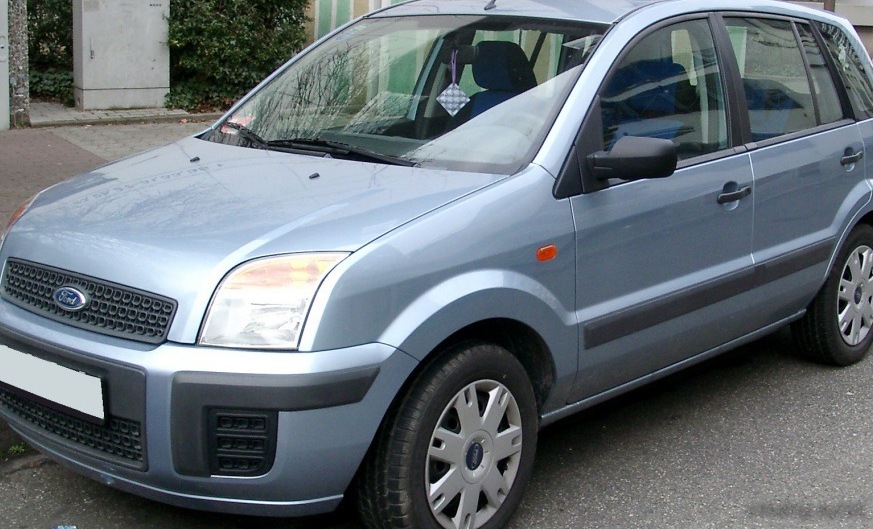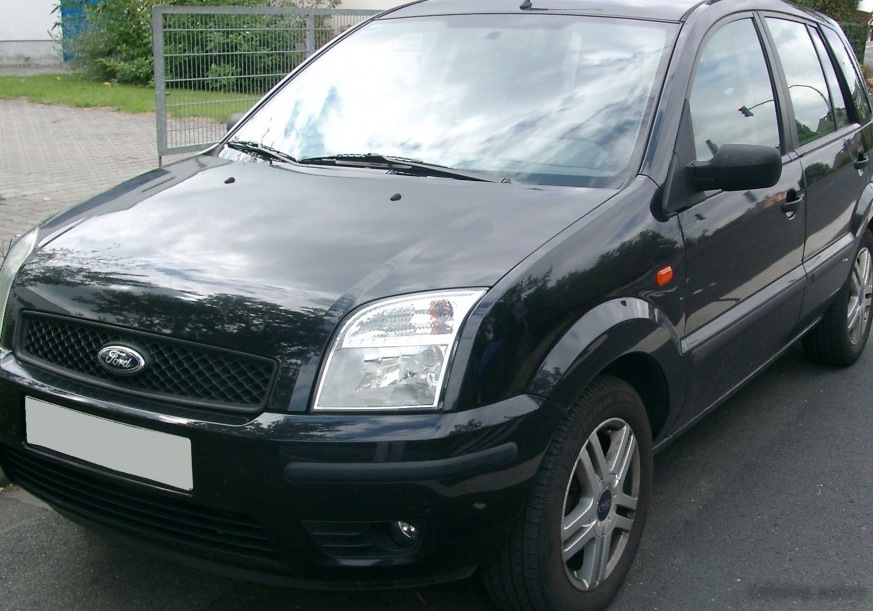
Technical Specifications
| Brand | Ford |
| Model | Fusion |
| Generation | Fusion I |
| Type (Engine) | 1.4 TDCi (68 Hp) |
| Start of production | 2002 |
| End of production | 2005 |
| Powertrain Architecture | Internal Combustion engine |
| Body type | Hatchback |
| Seats | 5 |
| Doors | 5 |
| Fuel consumption (urban) | 5.2 l/100 km (45.2 US mpg, 54.3 UK mpg, 19.2 km/l) |
| Fuel consumption (extra urban) | 3.9 l/100 km (60.3 US mpg, 72.4 UK mpg, 25.6 km/l) |
| Fuel consumption (combined) | 4.4 l/100 km (53.5 US mpg, 64.2 UK mpg, 22.7 km/l) |
| Fuel Type | Diesel |
| Acceleration 0 – 100 km/h | 15.5 sec |
| Acceleration 0 – 62 mph | 15.5 sec |
| Acceleration 0 – 60 mph | 14.7 sec |
| Maximum speed | 158 km/h (98.18 mph) |
| Weight-to-power ratio | 16.3 kg/Hp, 61.5 Hp/tonne |
| Weight-to-torque ratio | 6.9 kg/Nm, 144.8 Nm/tonne |
| Power | 68 Hp @ 4000 rpm |
| Power per litre | 48.6 Hp/l |
| Torque | 160 Nm @ 1750 rpm (118.01 lb.-ft. @ 1750 rpm) |
| Engine layout | Front, Transverse |
| Engine Model/Code | F6JA, F6JB |
| Engine displacement | 1399 cm3 (85.37 cu. in.) |
| Number of cylinders | 4 |
| Engine configuration | Inline |
| Cylinder Bore | 73.7 mm (2.9 in.) |
| Piston Stroke | 82 mm (3.23 in.) |
| Compression ratio | 17.9:1 |
| Number of valves per cylinder | 2 |
| Fuel injection system | Diesel Commonrail |
| Engine aspiration | Turbocharger, Intercooler |
| Engine oil capacity | 3.8 l (4.02 US qt | 3.34 UK qt) |
| Coolant | 5.5 l (5.81 US qt | 4.84 UK qt) |
| Kerb Weight | 1105 kg (2436.11 lbs.) |
| Max. weight | 1640 kg (3615.58 lbs.) |
| Max load | 535 kg (1179.47 lbs.) |
| Trunk (boot) space – minimum | 337 l (11.9 cu. ft.) |
| Trunk (boot) space – maximum | 1175 l (41.49 cu. ft.) |
| Fuel tank capacity | 45 l (11.89 US gal | 9.9 UK gal) |
| Length | 4020 mm (158.27 in.) |
| Width | 1708 mm (67.24 in.) |
| Height | 1503 mm (59.17 in.) |
| Wheelbase | 2488 mm (97.95 in.) |
| Front track | 1472 mm (57.95 in.) |
| Rear (Back) track | 1435 mm (56.5 in.) |
| Drivetrain Architecture | The Internal combustion engine (ICE) drives the front wheels of the vehicle. |
| Drive wheel | Front wheel drive |
| Number of gears and type of gearbox | 5 gears, manual transmission |
| Front suspension | Spring Strut |
| Rear suspension | Coil spring |
| Front brakes | Disc |
| Rear brakes | Drum |
| Assisting systems | ABS (Anti-lock braking system) |
| Steering type | Steering rack and pinion |
| Power steering | Hydraulic Steering |
| Tires size | 195/60 R15 |
The Ford Fusion, launched in Europe in 2002, marked Ford’s entry into the competitive compact family car segment, intended to supersede the aging Escort. The first generation, known internally as the Fusion I, was built on the Ford C170 platform, a shared architecture with the Mazda 3 and the first-generation Volvo S40/V50. The 1.4 TDCi variant, producing 68 horsepower, was introduced as the entry-level diesel option, positioned as the most fuel-efficient and affordable model in the Fusion range. Production of this specific configuration spanned from 2002 to 2005, primarily targeting buyers who prioritized economy over outright performance. This model was almost exclusively sold in the European market, where diesel engines enjoyed a substantial market share due to favorable taxation policies and fuel costs.
Powertrain & Engine Architecture
The 1.4 TDCi engine, designated by engine codes F6JA and F6JB, is a four-cylinder, inline diesel engine. It incorporates a turbocharger coupled with an intercooler to enhance efficiency and power output. The engine employs a common rail direct injection system, a relatively sophisticated technology for its time, enabling precise fuel delivery and improved combustion. This system contributed to the engine’s comparatively low emissions and commendable fuel economy. The engine’s valvetrain features two valves per cylinder (SOHC). The 1.4 TDCi was standardly paired with a five-speed manual transmission. This transmission was selected to maximize fuel efficiency and provide adequate performance for the engine’s power output. The gear ratios were deliberately long, prioritizing economy over rapid acceleration.
Driving Characteristics
The 1.4 TDCi Fusion delivered modest performance. Generating 68 horsepower and 160 Nm (118 lb-ft) of torque, acceleration was unhurried, requiring approximately 15.5 seconds to reach 62 mph (100 km/h). The engine’s strength resided in its low-end torque, making it reasonably drivable in urban settings and on slower roads. However, overtaking maneuvers demanded careful consideration. Compared to the more potent 1.6-liter petrol or 2.0-liter TDCi diesel variants, the 1.4 TDCi felt noticeably underpowered, particularly when carrying a full passenger load. The extended gear ratios of the five-speed manual transmission further underscored the engine’s economy-focused design. The steering was light and precise, characteristic of Ford’s vehicles of that era, and the suspension offered a comfortable, though not particularly engaging, ride.
Equipment & Trim Levels
The 1.4 TDCi typically represented the base trim level within the Fusion range. Standard equipment generally included central locking, power steering, an adjustable steering column, and a basic audio system. Interior upholstery was typically cloth, and the dashboard featured a functional, albeit somewhat spartan, design. Optional extras included air conditioning, alloy wheels, and an upgraded audio system. Higher trim levels, such as the Zetec, offered more comprehensive equipment lists, encompassing features like electric windows, heated mirrors, and enhanced interior trim.
Chassis & Braking
The Fusion I utilized a front-wheel-drive layout with a MacPherson strut front suspension and a coil spring rear suspension. The front brakes were disc brakes, providing adequate stopping power, while the rear brakes were drum brakes, a cost-saving measure common in entry-level models. Anti-lock Braking System (ABS) was standard, enhancing safety. The chassis was tuned for comfort rather than sporty handling, prioritizing ride quality over sharp cornering. Stabilizer bars were fitted to both the front and rear axles to mitigate body roll, but the overall handling characteristics remained relatively neutral.
Market Reception & Comparison
The 1.4 TDCi Fusion was generally well-received by automotive critics as an economical and practical family car. Its fuel efficiency was a significant selling point, particularly in Europe where diesel fuel was often cheaper and taxes favored lower-emission vehicles. However, the engine’s limited power output was frequently criticized. Compared to the 1.6-liter petrol engine, the 1.4 TDCi offered superior fuel economy but considerably slower acceleration. The 2.0-liter TDCi provided a substantial performance boost but came at a higher purchase price. Reliability was generally good, although some owners reported issues with the turbocharger and fuel injection system over the long term.
Legacy
The 1.4 TDCi Fusion, while not a performance benchmark, remains a relatively affordable and fuel-efficient option in the used car market. The engine, when properly maintained, can prove durable, although preventative maintenance concerning the turbocharger and fuel system is essential. Today, these vehicles are often sought after by buyers seeking a budget-friendly and economical vehicle for daily commuting. The Fusion I, as a whole, helped solidify Ford’s position as a competitive force in the European compact family car market, laying the groundwork for subsequent generations of the model. The 1.4 TDCi variant, in particular, represents a pragmatic and economical choice for those prioritizing fuel efficiency and low running costs.