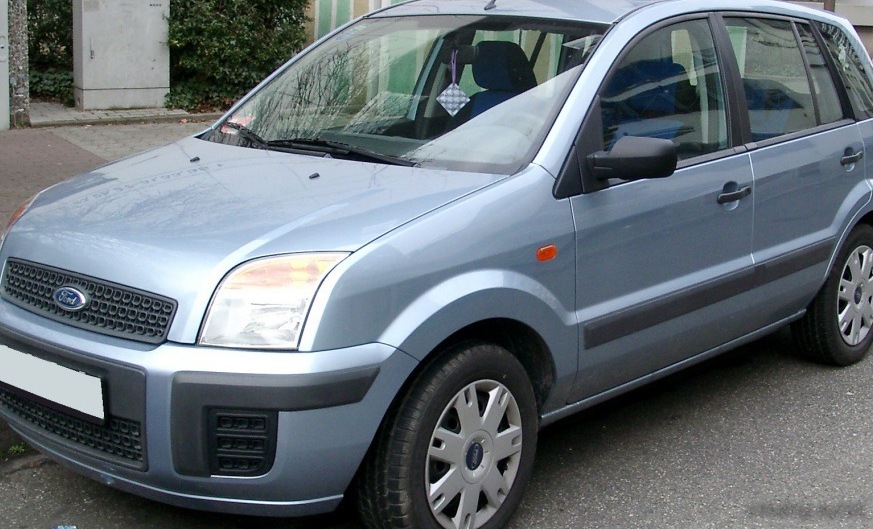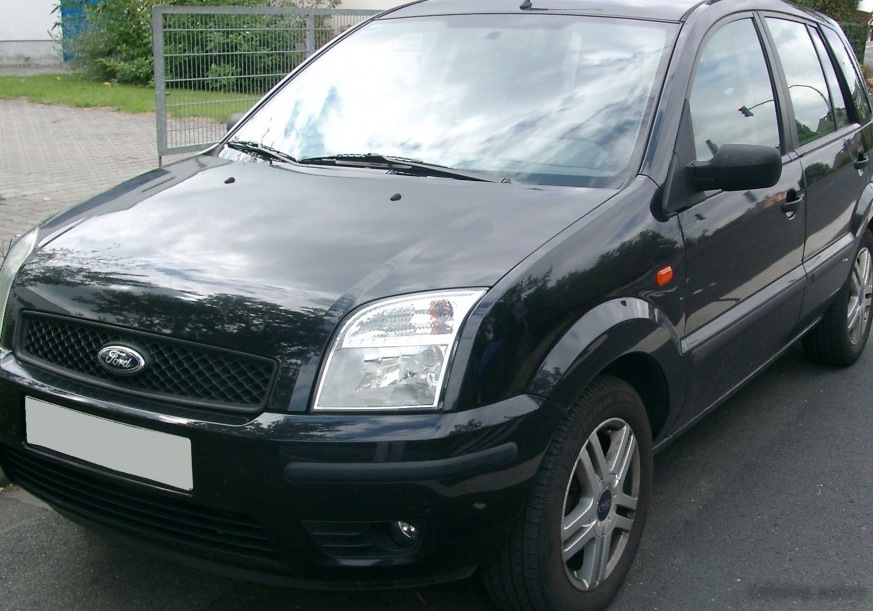
The Ford Fusion, launched in Europe in 2002, represented Ford’s entry into the compact hatchback segment, aiming to replace the aging Escort. The first generation, internally designated as the Fusion I, was based on the Ford C170 platform, shared with the Mazda 3 and the later Ford Focus. A key variant within the Fusion I lineup was the 1.4 TDCi Automatic, a diesel-powered model geared towards economy-minded buyers. Production of this specific configuration ran from 2002 to 2005, offering a relatively affordable and fuel-efficient option within the broader Fusion range. This model was primarily marketed in Europe, where diesel engines held a significant market share due to favorable taxation and fuel costs.
Technical Specifications
| Brand | Ford |
| Model | Fusion |
| Generation | Fusion I |
| Type (Engine) | 1.4 TDCi (68 Hp) Automatic |
| Start of production | 2002 |
| End of production | 2005 |
| Powertrain Architecture | Internal Combustion engine |
| Body type | Hatchback |
| Seats | 5 |
| Doors | 5 |
| Fuel consumption (urban) | 5.2 l/100 km (45.2 US mpg, 54.3 UK mpg, 19.2 km/l) |
| Fuel consumption (extra urban) | 3.9 l/100 km (60.3 US mpg, 72.4 UK mpg, 25.6 km/l) |
| Fuel consumption (combined) | 4.4 l/100 km (53.5 US mpg, 64.2 UK mpg, 22.7 km/l) |
| Fuel Type | Diesel |
| Acceleration 0 – 100 km/h | 16.6 sec |
| Acceleration 0 – 62 mph | 16.6 sec |
| Acceleration 0 – 60 mph | 15.8 sec |
| Maximum speed | 158 km/h (98.18 mph) |
| Weight-to-power ratio | 16.3 kg/Hp |
| Weight-to-torque ratio | 6.9 kg/Nm |
| Power | 68 Hp @ 4000 rpm |
| Power per litre | 48.6 Hp/l |
| Torque | 160 Nm @ 1750 rpm (118.01 lb.-ft. @ 1750 rpm) |
| Engine layout | Front, Transverse |
| Engine Model/Code | F6JA, F6JB |
| Engine displacement | 1399 cm3 (85.37 cu. in.) |
| Number of cylinders | 4 |
| Engine configuration | Inline |
| Cylinder Bore | 73.7 mm (2.9 in.) |
| Piston Stroke | 82 mm (3.23 in.) |
| Compression ratio | 17.9:1 |
| Number of valves per cylinder | 2 |
| Fuel injection system | Diesel Commonrail |
| Engine aspiration | Turbocharger, Intercooler |
| Engine oil capacity | 3.8 l (4.02 US qt | 3.34 UK qt) |
| Coolant capacity | 5.5 l (5.81 US qt | 4.84 UK qt) |
| Kerb Weight | 1105 kg (2436.11 lbs.) |
| Max. weight | 1640 kg (3615.58 lbs.) |
| Max load | 535 kg (1179.47 lbs.) |
| Trunk (boot) space – minimum | 337 l (11.9 cu. ft.) |
| Trunk (boot) space – maximum | 1175 l (41.49 cu. ft.) |
| Fuel tank capacity | 45 l (11.89 US gal | 9.9 UK gal) |
| Length | 4020 mm (158.27 in.) |
| Width | 1708 mm (67.24 in.) |
| Height | 1503 mm (59.17 in.) |
| Wheelbase | 2488 mm (97.95 in.) |
| Front track | 1472 mm (57.95 in.) |
| Rear track | 1435 mm (56.5 in.) |
| Drivetrain Architecture | Front wheel drive |
| Number of gears | 5 |
| Gearbox type | Automatic transmission |
| Front suspension | Spring Strut |
| Rear suspension | Coil spring |
| Front brakes | Disc |
| Rear brakes | Drum |
| Assisting systems | ABS (Anti-lock braking system) |
| Steering type | Steering rack and pinion |
| Power steering | Hydraulic Steering |
| Tires size | 195/60 R15 |
| Wheel rims size | 6J x 15 |
Powertrain & Engine Architecture
The 1.4 TDCi engine, identified by engine codes F6JA and F6JB, was a four-cylinder, inline diesel engine. It featured a turbocharger with an intercooler to improve power and efficiency. The engine utilized a common rail direct injection system, a relatively advanced technology for its time, allowing for precise fuel delivery and reduced emissions. This system operated at a high pressure of 17.9:1 compression ratio. The engine produced 68 horsepower at 4000 rpm and 160 Nm (118 lb-ft) of torque at 1750 rpm. The torque curve was relatively flat, providing usable power across a wide range of engine speeds. The automatic transmission was a conventional five-speed unit, chosen for its ease of use and suitability for urban driving. It wasn’t known for particularly quick shifts, but it prioritized smooth operation and fuel economy.
Driving Characteristics
The 1.4 TDCi Automatic Fusion offered a comfortable, if uninspiring, driving experience. Acceleration was leisurely, taking approximately 16.6 seconds to reach 62 mph (100 km/h). The automatic transmission, while smooth, contributed to this lack of urgency. Compared to the more powerful 1.6-liter petrol or 1.8 TDCi diesel variants, the 1.4 TDCi felt noticeably slower, particularly when overtaking or climbing hills. However, the engine’s strong low-end torque made it reasonably capable in city driving. The gear ratios were optimized for fuel efficiency rather than performance, meaning the engine often operated at lower RPMs during cruising. This contributed to its excellent fuel economy figures – around 53.5 US mpg combined.
Equipment & Trim Levels
The 1.4 TDCi Automatic typically represented an entry-level or mid-range trim within the Fusion lineup. Standard equipment generally included power steering, central locking, electric front windows, and an ABS anti-lock braking system. Interior upholstery was typically cloth, and the dashboard featured a functional, if somewhat basic, design. Optional extras included air conditioning, alloy wheels, a CD player, and rear electric windows. Higher trim levels, such as the Zetec, offered more comprehensive equipment lists, but at a higher price point. The focus of this trim was practicality and affordability.
Chassis & Braking
The Fusion I utilized a MacPherson strut front suspension and a coil spring rear suspension. The suspension setup was tuned for comfort rather than sporty handling. The front brakes were discs, providing adequate stopping power, while the rear brakes were drums, a cost-saving measure common in this segment. The steering was a hydraulic rack and pinion system, offering reasonable precision. Stabilizer bars were fitted to both the front and rear axles to reduce body roll, but the overall handling characteristics were geared towards safe and predictable driving rather than dynamic performance.
Market Reception & Comparison
The 1.4 TDCi Automatic Fusion was generally well-received by critics as a practical and economical choice. Its fuel efficiency was a major selling point, particularly in Europe where diesel fuel was cheaper than petrol. However, its lack of performance was often criticized. Compared to the 1.6-liter petrol version, the 1.4 TDCi offered better fuel economy but significantly slower acceleration. The 1.8 TDCi provided a better balance of performance and economy, but at a higher price. Reliability was generally good, although the common rail injection system could be prone to issues if not properly maintained.
Legacy
The 1.4 TDCi engine, while not a powerhouse, proved to be a relatively durable and reliable unit when properly maintained. Today, examples of the Fusion I 1.4 TDCi Automatic are relatively common on the used car market, often representing an affordable and economical option for budget-conscious buyers. However, potential buyers should be aware of the potential for issues with the common rail injection system and ensure that the vehicle has been regularly serviced. The Fusion I, and this variant in particular, played a significant role in establishing Ford as a major player in the European compact hatchback market, paving the way for the highly successful second-generation Focus.