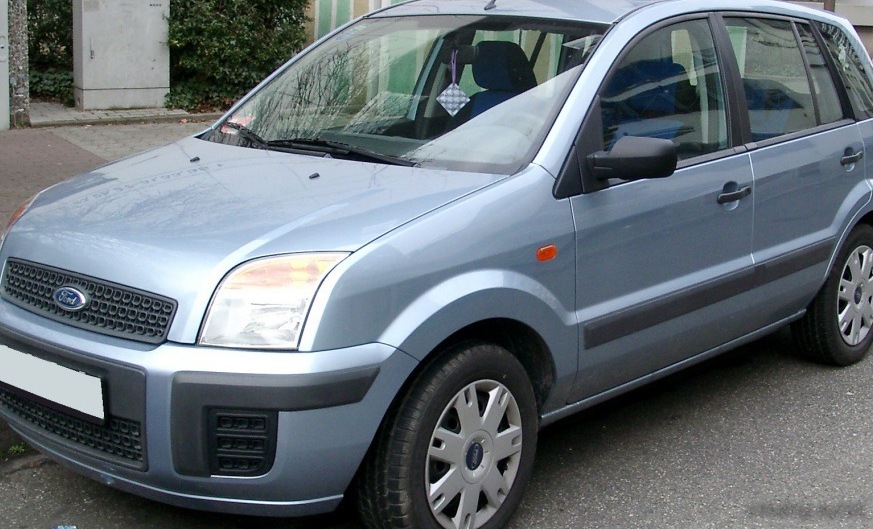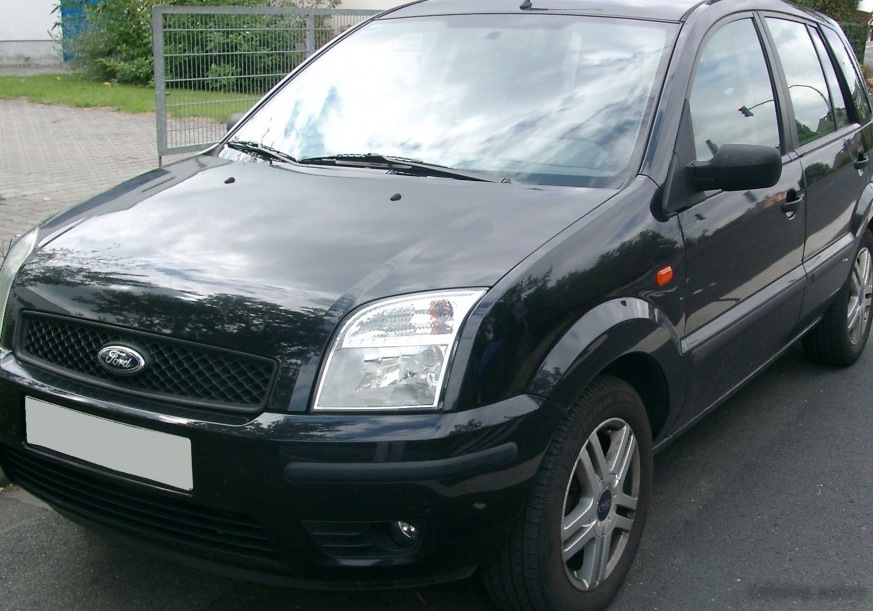
The Ford Fusion, launched in Europe in 2002, represented Ford’s entry into the compact family car segment, aiming to replace the Escort and offer a more modern, globally-oriented vehicle. The first generation, internally designated as the Fusion I, was based on the Ford C170 platform, shared with the Mazda 3 and the first-generation Volvo S40. Within the Fusion lineup, the 1.6 Duratec engine paired with an automatic transmission represented an entry-level offering, prioritizing affordability and ease of use over outright performance. Production of this specific variant ran from 2002 to 2005, serving as a key volume seller in several European markets.
Technical Specifications
| Brand | Ford |
| Model | Fusion |
| Generation | Fusion I |
| Type (Engine) | 1.6 Duratec (100 Hp) Automatic |
| Start of production | 2002 |
| End of production | 2005 |
| Powertrain Architecture | Internal Combustion engine |
| Body type | Hatchback |
| Seats | 5 |
| Doors | 5 |
| Fuel consumption (urban) | 10.3 l/100 km (22.8 US mpg) |
| Fuel consumption (extra urban) | 6.1 l/100 km (38.6 US mpg) |
| Fuel consumption (combined) | 7.6 l/100 km (30.9 US mpg) |
| Fuel Type | Petrol (Gasoline) |
| Acceleration 0 – 100 km/h | 13.1 sec |
| Acceleration 0 – 62 mph | 13.1 sec |
| Acceleration 0 – 60 mph | 12.4 sec |
| Maximum speed | 176 km/h (109.36 mph) |
| Emission standard | Euro 4 |
| Weight-to-power ratio | 10.8 kg/Hp |
| Weight-to-torque ratio | 7.6 kg/Nm |
| Power | 100 Hp @ 6000 rpm |
| Torque | 143 Nm @ 4000 rpm (105.47 lb.-ft. @ 4000 rpm) |
| Engine layout | Front, Transverse |
| Engine Model/Code | FYJA, FYJB, FYJC |
| Engine displacement | 1596 cm3 (97.39 cu. in.) |
| Number of cylinders | 4 |
| Engine configuration | Inline |
| Cylinder Bore | 79 mm (3.11 in.) |
| Piston Stroke | 81.4 mm (3.2 in.) |
| Compression ratio | 11:1 |
| Number of valves per cylinder | 4 |
| Fuel injection system | Multi-port manifold injection |
| Engine aspiration | Naturally aspirated engine |
| Valvetrain | DOHC |
| Engine oil capacity | 4.25 l (4.49 US qt | 3.74 UK qt) |
| Coolant capacity | 5 l (5.28 US qt | 4.4 UK qt) |
| Kerb Weight | 1080 kg (2380.99 lbs.) |
| Max. weight | 1605 kg (3538.42 lbs.) |
| Max load | 525 kg (1157.43 lbs.) |
| Trunk (boot) space – minimum | 337 l (11.9 cu. ft.) |
| Trunk (boot) space – maximum | 1175 l (41.49 cu. ft.) |
| Fuel tank capacity | 45 l (11.89 US gal | 9.9 UK gal) |
| Length | 4020 mm (158.27 in.) |
| Width | 1708 mm (67.24 in.) |
| Height | 1503 mm (59.17 in.) |
| Wheelbase | 2488 mm (97.95 in.) |
| Front track | 1472 mm (57.95 in.) |
| Rear track | 1435 mm (56.5 in.) |
| Drivetrain Architecture | Front wheel drive |
| Number of gears | 4 |
| Gearbox type | Automatic transmission |
| Front suspension | Spring Strut |
| Rear suspension | Coil spring |
| Front brakes | Disc |
| Rear brakes | Drum |
| Assisting systems | ABS (Anti-lock braking system) |
| Steering type | Steering rack and pinion |
| Power steering | Hydraulic Steering |
| Tires size | 195/60 R15 |
Introduction
The Ford Fusion 1.6 Duratec Automatic, produced between 2002 and 2005, was a key component of Ford of Europe’s strategy to offer a competitive and modern compact hatchback. Positioned as the entry point to the Fusion range, it aimed to attract buyers seeking a practical, affordable, and easy-to-drive vehicle. The Fusion I, built on the C170 platform, represented a significant departure from the aging Escort it replaced, offering improved interior space, a more refined driving experience, and a contemporary design. This variant specifically targeted buyers who prioritized comfort and convenience over sporty performance, making the automatic transmission a popular choice.
Powertrain & Engine Architecture
At the heart of the Fusion 1.6 Automatic lies the Ford Duratec 1.6-liter inline-four cylinder engine. Engine codes for this powerplant included FYJA, FYJB, and FYJC, denoting minor variations in calibration and specification. This engine featured a multi-port fuel injection system, delivering fuel directly into the intake ports, and a double overhead camshaft (DOHC) valvetrain, optimizing airflow for improved efficiency and power output. The engine’s 1596cc displacement produced 100 horsepower at 6000 rpm and 143 Nm (105.47 lb-ft) of torque at 4000 rpm. The automatic transmission was a conventional four-speed unit, chosen for its smooth operation and ease of use. While not offering the responsiveness of a manual gearbox, it provided a comfortable driving experience, particularly in urban environments. The transmission’s gear ratios were optimized for fuel efficiency and relaxed cruising, rather than rapid acceleration.
Driving Characteristics
The Fusion 1.6 Automatic offered a comfortable, if not particularly exhilarating, driving experience. Acceleration from 0-60 mph took approximately 12.4 seconds, and top speed was limited to 109.36 mph. Compared to the higher-output 1.8 and 2.0-liter versions of the Fusion, or even the diesel-powered models, the 1.6 Automatic felt noticeably slower. The automatic transmission, while smooth, could sometimes feel hesitant during overtaking maneuvers, requiring careful planning. However, the relaxed power delivery and comfortable suspension made it well-suited for everyday driving and long journeys. The steering was light and precise, making it easy to maneuver in tight spaces. The four-speed automatic, while adequate, lacked the efficiency and responsiveness of more modern transmissions with additional gears.
Equipment & Trim Levels
The 1.6 Duratec Automatic typically came equipped with a reasonable level of standard features. These generally included power steering, central locking, electric front windows, and an adjustable steering column. Interior upholstery was typically cloth, with a functional and durable design. Optional extras available for this trim level included air conditioning, alloy wheels, a CD player, and upgraded interior trim. The dashboard layout was straightforward and user-friendly, prioritizing practicality over stylistic flair. Safety features included ABS (Anti-lock Braking System) as standard, providing enhanced braking performance in emergency situations.
Chassis & Braking
The Fusion I featured a MacPherson strut front suspension and a coil spring rear suspension, providing a comfortable ride quality. The suspension was tuned for everyday use, prioritizing comfort over sporty handling. The front brakes were discs, offering good stopping power, while the rear brakes were drums, a cost-saving measure common in this segment. The chassis was relatively lightweight, contributing to the car’s fuel efficiency. Stabilizer bars were fitted to both the front and rear axles to reduce body roll during cornering, although the handling remained relatively neutral.
Market Reception & Comparison
The Fusion 1.6 Automatic was generally well-received by critics as a practical and affordable family car. However, its performance was often criticized as being somewhat underwhelming, particularly when compared to its rivals. Fuel economy was respectable, averaging around 30.9 US mpg in combined driving conditions. Compared to the higher-spec Fusion models, the 1.6 Automatic offered a more economical entry point, but at the expense of performance and refinement. The diesel-powered Fusion variants offered superior fuel economy and torque, but came at a higher purchase price. The 1.6 Automatic appealed to buyers who prioritized affordability, ease of use, and a comfortable driving experience.
Legacy
The Ford Fusion 1.6 Duratec Automatic has proven to be a relatively reliable vehicle, with the Duratec engine generally considered to be durable and long-lasting. However, like any used car, potential buyers should be aware of common issues, such as oil leaks and wear and tear on the automatic transmission. Today, the Fusion I 1.6 Automatic can be found on the used car market at very affordable prices, making it an attractive option for budget-conscious buyers. While it may not offer the performance or features of more modern vehicles, it remains a practical and dependable choice for everyday transportation. The simplicity of the engine and transmission also makes it relatively easy and inexpensive to maintain.