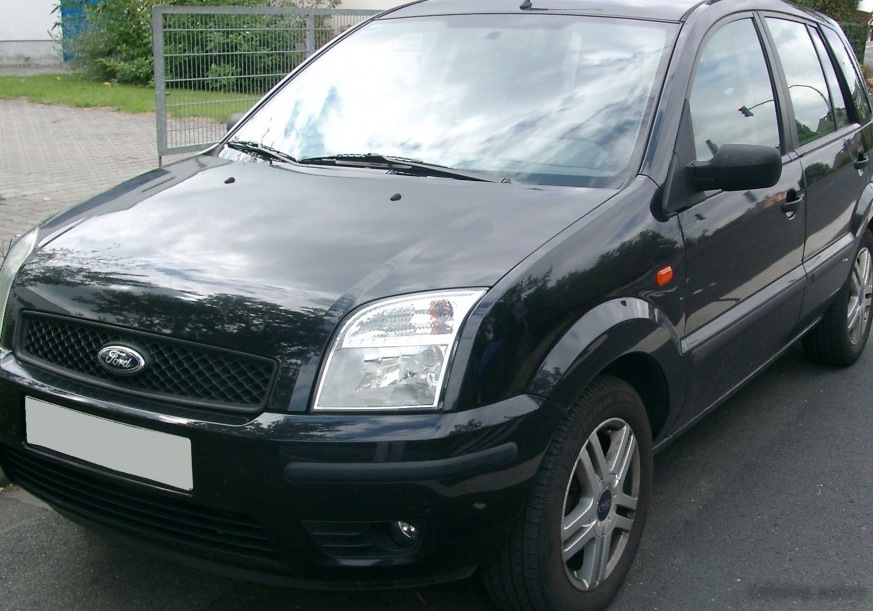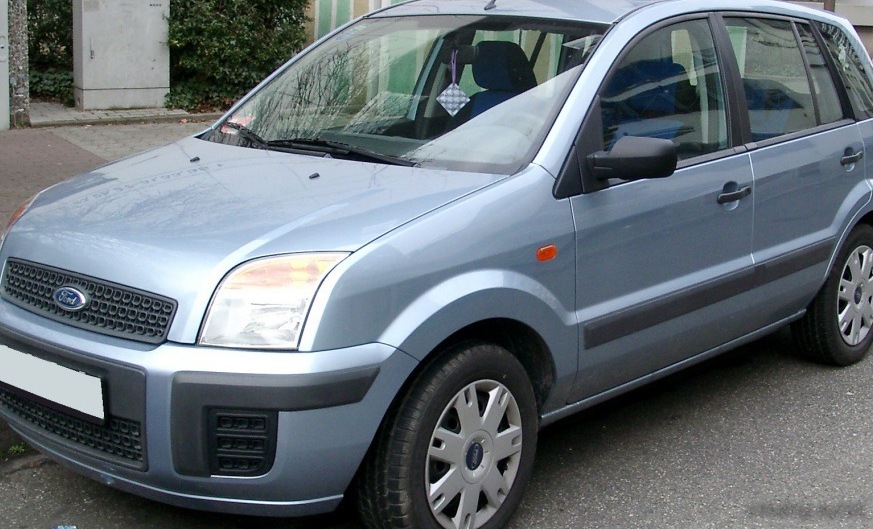
The Ford Fusion, specifically the first generation model produced from 2002 to 2012, represented Ford’s entry into the European compact hatchback market. The 2005 facelift brought revised styling and minor mechanical updates. Among the engine options available, the 1.2-liter gasoline engine producing 75 horsepower was positioned as the entry-level offering, aimed at buyers prioritizing fuel economy and affordability. This variant was sold primarily in Europe, where smaller displacement engines were favored due to tax regulations and driving conditions. Production of this specific configuration ran from 2005 through 2012, coinciding with the end of the first generation Fusion’s lifecycle.
Technical Specifications
| Brand | Ford |
| Model | Fusion |
| Generation | Fusion I (facelift 2005) |
| Type (Engine) | 1.2 (75 Hp) |
| Start of production | 2005 |
| End of production | 2012 |
| Powertrain Architecture | Internal Combustion engine |
| Body type | Hatchback |
| Seats | 5 |
| Doors | 5 |
| Fuel consumption (urban) | 8.7 l/100 km (36.2 US mpg) |
| Fuel consumption (extra urban) | 5.2 l/100 km (45.2 US mpg) |
| Fuel consumption (combined) | 6.5 l/100 km (36.2 US mpg) |
| Fuel Type | Petrol (Gasoline) |
| Acceleration 0 – 100 km/h | 15.5 sec |
| Acceleration 0 – 62 mph | 15.5 sec |
| Acceleration 0 – 60 mph | 14.7 sec |
| Maximum speed | 159 km/h (98.8 mph) |
| Emission standard | Euro 4 |
| Weight-to-power ratio | 14.3 kg/Hp |
| Weight-to-torque ratio | 9.8 kg/Nm |
| Power | 75 Hp @ 5500 rpm |
| Torque | 110 Nm @ 4200 rpm (81.13 lb.-ft. @ 4200 rpm) |
| Engine layout | Front, Transverse |
| Engine Model/Code | FUJA, FUJB |
| Engine displacement | 1242 cm3 (75.79 cu. in.) |
| Number of cylinders | 4 |
| Engine configuration | Inline |
| Cylinder Bore | 71.9 mm (2.83 in.) |
| Piston Stroke | 76.5 mm (3.01 in.) |
| Compression ratio | 10:1 |
| Number of valves per cylinder | 4 |
| Fuel injection system | Multi-port manifold injection |
| Engine aspiration | Naturally aspirated |
| Valvetrain | DOHC |
| Engine oil capacity | 3.8 l (4.02 US qt | 3.34 UK qt) |
| Coolant capacity | 5 l (5.28 US qt | 4.4 UK qt) |
| Kerb Weight | 1075 kg (2369.97 lbs.) |
| Max. weight | 1605 kg (3538.42 lbs.) |
| Max load | 530 kg (1168.45 lbs.) |
| Trunk (boot) space – minimum | 337 l (11.9 cu. ft.) |
| Trunk (boot) space – maximum | 1175 l (41.49 cu. ft.) |
| Fuel tank capacity | 45 l (11.89 US gal | 9.9 UK gal) |
| Permitted trailer load with brakes (12%) | 600 kg (1322.77 lbs.) |
| Permitted trailer load without brakes | 500 kg (1102.31 lbs.) |
| Length | 4013 mm (157.99 in.) |
| Width | 1724 mm (67.87 in.) |
| Height | 1543 mm (60.75 in.) |
| Wheelbase | 2486 mm (97.87 in.) |
| Front track | 1487 mm (58.54 in.) |
| Rear track | 1445 mm (56.89 in.) |
| Ride height (ground clearance) | 160 mm (6.3 in.) |
| Drag coefficient (Cd) | 0.35 |
| Minimum turning circle | 10.3 m (33.79 ft.) |
| Drivetrain | Front wheel drive |
| Number of gears | 5 |
| Gearbox type | Manual transmission |
| Front suspension | Spring Strut |
| Rear suspension | Coil spring |
| Front brakes | Ventilated discs |
| Rear brakes | Drum |
| Steering type | Steering rack and pinion |
| Power steering | Hydraulic |
| Tires size | 195/60 R15 |
| Wheel rims size | 15 |
Powertrain & Engine Architecture
The heart of this Fusion variant is the Duratec 1.2-liter inline-four cylinder engine, designated with engine codes FUJA or FUJB depending on minor variations. This engine is a naturally aspirated unit featuring a multi-port fuel injection system and a double overhead camshaft (DOHC) valvetrain. The 1242cc displacement is achieved with a bore of 71.9mm and a stroke of 76.5mm, operating at a compression ratio of 10:1. The engine’s relatively small displacement and modest output were intentional, designed to meet European market demands for fuel efficiency and lower vehicle taxation. The engine was paired with a five-speed manual transmission, which was the standard offering for this trim level. While an automatic transmission was available on higher-spec Fusion models, it was not offered with the 1.2-liter engine.
Driving Characteristics
The 1.2-liter Fusion offered modest performance. With 75 horsepower and 110 Nm (81 lb-ft) of torque, acceleration was leisurely, taking approximately 15.5 seconds to reach 62 mph (100 km/h). The five-speed manual transmission helped to keep the engine in its optimal power band, but overtaking maneuvers required careful planning. Compared to the more powerful 1.4 or 1.6-liter versions, the 1.2 felt noticeably slower. However, the lighter engine weight contributed to improved handling and a more nimble feel, particularly in urban driving conditions. The gear ratios were tuned for fuel economy rather than outright performance, resulting in a comfortable but uninspiring driving experience.
Equipment & Trim Levels
The 1.2-liter Fusion typically represented the base trim level. Standard equipment generally included power steering, central locking, electric front windows, and an adjustable steering column. Air conditioning was often an optional extra. Interior upholstery was typically cloth, and the dashboard featured a simple, functional design. Higher trim levels, such as the Zetec or Ghia, offered additional features like alloy wheels, upgraded audio systems, and more luxurious interior appointments. The 1.2-liter model was often chosen by buyers who prioritized affordability and practicality over luxury features.
Chassis & Braking
The Fusion’s chassis featured a MacPherson strut front suspension and a coil spring rear suspension. The front brakes were ventilated discs, providing adequate stopping power, while the rear brakes were drums, a cost-saving measure common in entry-level models. The suspension was tuned for comfort, providing a relatively smooth ride over uneven surfaces. The 1.2-liter model’s lighter weight helped to reduce stress on the suspension components. Stabilizer bars were typically fitted to both the front and rear axles, improving handling stability.
Market Reception & Comparison
The 1.2-liter Fusion was generally well-received as an affordable and economical city car. Critics praised its fuel efficiency and nimble handling, but noted its lack of outright performance. Compared to other compact hatchbacks in the European market, such as the Volkswagen Golf or Opel Astra, the Fusion offered a more budget-friendly option. The 1.4 and 1.6-liter Fusion models provided a noticeable performance upgrade, but at a higher price point. The 1.2-liter model’s fuel economy was competitive with other small-displacement engines in its class.
Legacy
The 1.2-liter Duratec engine proved to be a relatively reliable unit, although regular maintenance is crucial. Common issues include oil leaks and occasional problems with the fuel injection system. In the used car market, the 1.2-liter Fusion remains an affordable option for buyers seeking a practical and economical hatchback. Its simplicity and relatively low running costs make it an attractive choice for first-time car owners or those on a tight budget. While not a performance car, the 1.2-liter Fusion offers a dependable and fuel-efficient mode of transportation.