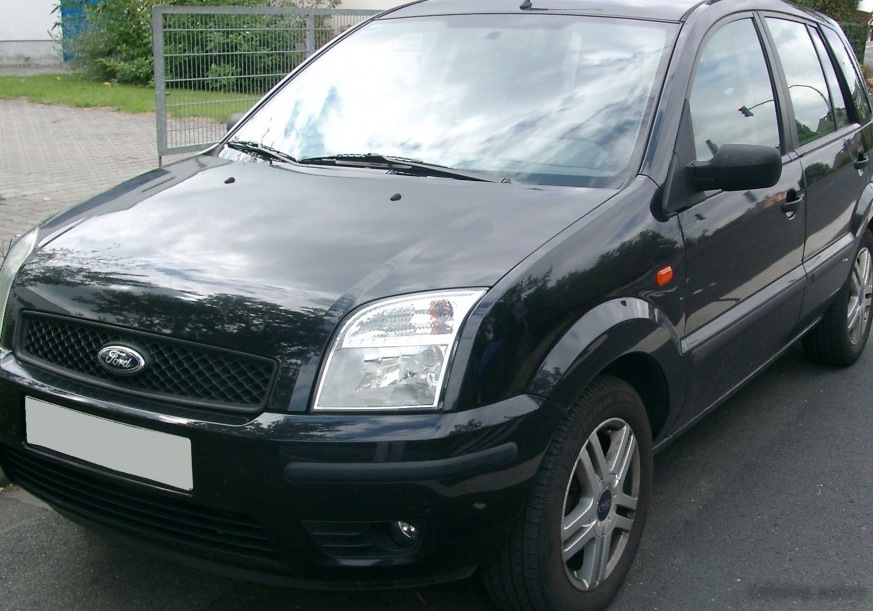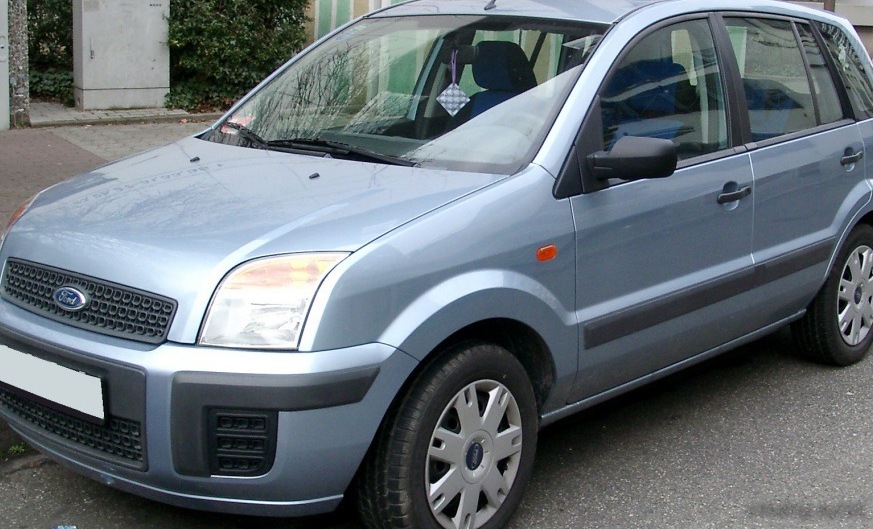
The Ford Fusion, specifically the first generation model produced from 2002 to 2012, represented Ford’s entry into the compact hatchback market in Europe. The 2005 facelift brought styling revisions and minor mechanical updates. Among the engine options available, the 1.4-liter 80 horsepower variant, typically paired with a five-speed manual transmission, served as the entry point to the Fusion range. This version was aimed at buyers prioritizing fuel economy and affordability over outright performance. While a four-speed automatic transmission was offered, it was less common and impacted performance further. This article will focus on the 1.4L (80 hp) engine paired with the four-speed automatic transmission, detailing its specifications, characteristics, and place within the broader Fusion lineup.
Technical Specifications
| Brand | Ford |
| Model | Fusion |
| Generation | Fusion I (facelift 2005) |
| Type (Engine) | 1.4 (80 Hp) |
| Start of production | 2005 |
| End of production | 2012 |
| Powertrain Architecture | Internal Combustion engine |
| Body type | Hatchback |
| Seats | 5 |
| Doors | 5 |
| Fuel consumption (urban) | 8.5 l/100 km (27.7 US mpg) |
| Fuel consumption (extra urban) | 5.3 l/100 km (44.4 US mpg) |
| Fuel consumption (combined) | 6.5 l/100 km (36.2 US mpg) |
| CO2 emissions | 154 g/km |
| Fuel Type | Petrol (Gasoline) |
| Acceleration 0 – 100 km/h | 14 sec |
| Acceleration 0 – 62 mph | 14 sec |
| Acceleration 0 – 60 mph | 13.3 sec |
| Maximum speed | 163 km/h (101.28 mph) |
| Emission standard | Euro 4 |
| Weight-to-power ratio | 13.6 kg/Hp |
| Weight-to-torque ratio | 8.8 kg/Nm |
| Power | 80 Hp @ 5700 rpm |
| Torque | 124 Nm @ 3500 rpm (91.46 lb.-ft. @ 3500 rpm) |
| Engine layout | Front, Transverse |
| Engine Model/Code | FXJA, FXJB, FXJC |
| Engine displacement | 1388 cm3 (84.7 cu. in.) |
| Number of cylinders | 4 |
| Engine configuration | Inline |
| Cylinder Bore | 76 mm (2.99 in.) |
| Piston Stroke | 76.5 mm (3.01 in.) |
| Compression ratio | 11:1 |
| Number of valves per cylinder | 4 |
| Fuel injection system | Multi-port manifold injection |
| Engine aspiration | Naturally aspirated |
| Valvetrain | DOHC |
| Engine oil capacity | 3.8 l (4.02 US qt | 3.34 UK qt) |
| Coolant capacity | 5 l (5.28 US qt | 4.4 UK qt) |
| Kerb Weight | 1085 kg (2392.02 lbs.) |
| Max. weight | 1605 kg (3538.42 lbs.) |
| Max load | 520 kg (1146.4 lbs.) |
| Trunk (boot) space – minimum | 337 l (11.9 cu. ft.) |
| Trunk (boot) space – maximum | 1175 l (41.49 cu. ft.) |
| Fuel tank capacity | 45 l (11.89 US gal | 9.9 UK gal) |
| Permitted trailer load with brakes (12%) | 900 kg (1984.16 lbs.) |
| Permitted trailer load without brakes | 500 kg (1102.31 lbs.) |
| Length | 4013 mm (157.99 in.) |
| Width | 1724 mm (67.87 in.) |
| Height | 1543 mm (60.75 in.) |
| Wheelbase | 2486 mm (97.87 in.) |
| Front track | 1487 mm (58.54 in.) |
| Rear track | 1445 mm (56.89 in.) |
| Ride height (ground clearance) | 160 mm (6.3 in.) |
| Drag coefficient (Cd) | 0.35 |
| Minimum turning circle | 10.3 m (33.79 ft.) |
| Drivetrain | Front wheel drive |
| Number of gears | 4 (Automatic) |
| Front suspension | Spring Strut |
| Rear suspension | Coil spring |
| Front brakes | Ventilated discs |
| Rear brakes | Drum |
| Steering type | Steering rack and pinion |
| Power steering | Hydraulic |
| Tires size | 195/55 R16 |
| Wheel rims size | 16 |
INTRODUCTION
The Ford Fusion 1.4 (80 hp) with the four-speed automatic transmission, produced from 2005 to 2012, occupied the base trim level within the first generation Fusion range. Positioned below the 1.6-liter and 2.0-liter petrol engines, as well as the diesel options, it catered to buyers seeking an affordable and economical hatchback. Built on Ford’s B platform (shared with the Focus and C-Max), the Fusion aimed to provide a practical and versatile vehicle for European families. The facelift in 2005 brought subtle cosmetic changes and refinements to the interior, enhancing the car’s appeal. The automatic transmission option, while offering convenience, significantly impacted the vehicle’s performance compared to the more popular manual gearbox.
Powertrain & Engine Architecture
The heart of this Fusion variant is the FXJA/FXJB/FXJC 1.4-liter inline-four cylinder engine. This engine utilizes a naturally aspirated configuration with multi-port fuel injection and a double overhead camshaft (DOHC) valvetrain. The 11:1 compression ratio contributes to reasonable efficiency, but limits the engine’s potential for high output. The four-speed automatic transmission, while providing ease of use, is a relatively dated design. It lacks the efficiency and responsiveness of more modern automatic transmissions with more gears. The transmission’s gear ratios are optimized for fuel economy rather than acceleration, resulting in a noticeable delay during overtaking maneuvers. The engine’s 80 horsepower and 124 Nm (91.46 lb-ft) of torque are modest, and the automatic transmission further diminishes the available power at the wheels.
Driving Characteristics
The driving experience in the 1.4L automatic Fusion is best described as adequate. Acceleration is leisurely, taking approximately 14 seconds to reach 62 mph (100 km/h). The automatic transmission tends to hunt for gears on inclines, and downshifts can be slow to respond. Compared to the manual version of the same engine, the automatic suffers a noticeable performance penalty. The manual transmission allows for better control over the engine’s power band, resulting in a more engaging driving experience. Even compared to the slightly more powerful 1.6-liter engine, the 1.4 automatic feels underpowered. However, the ride quality is generally comfortable, and the steering is light and easy to use, making it suitable for urban driving.
Equipment & Trim Levels
The base-level 1.4 automatic Fusion typically came equipped with basic features such as power steering, central locking, electric front windows, and an AM/FM radio. Air conditioning was often an optional extra. Interior upholstery was typically cloth, and the dashboard featured a simple, functional design. Higher trim levels, such as the Zetec, offered additional features like alloy wheels, upgraded audio systems, and more luxurious interior trim. Safety features included driver and passenger airbags, and ABS brakes were often standard, depending on the specific market.
Chassis & Braking
The Fusion’s chassis features a MacPherson strut front suspension and a coil spring rear suspension. This setup provides a comfortable ride, but doesn’t offer particularly sporty handling. The front brakes are ventilated discs, while the rear brakes are drums. This configuration is typical for vehicles in this weight class and price range. The hydraulic power steering provides light and easy steering, but lacks the feedback of more sophisticated systems. The 195/55 R16 tires offer adequate grip in most conditions.
Market Reception & Comparison
The 1.4L automatic Fusion was generally viewed as a sensible and economical choice, but it wasn’t a particularly exciting vehicle. Critics often noted its lack of performance and the dated nature of the four-speed automatic transmission. Compared to rivals like the Volkswagen Golf or Opel/Vauxhall Astra, the Fusion offered a competitive price point but lacked the refinement and driving dynamics of those models. Fuel economy was a strong point, with combined figures around 36.2 US mpg. Reliability was generally good, but the automatic transmission was sometimes prone to issues with age.
Legacy
Today, the Ford Fusion 1.4 automatic is a relatively affordable used car option. Its simplicity and relatively low maintenance costs make it appealing to budget-conscious buyers. However, potential buyers should be aware of the potential for issues with the automatic transmission, particularly if it hasn’t been regularly serviced. While not a performance car, the 1.4 automatic Fusion provides a practical and reliable means of transportation for those prioritizing fuel economy and affordability over driving excitement. Its enduring appeal lies in its simplicity and the relatively low cost of ownership.