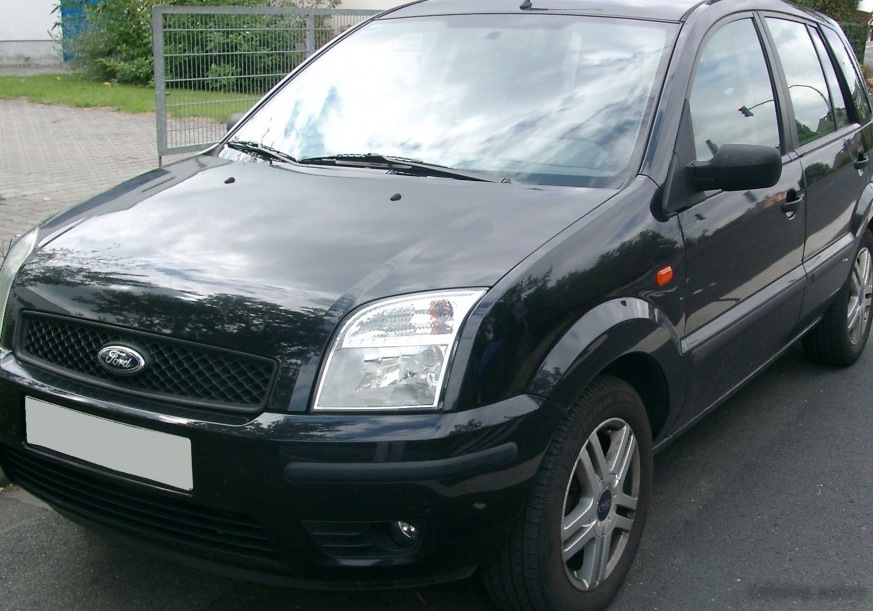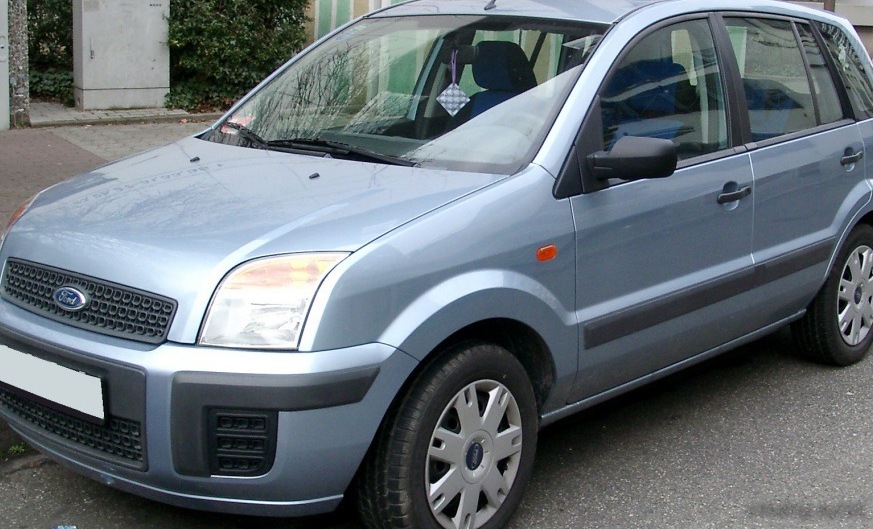
The Ford Fusion, specifically the first generation facelift model produced from 2005 to 2012, represented Ford of Europe’s entry into the compact hatchback segment. Designed as a global vehicle, the Fusion was intended to appeal to a broad customer base. The 1.4-liter engine paired with an automatic transmission was a key variant, positioned as the entry-level offering for buyers prioritizing affordability and ease of use over outright performance. This configuration was particularly popular in markets where manual transmissions were less common, and automatic convenience was highly valued. The facelift in 2005 brought styling updates and minor mechanical revisions to the original Fusion design, enhancing its appeal and competitiveness.
Technical Specifications
| Brand | Ford |
| Model | Fusion |
| Generation | Fusion I (facelift 2005) |
| Type (Engine) | 1.4 (80 Hp) Automatic |
| Start of production | 2005 |
| End of production | 2012 |
| Powertrain Architecture | Internal Combustion engine |
| Body type | Hatchback |
| Seats | 5 |
| Doors | 5 |
| Fuel consumption (urban) | 8.5 l/100 km (27.7 US mpg, 33.2 UK mpg, 11.8 km/l) |
| Fuel consumption (extra urban) | 5 l/100 km (47 US mpg, 56.5 UK mpg, 20 km/l) |
| Fuel consumption (combined) | 6.3 l/100 km (37.3 US mpg, 44.8 UK mpg, 15.9 km/l) |
| CO2 emissions | 154 g/km |
| Fuel Type | Petrol (Gasoline) |
| Acceleration 0 – 100 km/h | 14.6 sec |
| Acceleration 0 – 62 mph | 14.6 sec |
| Acceleration 0 – 60 mph | 13.9 sec |
| Maximum speed | 164 km/h (101.9 mph) |
| Emission standard | Euro 4 |
| Weight-to-power ratio | 13.6 kg/Hp, 73.4 Hp/tonne |
| Weight-to-torque ratio | 8.8 kg/Nm, 113.8 Nm/tonne |
| Power | 80 Hp @ 5700 rpm |
| Power per litre | 57.6 Hp/l |
| Torque | 124 Nm @ 3500 rpm (91.46 lb.-ft. @ 3500 rpm) |
| Engine layout | Front, Transverse |
| Engine Model/Code | FXJA, FXJB, FXJC |
| Engine displacement | 1388 cm3 (84.7 cu. in.) |
| Number of cylinders | 4 |
| Engine configuration | Inline |
| Cylinder Bore | 76 mm (2.99 in.) |
| Piston Stroke | 76.5 mm (3.01 in.) |
| Compression ratio | 11:1 |
| Number of valves per cylinder | 4 |
| Fuel injection system | Multi-port manifold injection |
| Engine aspiration | Naturally aspirated engine |
| Valvetrain | DOHC |
| Engine oil capacity | 3.8 l (4.02 US qt | 3.34 UK qt) |
| Coolant | 5 l (5.28 US qt | 4.4 UK qt) |
| Kerb Weight | 1090 kg (2403.04 lbs.) |
| Max. weight | 1605 kg (3538.42 lbs.) |
| Max load | 515 kg (1135.38 lbs.) |
| Trunk (boot) space – minimum | 337 l (11.9 cu. ft.) |
| Trunk (boot) space – maximum | 1175 l (41.49 cu. ft.) |
| Fuel tank capacity | 45 l (11.89 US gal | 9.9 UK gal) |
| Permitted trailer load with brakes (12%) | 500 kg (1102.31 lbs.) |
| Permitted trailer load without brakes | 500 kg (1102.31 lbs.) |
| Length | 4013 mm (157.99 in.) |
| Width | 1724 mm (67.87 in.) |
| Height | 1543 mm (60.75 in.) |
| Wheelbase | 2486 mm (97.87 in.) |
| Front track | 1487 mm (58.54 in.) |
| Rear (Back) track | 1445 mm (56.89 in.) |
| Ride height (ground clearance) | 160 mm (6.3 in.) |
| Drag coefficient (Cd) | 0.35 |
| Minimum turning circle (turning diameter) | 10.3 m (33.79 ft.) |
| Drivetrain Architecture | The Internal combustion engine (ICE) drives the front wheels of the vehicle. |
| Drive wheel | Front wheel drive |
| Number of gears and type of gearbox | 5 gears, automatic transmission |
| Front suspension | Spring Strut |
| Rear suspension | Coil spring |
| Front brakes | Ventilated discs |
| Rear brakes | Drum |
| Steering type | Steering rack and pinion |
| Power steering | Hydraulic Steering |
| Tires size | 195/55 R16 |
| Wheel rims size | 16 |
Powertrain & Engine Architecture
The 1.4-liter engine, identified by codes such as FXJA, FXJB, and FXJC, is a naturally aspirated, inline-four cylinder petrol engine. It features a double overhead camshaft (DOHC) valvetrain with four valves per cylinder, contributing to reasonable breathing for its displacement. Fuel delivery is managed by a multi-port fuel injection system, a common setup for engines of this era. The engine’s 11:1 compression ratio was fairly standard for the time, balancing efficiency and performance. Paired with this engine was a five-speed automatic transmission. This transmission, while providing convenience, was not known for its sportiness or particularly quick shifts. It was designed for smooth operation and fuel efficiency rather than aggressive acceleration. The automatic transmission’s gear ratios were tuned to prioritize fuel economy and drivability in urban conditions.
Driving Characteristics
The 1.4-liter, 80 horsepower Fusion Automatic was not a performance-oriented vehicle. Acceleration was modest, with a 0-60 mph time around 13.9 seconds. In real-world driving, the engine felt strained when attempting brisk acceleration or overtaking maneuvers. The automatic transmission contributed to this feeling, often hunting for the correct gear, especially on inclines. Compared to the more powerful 1.6-liter or even diesel variants, the 1.4 Automatic felt noticeably slower. However, it offered a comfortable and relaxed driving experience in city traffic and on the highway, where maintaining a steady speed was more important than rapid acceleration. The automatic transmission made it particularly easy to drive in congested areas.
Equipment & Trim Levels
The 1.4 Automatic Fusion typically came with a base level of equipment. Standard features generally included power steering, central locking, electric front windows, and an audio system. Air conditioning was often an optional extra. Interior upholstery was typically cloth, and the dashboard featured a functional but relatively basic design. Higher trim levels, available with other engine options, offered features like alloy wheels, upgraded audio systems, and climate control, but these were less common on the entry-level 1.4 Automatic model. Safety features were also fairly basic, typically including driver and passenger airbags and ABS brakes.
Chassis & Braking
The Fusion’s chassis utilized a MacPherson strut front suspension and a coil spring rear suspension. This setup provided a comfortable ride, but handling was not particularly sharp. The front brakes were ventilated discs, offering adequate stopping power, while the rear brakes were drums, a cost-saving measure common in this segment. The suspension was tuned for comfort rather than sporty handling, resulting in noticeable body roll during cornering. The 1.4 Automatic, being one of the lighter variants, benefited from slightly more responsive handling compared to the heavier, more powerful models.
Market Reception & Comparison
The 1.4 Automatic Fusion was generally well-received as an affordable and practical hatchback. Critics acknowledged its fuel efficiency and ease of use, particularly for drivers unfamiliar with manual transmissions. However, it was often criticized for its lack of performance and somewhat dated interior. Compared to rivals like the Volkswagen Golf or Opel/Vauxhall Astra, the Fusion offered a more budget-friendly option, but lacked the refinement and driving dynamics of those competitors. Fuel economy was a strong point, with combined figures around 37.3 US mpg, making it an attractive option for cost-conscious buyers. Reliability was generally good, although the automatic transmission could be prone to issues if not properly maintained.
Legacy
The 1.4-liter engine and automatic transmission combination in the Ford Fusion, while not a standout performer, proved to be reasonably reliable. Today, these vehicles are often found as affordable used cars. The automatic transmission, while not known for its longevity in all applications, generally holds up well with regular servicing. Parts availability is generally good, making maintenance relatively straightforward. The 1.4 Automatic Fusion remains a practical and economical choice for those seeking a basic, no-frills hatchback for city driving or as a first car. Its simplicity and affordability continue to make it a viable option in the used car market.