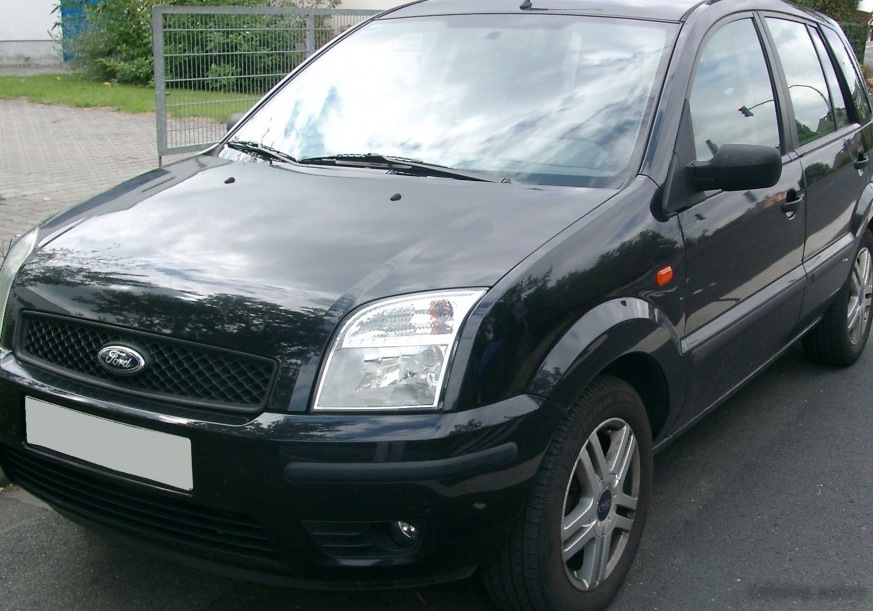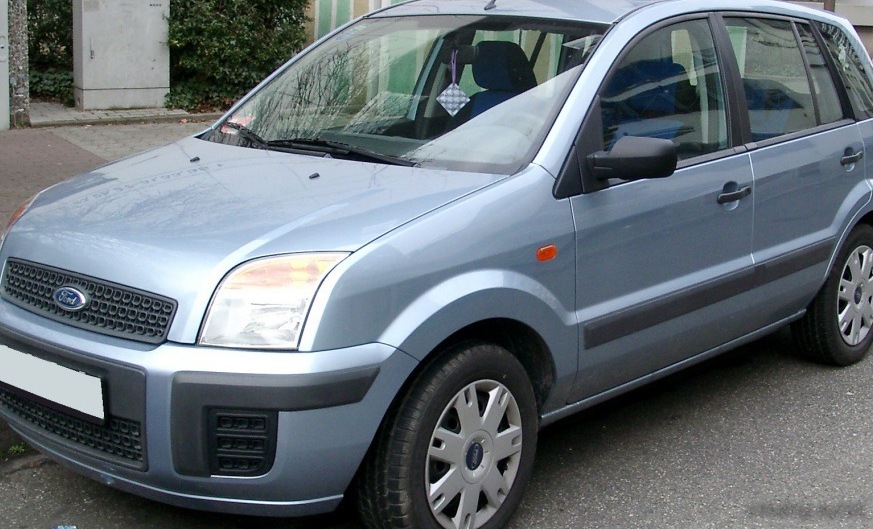
The Ford Fusion, specifically the first generation (Mk1) facelift model produced from 2005 to 2012, represented Ford’s entry into the compact hatchback market in Europe. Designed to appeal to buyers seeking a practical and affordable vehicle, the Fusion was a key component of Ford’s restructuring of its European lineup. The 1.4 TDCi variant, producing 68 horsepower, was positioned as the entry-level engine option, prioritizing fuel economy and lower running costs over outright performance. This model played a significant role in attracting budget-conscious consumers and fleet buyers.
Technical Specifications
| Brand | Ford |
| Model | Fusion |
| Generation | Fusion I (facelift 2005) |
| Type (Engine) | 1.4 TDCi (68 Hp) |
| Start of production | 2005 |
| End of production | 2012 |
| Powertrain Architecture | Internal Combustion engine |
| Body type | Hatchback |
| Seats | 5 |
| Doors | 5 |
| Fuel consumption (urban) | 5.2 l/100 km (45.2 US mpg, 54.3 UK mpg, 19.2 km/l) |
| Fuel consumption (extra urban) | 3.9 l/100 km (60.3 US mpg, 72.4 UK mpg, 25.6 km/l) |
| Fuel consumption (combined) | 4.4 l/100 km (53.5 US mpg, 64.2 UK mpg, 22.7 km/l) |
| Fuel Type | Diesel |
| Acceleration 0 – 100 km/h | 15.5 sec |
| Acceleration 0 – 62 mph | 15.5 sec |
| Acceleration 0 – 60 mph | 14.7 sec |
| Maximum speed | 158 km/h (98.18 mph) |
| Emission standard | Euro 4 |
| Weight-to-power ratio | 16.3 kg/Hp |
| Weight-to-torque ratio | 6.9 kg/Nm |
| Power | 68 Hp @ 4000 rpm |
| Torque | 160 Nm @ 1750 rpm (118.01 lb.-ft. @ 1750 rpm) |
| Engine layout | Front, Transverse |
| Engine Model/Code | F6JA, F6JB |
| Engine displacement | 1399 cm3 (85.37 cu. in.) |
| Number of cylinders | 4 |
| Engine configuration | Inline |
| Cylinder Bore | 73.7 mm (2.9 in.) |
| Piston Stroke | 82 mm (3.23 in.) |
| Compression ratio | 18:1 |
| Number of valves per cylinder | 2 |
| Fuel injection system | Diesel Commonrail |
| Engine aspiration | Turbocharger, Intercooler |
| Valvetrain | SOHC |
| Engine oil capacity | 3.8 l (4.02 US qt | 3.34 UK qt) |
| Coolant capacity | 5.5 l (5.81 US qt | 4.84 UK qt) |
| Kerb Weight | 1105 kg (2436.11 lbs.) |
| Max. weight | 1640 kg (3615.58 lbs.) |
| Max load | 535 kg (1179.47 lbs.) |
| Trunk (boot) space – minimum | 337 l (11.9 cu. ft.) |
| Trunk (boot) space – maximum | 1175 l (41.49 cu. ft.) |
| Fuel tank capacity | 45 l (11.89 US gal | 9.9 UK gal) |
| Permitted trailer load with brakes (12%) | 750 kg (1653.47 lbs.) |
| Permitted trailer load without brakes | 500 kg (1102.31 lbs.) |
| Length | 4013 mm (157.99 in.) |
| Width | 1724 mm (67.87 in.) |
| Height | 1543 mm (60.75 in.) |
| Wheelbase | 2486 mm (97.87 in.) |
| Front track | 1487 mm (58.54 in.) |
| Rear track | 1445 mm (56.89 in.) |
| Ride height (ground clearance) | 160 mm (6.3 in.) |
| Drag coefficient (Cd) | 0.35 |
| Minimum turning circle | 10.3 m (33.79 ft.) |
| Drivetrain Architecture | Front wheel drive |
| Number of gears | 5 |
| Gearbox type | Manual transmission |
| Front suspension | Spring Strut |
| Rear suspension | Coil spring |
| Front brakes | Ventilated discs |
| Rear brakes | Drum |
| Assisting systems | ABS (Anti-lock braking system) |
| Steering type | Steering rack and pinion |
| Power steering | Hydraulic Steering |
| Tires size | 195/60 R15 |
| Wheel rims size | 15 |
INTRODUCTION
The Ford Fusion 1.4 TDCi (68 hp) was a key variant within the first generation (Mk1) Fusion range, produced from 2005 to 2012. Built on the Ford B platform (shared with the Fiesta and Focus), the Fusion aimed to provide a stylish and practical alternative to traditional small hatchbacks. The facelift in 2005 brought revised styling and minor mechanical updates. This particular engine and transmission combination was designed to maximize fuel efficiency and minimize purchase price, making it a popular choice for urban commuters and first-time car buyers. It sat at the bottom of the Fusion lineup, below the 1.6-liter petrol and larger 1.6 and 2.0-liter TDCi diesel engines.
Powertrain & Engine Architecture
The heart of the Fusion 1.4 TDCi is the Duratorq engine, specifically the F6JA or F6JB engine code. This is a common-rail direct injection diesel engine, utilizing a turbocharger with an intercooler to boost power and efficiency. The 1399cc inline-four cylinder engine features a single overhead camshaft (SOHC) valvetrain with two valves per cylinder. The common-rail system, supplied by Bosch, delivers fuel at extremely high pressure, ensuring efficient combustion. The engine produces 68 horsepower at 4000 rpm and 160 Nm (118 lb-ft) of torque at 1750 rpm. The engine is transversely mounted in the front of the vehicle. The 5-speed manual transmission was the standard offering for this variant, chosen for its simplicity and contribution to fuel economy. While an automatic transmission was available on some Fusion models, it was not offered with the 1.4 TDCi engine.
Driving Characteristics
The Fusion 1.4 TDCi, with its modest 68 horsepower, wasn’t designed for rapid acceleration. The 0-60 mph time of around 14.7 seconds and a top speed of 98.18 mph reflect this. However, the engine’s 160 Nm of torque, available from relatively low revs, provided adequate pulling power for everyday driving. The gear ratios in the 5-speed manual transmission were geared towards economy, with taller ratios in higher gears. Compared to the more powerful 1.6 TDCi or 2.0 TDCi models, the 1.4 TDCi felt noticeably slower, particularly when overtaking or climbing hills. The manual transmission allowed for greater driver control and contributed to the car’s relatively nimble handling. The turbocharger did provide a noticeable boost in power once spooled up, but there was some turbo lag at lower engine speeds.
Equipment & Trim Levels
The 1.4 TDCi typically came with a basic level of equipment, reflecting its position as the entry-level model. Standard features generally included power steering, central locking, electric front windows, and an ABS anti-lock braking system. Interior upholstery was typically cloth, and the dashboard featured a simple, functional design. Optional extras included air conditioning, alloy wheels, a CD player, and front fog lights. Higher trim levels, such as Zetec, offered more features as standard, but were paired with more powerful engines. The focus was on providing a practical and affordable package, rather than luxury or extensive features.
Chassis & Braking
The Fusion’s chassis featured a MacPherson strut front suspension and a coil spring rear suspension. This setup provided a comfortable ride, although it wasn’t particularly sporty. The front brakes were ventilated discs, providing adequate stopping power, while the rear brakes were drums, a cost-saving measure common in this segment. The steering was a hydraulic rack and pinion system, offering reasonable precision and feel. The 195/60 R15 tires provided a good balance between grip and rolling resistance, contributing to fuel efficiency. The car’s relatively light weight (1105 kg / 2436 lbs) helped to offset the engine’s modest power output.
Market Reception & Comparison
The Ford Fusion 1.4 TDCi was generally well-received by critics as a practical and economical small hatchback. Its fuel economy of around 53.5 US mpg combined was a major selling point. However, its performance was often criticized as being underwhelming, particularly when compared to competitors like the Volkswagen Polo or Renault Clio. The 1.6-liter petrol Fusion offered slightly more power but at the expense of fuel economy. The larger diesel engines provided significantly more performance but came with a higher price tag. The 1.4 TDCi appealed to buyers who prioritized running costs and practicality over driving excitement.
Legacy
The Duratorq 1.4 TDCi engine proved to be relatively reliable, although common issues included turbocharger failure and problems with the fuel injection system. Regular maintenance, including oil changes and filter replacements, was crucial for ensuring longevity. Today, the Fusion 1.4 TDCi can be found on the used car market at very affordable prices. While it may not be the most exciting car to drive, it remains a practical and economical option for those seeking a reliable and fuel-efficient small hatchback. Its simplicity and relatively low running costs continue to make it an attractive proposition for budget-conscious buyers.