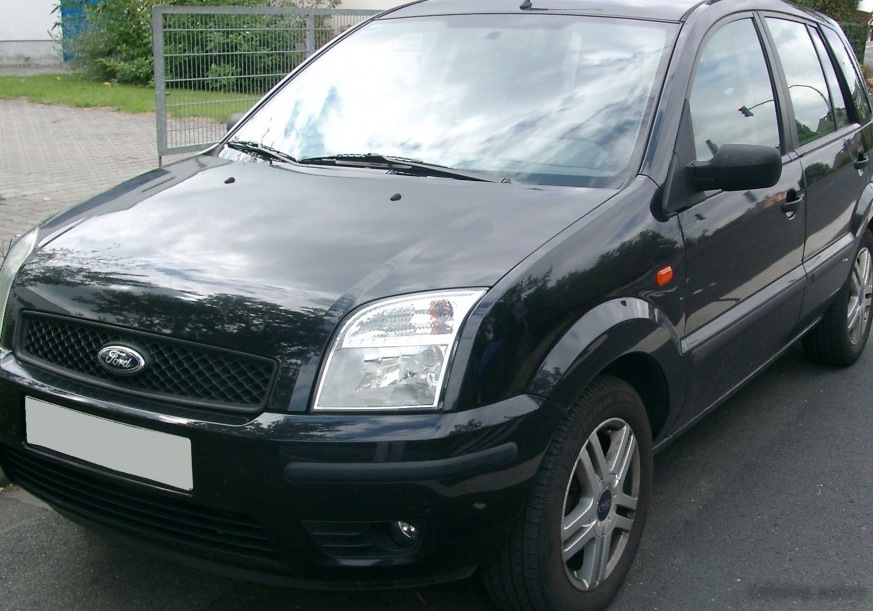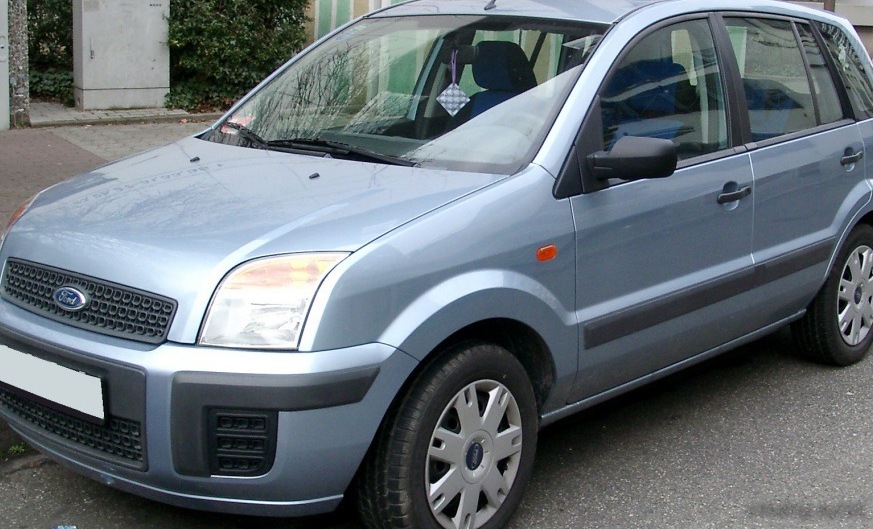
The Ford Fusion, specifically the 1.6-liter (101 horsepower) variant produced from 2005 to 2012, represented an entry-level offering within the first generation (Mk1) Fusion lineup. Introduced as part of the 2005 facelift, this model aimed to provide affordable and practical transportation, primarily targeting European markets. The Fusion, a compact hatchback, was Ford’s attempt to create a globally appealing vehicle, sharing its platform – the B3 platform – with the Ford Focus and Mazda 3. This particular 1.6L engine and five-speed manual transmission combination served as the base model, offering a balance between fuel efficiency and acceptable performance for everyday driving.
Technical Specifications
| Brand | Ford |
| Model | Fusion |
| Generation | Fusion I (facelift 2005) |
| Type (Engine) | 1.6 (101 Hp) |
| Start of production | 2005 |
| End of production | 2012 |
| Powertrain Architecture | Internal Combustion engine |
| Body type | Hatchback |
| Seats | 5 |
| Doors | 5 |
| Fuel consumption (urban) | 8.9 l/100 km (26.4 US mpg) |
| Fuel consumption (extra urban) | 5.3 l/100 km (44.4 US mpg) |
| Fuel consumption (combined) | 6.6 l/100 km (35.6 US mpg) |
| CO2 emissions | 157 g/km |
| Fuel Type | Petrol (Gasoline) |
| Acceleration 0 – 100 km/h | 11.1 sec |
| Acceleration 0 – 62 mph | 11.1 sec |
| Acceleration 0 – 60 mph | 10.5 sec |
| Maximum speed | 178 km/h (110.6 mph) |
| Emission standard | Euro 4 |
| Weight-to-power ratio | 10.8 kg/Hp |
| Weight-to-torque ratio | 7.5 kg/Nm |
| Power | 101 Hp @ 6000 rpm |
| Torque | 146 Nm @ 4000 rpm (107.68 lb.-ft. @ 4000 rpm) |
| Engine layout | Front, Transverse |
| Engine Model/Code | FYJA, FYJB, FYJC |
| Engine displacement | 1596 cm3 (97.39 cu. in.) |
| Number of cylinders | 4 |
| Engine configuration | Inline |
| Cylinder Bore | 79 mm (3.11 in.) |
| Piston Stroke | 81.4 mm (3.2 in.) |
| Compression ratio | 11:1 |
| Number of valves per cylinder | 4 |
| Fuel injection system | Multi-port manifold injection |
| Engine aspiration | Naturally aspirated engine |
| Valvetrain | DOHC |
| Engine oil capacity | 4.25 l (4.49 US qt | 3.74 UK qt) |
| Coolant capacity | 5 l (5.28 US qt | 4.4 UK qt) |
| Kerb Weight | 1090 kg (2403.04 lbs.) |
| Max. weight | 1605 kg (3538.42 lbs.) |
| Max load | 515 kg (1135.38 lbs.) |
| Trunk (boot) space – minimum | 337 l (11.9 cu. ft.) |
| Trunk (boot) space – maximum | 1175 l (41.49 cu. ft.) |
| Fuel tank capacity | 45 l (11.89 US gal | 9.9 UK gal) |
| Permitted trailer load with brakes (12%) | 900 kg (1984.16 lbs.) |
| Permitted trailer load without brakes | 500 kg (1102.31 lbs.) |
| Length | 4013 mm (157.99 in.) |
| Width | 1724 mm (67.87 in.) |
| Height | 1543 mm (60.75 in.) |
| Wheelbase | 2486 mm (97.87 in.) |
| Front track | 1487 mm (58.54 in.) |
| Rear track | 1445 mm (56.89 in.) |
| Ride height (ground clearance) | 160 mm (6.3 in.) |
| Drag coefficient (Cd) | 0.35 |
| Minimum turning circle | 10.3 m (33.79 ft.) |
| Drivetrain | Front wheel drive |
| Number of gears | 5 |
| Gearbox type | Manual transmission |
| Front suspension | Spring Strut |
| Rear suspension | Coil spring |
| Front brakes | Ventilated discs |
| Rear brakes | Drum |
| Steering type | Steering rack and pinion |
| Power steering | Hydraulic Steering |
| Tires size | 195/55 R16 |
| Wheel rims size | 16 |
Powertrain & Engine Architecture
The heart of this Fusion variant is the Ford FYJA/FYJB/FYJC 1.6-liter inline-four cylinder engine. This engine, a member of Ford’s Duratec family, utilizes a naturally aspirated configuration with multi-port fuel injection. The DOHC (Double Overhead Camshaft) valvetrain, with four valves per cylinder, contributes to reasonable power output for its displacement. The engine’s 11:1 compression ratio further aids in efficiency. The five-speed manual transmission, a standard feature, was chosen for its simplicity and cost-effectiveness. While not known for its sporty performance, the transmission offered smooth shifts and adequate gear spacing for typical urban and highway driving. The engine’s design prioritized fuel economy and reliability over outright power.
Driving Characteristics
The 1.6-liter Fusion offered modest performance. With 101 horsepower and 146 Nm (107.68 lb-ft) of torque, acceleration from 0 to 60 mph took around 10.5 seconds. The five-speed manual transmission allowed drivers to keep the engine in its optimal power band, but overtaking maneuvers required careful planning. Compared to higher-trim Fusions equipped with larger engines (like the 2.0-liter), the 1.6L felt noticeably slower. However, the lighter engine weight contributed to better handling and a more nimble feel, particularly in city driving. The gear ratios were tuned for fuel efficiency, meaning the engine could feel strained at higher speeds or when carrying a full load.
Equipment & Trim Levels
The 1.6-liter Fusion typically served as the entry-level trim. Standard equipment generally included power steering, central locking, electric front windows, and an AM/FM radio. Air conditioning was often an optional extra. Interior upholstery was typically cloth, and the dashboard featured a functional but basic design. Higher trim levels added features like alloy wheels, upgraded audio systems, and more luxurious interior appointments. The base model focused on providing essential features at an affordable price point.
Chassis & Braking
The Fusion’s chassis featured a MacPherson strut front suspension and a coil spring rear suspension. This setup provided a comfortable ride, although it wasn’t particularly sporty. The front brakes were ventilated discs, offering adequate stopping power, while the rear brakes were drums, a cost-saving measure common in entry-level vehicles. The hydraulic power steering provided light and easy steering, making it convenient for maneuvering in tight spaces. Stabilizer bars were present, but their thickness was relatively modest compared to higher-performance variants.
Market Reception & Comparison
The 1.6-liter Fusion was generally well-received as an affordable and practical hatchback. Critics praised its fuel efficiency and comfortable ride, but noted its lack of outright performance. Compared to other compact hatchbacks in the European market, the Fusion offered a competitive price point and a spacious interior. The 2.0-liter Fusion offered significantly more power but came at a higher cost. The 1.6L variant appealed to buyers prioritizing economy and practicality over performance, such as first-time car buyers or those seeking a reliable city car.
Legacy
The 1.6-liter Fusion, while not a performance icon, proved to be a reliable and durable powertrain. The FYJA/FYJB/FYJC engine is known for its longevity when properly maintained. In the used car market, these Fusions are often sought after for their affordability and low running costs. Common issues are generally limited to age-related wear and tear, such as suspension components and exhaust systems. The simplicity of the engine and transmission makes it relatively easy and inexpensive to repair. Today, the 1.6L Fusion remains a viable option for budget-conscious buyers seeking a practical and dependable hatchback.