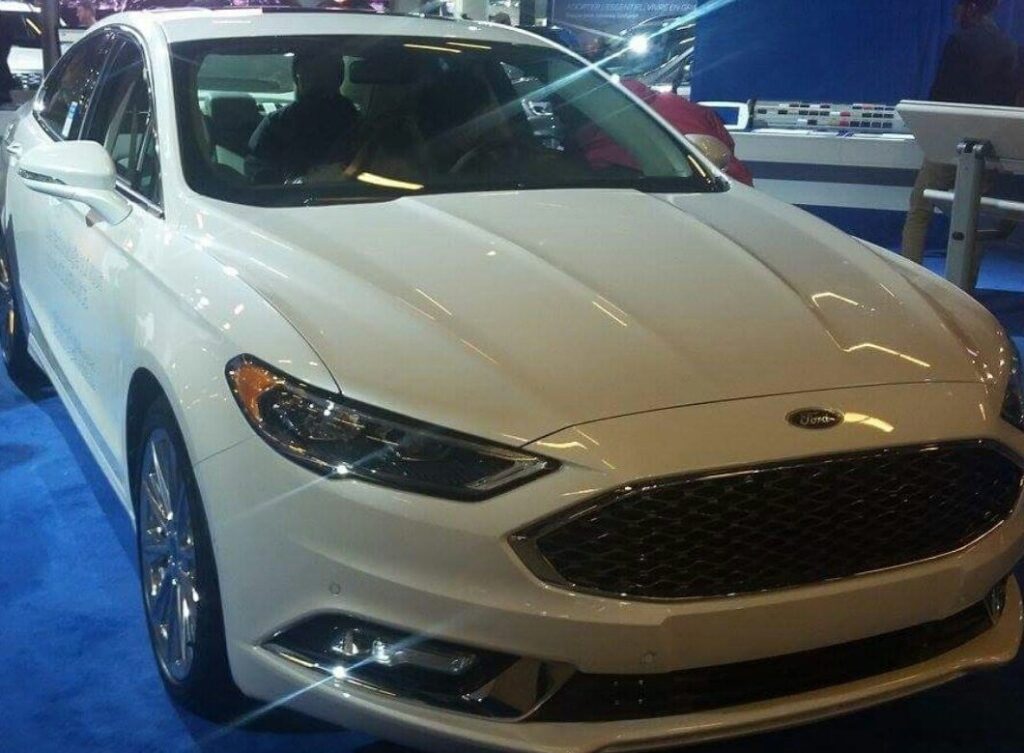
The Ford Fusion II, specifically the 1.5 EcoBoost variant with the automatic transmission, represented a key offering in Ford’s mid-size sedan lineup from 2016 to 2018. This version of the Fusion, a facelift of the second-generation model, was designed to appeal to a broad range of American drivers seeking a balance of fuel efficiency, modern technology, and comfortable driving dynamics. Positioned as a mid-range trim, it slotted between the base 2.5L naturally aspirated engine and the more powerful 2.0L EcoBoost options. The 1.5 EcoBoost automatic aimed to provide a more engaging driving experience than the base engine while remaining more affordable than the top-tier trims.
Technical Specifications
| Brand | Ford |
| Model | Fusion |
| Generation | Fusion II (facelift 2016) |
| Type (Engine) | 1.5 EcoBoost (181 Hp) Automatic |
| Start of production | 2016 |
| End of production | 2018 |
| Powertrain Architecture | Internal Combustion engine |
| Body type | Sedan |
| Seats | 5 |
| Doors | 4 |
| Fuel consumption (urban) | 9.8 l/100 km (24 US mpg) |
| Fuel consumption (extra urban) | 6.5 l/100 km (36.2 US mpg) |
| Fuel consumption (combined) | 8.4 l/100 km (28 US mpg) |
| Fuel Type | Petrol (Gasoline) |
| Acceleration 0 – 100 km/h | 8.9 sec |
| Acceleration 0 – 62 mph | 8.9 sec |
| Acceleration 0 – 60 mph | 8.5 sec |
| Maximum speed | 221 km/h (137.32 mph) |
| Weight-to-power ratio | 8.7 kg/Hp |
| Weight-to-torque ratio | 6.3 kg/Nm |
| Power | 181 Hp @ 6000 rpm |
| Torque | 251 Nm @ 4320 rpm (185.13 lb.-ft. @ 4320 rpm) |
| Engine layout | Front, Transverse |
| Engine displacement | 1499 cm3 (91.47 cu. in.) |
| Number of cylinders | 4 |
| Engine configuration | Inline |
| Cylinder Bore | 79 mm (3.11 in.) |
| Piston Stroke | 76.45 mm (3.01 in.) |
| Compression ratio | 10:1 |
| Number of valves per cylinder | 4 |
| Fuel injection system | Direct injection |
| Engine aspiration | Turbocharger, Intercooler |
| Valvetrain | DOHC, Ti-VCT |
| Engine oil capacity | 4.1 l (4.33 US qt | 3.61 UK qt) |
| Coolant | 10.3 l (10.88 US qt | 9.06 UK qt) |
| Kerb Weight | 1575 kg (3472.28 lbs.) |
| Trunk (boot) space – minimum | 453 l (16 cu. ft.) |
| Fuel tank capacity | 62 l (16.38 US gal | 13.64 UK gal) |
| Length | 4872 mm (191.81 in.) |
| Width | 1852 mm (72.91 in.) |
| Width including mirrors | 2121 mm (83.5 in.) |
| Height | 1478 mm (58.19 in.) |
| Wheelbase | 2850 mm (112.2 in.) |
| Front track | 1593 mm (62.72 in.) |
| Rear (Back) track | 1585 mm (62.4 in.) |
| Drag coefficient (Cd) | 0.30 |
| Minimum turning circle | 11.5 m (37.73 ft.) |
| Drivetrain Architecture | Front wheel drive |
| Number of gears | 6 |
| Type of gearbox | Automatic transmission |
| Front suspension | Independent, McPherson with coil spring and anti-roll bar |
| Rear suspension | Independent multi-link suspension |
| Front brakes | Ventilated discs |
| Rear brakes | Disc |
| Tires size | 235/50 R17 |
| Wheel rims size | 17 |
INTRODUCTION
The 2016-2018 Ford Fusion 1.5 EcoBoost Automatic was a significant iteration of Ford’s popular mid-size sedan. Falling within the second generation (2013-2020) of the Fusion, this facelift brought updated styling and a refined powertrain lineup. The 1.5L EcoBoost engine, introduced with this refresh, was designed to offer improved fuel economy and a more responsive driving experience compared to the older 2.5L naturally aspirated engine. Built on the CD2 platform (also known as the 1HX0/A3 platform shared with the Mazda 6 and Euro Ford Mondeo), the Fusion aimed to compete with established rivals like the Toyota Camry, Honda Accord, and Nissan Altima in the highly competitive American family sedan market.
Powertrain & Engine Architecture
At the heart of the Fusion 1.5 EcoBoost is the Ford 1.5L EcoBoost inline-four cylinder engine. This engine, part of Ford’s EcoBoost family, utilizes direct fuel injection and a single turbocharger with an intercooler to deliver a balance of power and efficiency. The engine code is typically GTDI. The direct injection system allows for precise fuel delivery, optimizing combustion and reducing emissions. The valvetrain features a Double Overhead Camshaft (DOHC) configuration with Twin Independent Variable Camshaft Timing (Ti-VCT), enabling the engine to adjust valve timing for optimal performance across the rev range. The 1.5L engine produces 181 horsepower at 6000 rpm and 185 lb-ft of torque at 4320 rpm. Paired with this engine is a six-speed automatic transmission, chosen for its smooth shifting and efficiency. This transmission is designed to work seamlessly with the engine’s torque curve, providing adequate acceleration and comfortable cruising.
Driving Characteristics
The Fusion 1.5 EcoBoost Automatic offered a noticeably more spirited driving experience than the base 2.5L model. While not as powerful as the 2.0L EcoBoost variants, the 1.5L provided sufficient power for everyday driving situations, including highway merging and passing maneuvers. The six-speed automatic transmission generally shifted smoothly, although some drivers noted a slight hesitation during quick acceleration. The gear ratios were tuned for a balance of fuel economy and responsiveness. Compared to the manual transmission options available on other Fusion trims, the automatic prioritized convenience and ease of use over outright performance. The automatic transmission’s programming was geared towards fuel efficiency, resulting in a slightly less aggressive throttle response.
Equipment & Trim Levels
The 1.5 EcoBoost trim typically came standard with features such as Ford’s SYNC infotainment system with a touchscreen display, Bluetooth connectivity, a rearview camera, and automatic climate control. Interior upholstery was generally cloth, with available upgrades to leather. Common optional extras included a sunroof, heated front seats, a premium audio system, and advanced safety features like blind-spot monitoring and rear cross-traffic alert. The dashboard layout was clean and modern, with a focus on user-friendliness. Higher trim levels within the 1.5 EcoBoost range often added features like upgraded interior materials, larger wheels, and additional chrome exterior accents.
Chassis & Braking
The Fusion 1.5 EcoBoost utilized an independent McPherson strut front suspension and an independent multi-link rear suspension. This suspension setup provided a comfortable ride quality while maintaining reasonable handling characteristics. The front suspension incorporated a coil spring and anti-roll bar to reduce body roll during cornering. Braking duties were handled by ventilated discs at the front and solid discs at the rear. The braking system was equipped with Anti-lock Braking System (ABS) as standard, enhancing safety and control during emergency braking situations. Steering was provided by a rack and pinion system, offering precise and responsive steering feel.
Market Reception & Comparison
The Fusion 1.5 EcoBoost Automatic was generally well-received by automotive critics. Reviewers praised its fuel efficiency, comfortable ride, and modern features. However, some noted that the engine lacked the outright power of its competitors, particularly the turbocharged engines offered by Honda and Toyota. Compared to the 2.5L Fusion, the 1.5 EcoBoost offered a significant improvement in performance and fuel economy. Compared to the 2.0L EcoBoost, it provided a more affordable entry point into the Fusion lineup, albeit with less power. Fuel economy figures averaged around 28 mpg combined, making it a competitive option in its class.
Legacy
The 1.5L EcoBoost engine, while not without its minor issues (such as potential for carbon buildup on the intake valves, a common issue with direct-injection engines), has proven to be relatively reliable in the long term. The six-speed automatic transmission is also known for its durability. On the used car market, the 2016-2018 Fusion 1.5 EcoBoost Automatic represents a good value proposition, offering a well-equipped and fuel-efficient mid-size sedan at an affordable price. Its blend of comfort, technology, and efficiency continues to appeal to buyers seeking a practical and reliable family car.