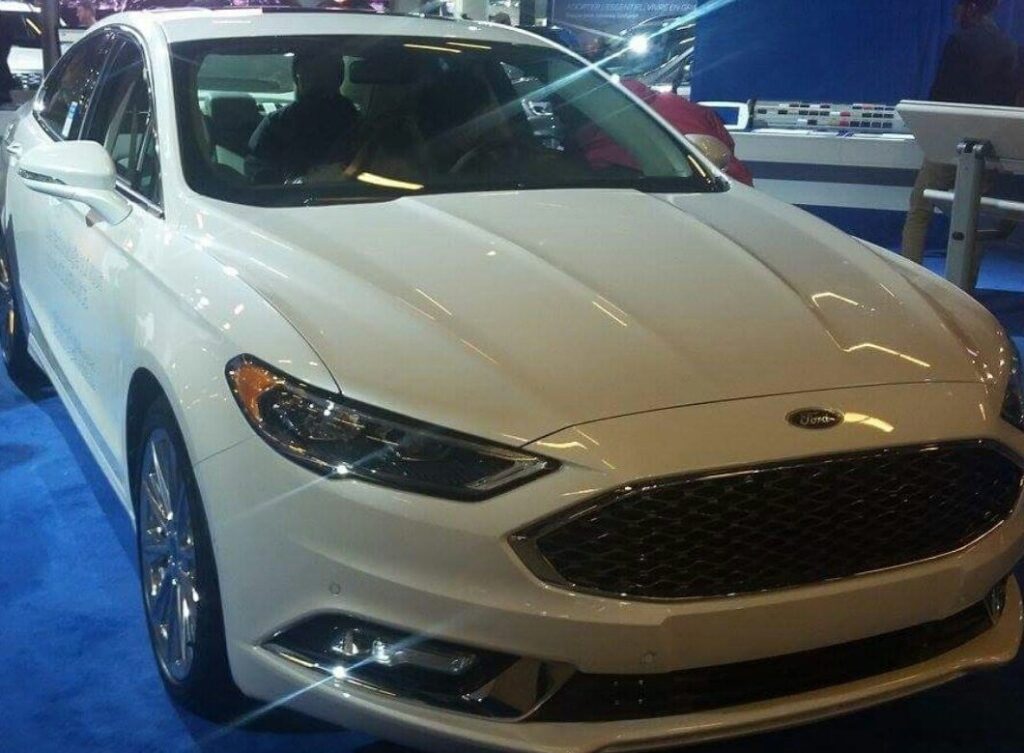
The Ford Fusion II, specifically the 2.0 EcoBoost variant with all-wheel drive and an automatic transmission, represented a significant offering in the mid-size sedan segment during its 2016-2018 production run. This version, part of the facelifted second generation of the Fusion (introduced in 2013), aimed to provide a blend of performance, technology, and all-weather capability. Positioned as a near-top-tier trim, it sat above the base 2.5L engine and the hybrid options, offering a more spirited driving experience than the standard models while remaining below the more luxurious and potentially higher-priced options available at the time. It was primarily marketed towards American and Canadian consumers seeking a comfortable, well-equipped, and capable family sedan.
Technical Specifications
| Brand | Ford |
| Model | Fusion |
| Generation | Fusion II (facelift 2016) |
| Type (Engine) | 2.0 EcoBoost (245 Hp) AWD Automatic |
| Start of production | 2016 |
| End of production | 2018 |
| Powertrain Architecture | Internal Combustion engine |
| Body type | Sedan |
| Seats | 5 |
| Doors | 4 |
| Fuel consumption (economy) – urban | 11.7 l/100 km (20.1 US mpg, 24.1 UK mpg, 8.5 km/l) |
| Fuel consumption (economy) – extra urban | 8.1 l/100 km (29 US mpg, 34.9 UK mpg, 12.3 km/l) |
| Fuel consumption (economy) – combined | 10.2 l/100 km (23.1 US mpg, 27.7 UK mpg, 9.8 km/l) |
| Fuel Type | Petrol (Gasoline) |
| Acceleration 0 – 100 km/h | 7 sec |
| Acceleration 0 – 62 mph | 7 sec |
| Acceleration 0 – 60 mph | 6.7 sec |
| Maximum speed | 238 km/h (147.89 mph) |
| Weight-to-power ratio | 7.1 kg/Hp, 141.2 Hp/tonne |
| Weight-to-torque ratio | 4.7 kg/Nm, 215 Nm/tonne |
| Power | 245 Hp @ 5500 rpm |
| Power per litre | 122.6 Hp/l |
| Torque | 373 Nm @ 3000 rpm (275.11 lb.-ft. @ 3000 rpm) |
| Engine layout | Front, Transverse |
| Engine displacement | 1999 cm3 (121.99 cu. in.) |
| Number of cylinders | 4 |
| Engine configuration | Inline |
| Cylinder Bore | 87.5 mm (3.44 in.) |
| Piston Stroke | 83.1 mm (3.27 in.) |
| Compression ratio | 9.3:1 |
| Number of valves per cylinder | 4 |
| Fuel injection system | Direct injection |
| Engine aspiration | Turbocharger, Intercooler |
| Valvetrain | DOHC, Ti-VCT |
| Engine oil capacity | 5.4 l (5.71 US qt | 4.75 UK qt) |
| Coolant | 8 l (8.45 US qt | 7.04 UK qt) |
| Kerb Weight | 1735 kg (3825.02 lbs.) |
| Trunk (boot) space – minimum | 453 l (16 cu. ft.) |
| Fuel tank capacity | 68 l (17.96 US gal | 14.96 UK gal) |
| Length | 4872 mm (191.81 in.) |
| Width | 1852 mm (72.91 in.) |
| Width including mirrors | 2121 mm (83.5 in.) |
| Height | 1478 mm (58.19 in.) |
| Wheelbase | 2850 mm (112.2 in.) |
| Front track | 1593 mm (62.72 in.) |
| Rear (Back) track | 1585 mm (62.4 in.) |
| Drag coefficient (Cd) | 0.30 |
| Minimum turning circle (turning diameter) | 11.5 m (37.73 ft.) |
| Drive wheel | All wheel drive (4×4) |
| Number of gears and type of gearbox | 6 gears, automatic transmission |
| Front suspension | Independent, type McPherson with coil spring and anti-roll bar |
| Rear suspension | Independent multi-link suspension |
| Front brakes | Ventilated discs |
| Rear brakes | Disc |
| Assisting systems | ABS (Anti-lock braking system) |
| Steering type | Steering rack and pinion |
| Tires size | 235/40 R19 |
| Wheel rims size | 19 |
Powertrain & Engine Architecture
At the heart of the 2016-2018 Fusion 2.0 EcoBoost AWD was the Ford EcoBoost 2.0-liter inline-four cylinder engine. This engine, part of Ford’s EcoBoost family, utilized direct fuel injection and a single turbocharger with an intercooler to deliver a substantial 245 horsepower and 275 lb-ft of torque. The engine code is generally associated with the GTDI (Gasoline Turbocharged Direct Injection) family. The Ti-VCT (Twin Independent Variable Camshaft Timing) system optimized valve timing for improved performance and efficiency across the rev range. The engine’s aluminum block and head contributed to weight savings. The six-speed automatic transmission, specifically the 6F35, was chosen for its smooth shifting and responsiveness. This transmission featured a torque converter and was designed to handle the engine’s output effectively. The all-wheel-drive system employed a multi-plate clutch to distribute torque between the front and rear axles, enhancing traction in various conditions.
Driving Characteristics
The 2.0 EcoBoost AWD Fusion offered a noticeably more engaging driving experience compared to the base 2.5L model. Acceleration to 60 mph was achieved in around 6.7 seconds, making it competitive with other mid-size sedans in its class. The turbocharger provided a broad torque curve, resulting in strong acceleration from low to mid-range engine speeds. The six-speed automatic transmission generally shifted smoothly, although some drivers noted occasional hesitation during downshifts. The all-wheel-drive system provided enhanced stability and grip, particularly in inclement weather. While not a sports sedan, the Fusion 2.0 EcoBoost AWD offered a good balance of performance and comfort for everyday driving.
Equipment & Trim Levels
The 2.0 EcoBoost AWD trim typically included features such as leather upholstery, heated front seats, a power-adjustable driver’s seat, dual-zone automatic climate control, and a premium audio system. Standard technology included Ford’s SYNC 3 infotainment system with an 8-inch touchscreen, Apple CarPlay, and Android Auto compatibility. Optional extras included a sunroof, navigation system, blind-spot monitoring, lane-keeping assist, and adaptive cruise control. The interior design was generally considered modern and well-appointed, with a focus on user-friendliness.
Chassis & Braking
The Fusion’s chassis featured an independent McPherson strut front suspension and an independent multi-link rear suspension. This setup provided a comfortable ride while maintaining good handling characteristics. The steering was electrically assisted and offered a reasonable level of feedback. The braking system consisted of ventilated discs at the front and solid discs at the rear. Anti-lock brakes (ABS) and electronic stability control were standard features. The suspension tuning was geared towards comfort, but the all-wheel-drive system helped to mitigate body roll during cornering.
Market Reception & Comparison
The 2.0 EcoBoost AWD Fusion was generally well-received by automotive critics. It was praised for its strong performance, comfortable ride, and well-equipped interior. Fuel economy was rated at around 23 mpg combined, which was competitive for its class. Compared to the base 2.5L Fusion, the 2.0 EcoBoost AWD offered a significant performance upgrade. Compared to the Fusion Hybrid, it provided a more traditional driving experience with more readily available power. Reliability was generally considered average, with some reports of minor issues with the turbocharger and fuel system.
Legacy
The 2.0 EcoBoost engine proved to be a popular choice for Ford, appearing in a variety of models. While the Fusion itself was discontinued in 2020, the 2.0 EcoBoost AWD variant remains a viable option in the used car market. The powertrain is generally considered reliable, although regular maintenance is essential to prevent potential issues. The combination of performance, all-wheel-drive capability, and available features makes it an attractive choice for buyers seeking a well-rounded mid-size sedan. Parts availability is generally good, and the vehicle’s relatively modern technology ensures that it remains competitive with newer models.