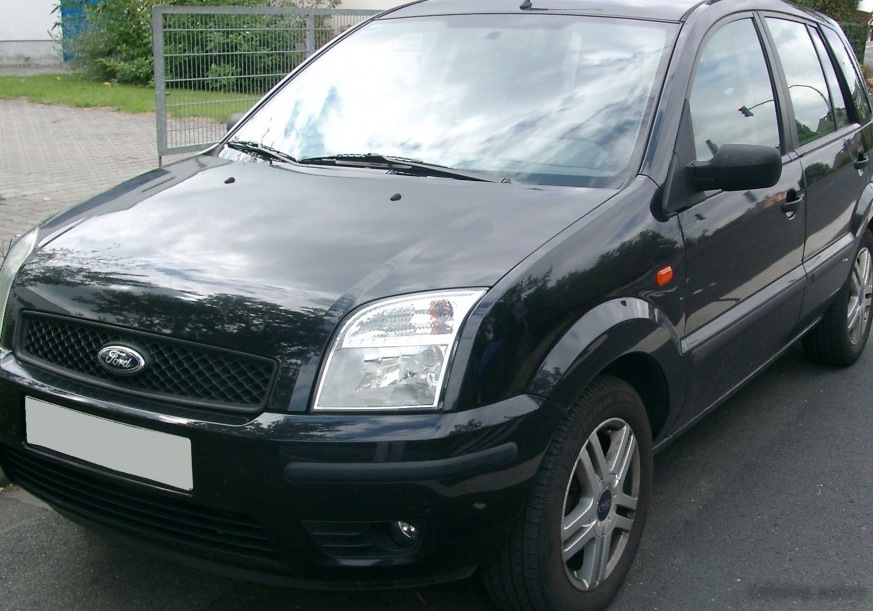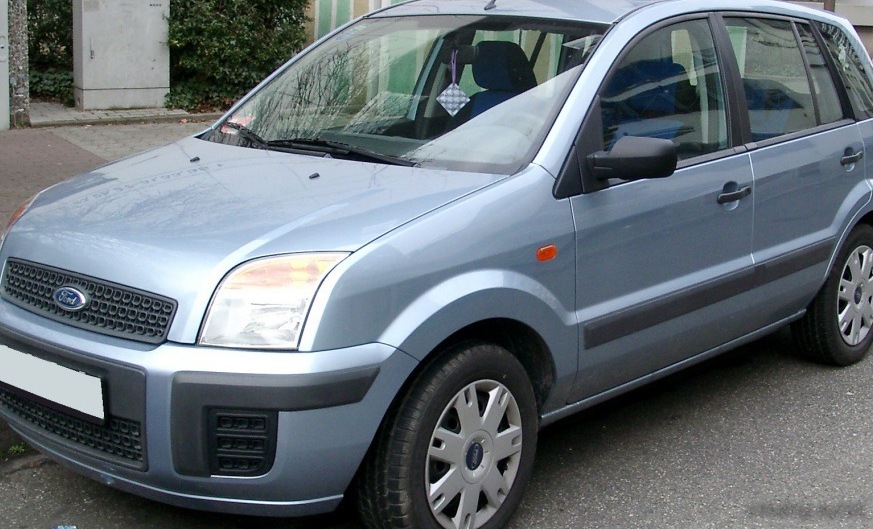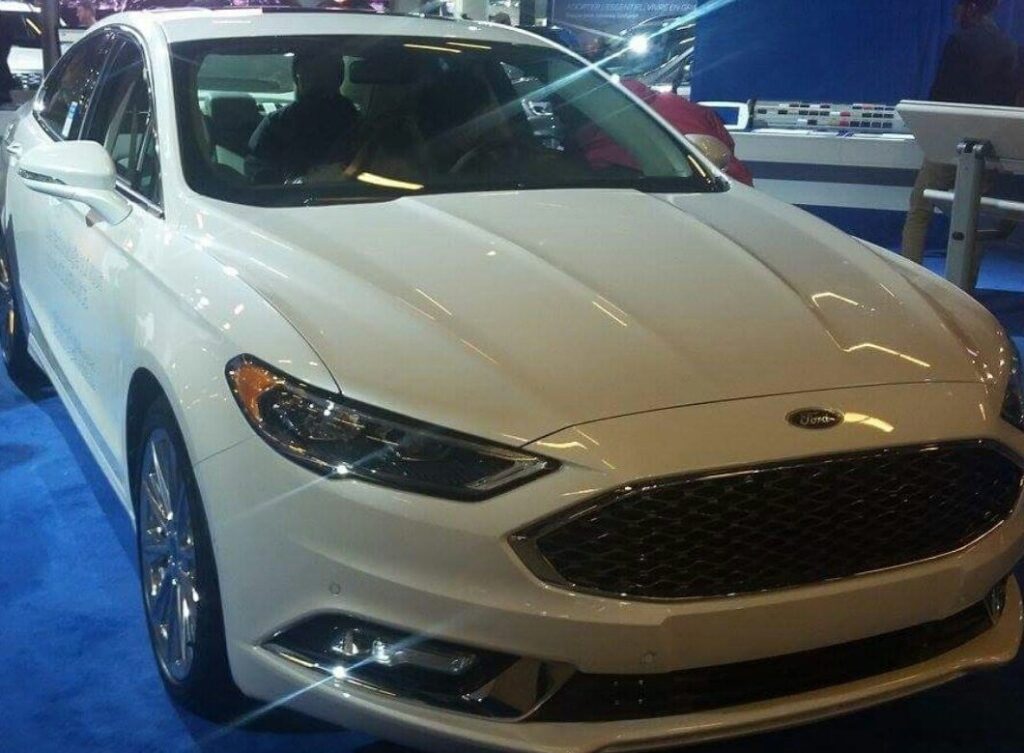
The Ford Fusion II, specifically the 2.5-liter variant with an automatic transmission produced from 2016 to 2018, represented a significant offering in Ford’s mid-size sedan lineup. This iteration of the Fusion, a facelift of the second generation (introduced in 2013), aimed to balance fuel efficiency, comfort, and a reasonable level of performance for the average American driver. Positioned as a mainstream trim, it sat between the base 2.5-liter engine and the more powerful, turbocharged EcoBoost options. The 2016-2018 Fusion was designed to compete with established rivals like the Toyota Camry, Honda Accord, and Nissan Altima, offering a distinctly American take on the family sedan.
Technical Specifications
| Brand | Ford |
| Model | Fusion |
| Generation | Fusion II (facelift 2016) |
| Type (Engine) | 2.5 (175 Hp) Automatic |
| Start of production | 2016 |
| End of production | 2018 |
| Powertrain Architecture | Internal Combustion engine |
| Body type | Sedan |
| Seats | 5 |
| Doors | 4 |
| Fuel consumption (urban) | 11.2 l/100 km (21 US mpg) |
| Fuel consumption (extra urban) | 7.3 l/100 km (32.2 US mpg) |
| Fuel consumption (combined) | 9.4 l/100 km (25 US mpg) |
| Fuel Type | Petrol (Gasoline) |
| Acceleration 0 – 100 km/h | 9.5 sec |
| Acceleration 0 – 62 mph | 9.5 sec |
| Acceleration 0 – 60 mph | 9 sec |
| Maximum speed | 217 km/h (134.84 mph) |
| Weight-to-power ratio | 9 kg/Hp |
| Weight-to-torque ratio | 6.6 kg/Nm |
| Power | 175 Hp @ 6000 rpm |
| Torque | 237 Nm @ 4500 rpm (174.8 lb.-ft. @ 4500 rpm) |
| Engine layout | Front, Transverse |
| Engine displacement | 2488 cm3 (151.83 cu. in.) |
| Number of cylinders | 4 |
| Engine configuration | Inline |
| Cylinder Bore | 89 mm (3.5 in.) |
| Piston Stroke | 100 mm (3.94 in.) |
| Compression ratio | 9.7:1 |
| Number of valves per cylinder | 4 |
| Fuel injection system | Multi-port manifold injection |
| Engine aspiration | Naturally aspirated engine |
| Valvetrain | DOHC, Ti-VCT |
| Engine oil capacity | 5.4 l (5.71 US qt | 4.75 UK qt) |
| Coolant capacity | 7.4 l (7.82 US qt | 6.51 UK qt) |
| Kerb Weight | 1575 kg (3472.28 lbs.) |
| Trunk (boot) space | 453 l (16 cu. ft.) |
| Fuel tank capacity | 62 l (16.38 US gal | 13.64 UK gal) |
| Length | 4872 mm (191.81 in.) |
| Width | 1852 mm (72.91 in.) |
| Width including mirrors | 2121 mm (83.5 in.) |
| Height | 1478 mm (58.19 in.) |
| Wheelbase | 2850 mm (112.2 in.) |
| Front track | 1593 mm (62.72 in.) |
| Rear track | 1585 mm (62.4 in.) |
| Drag coefficient (Cd) | 0.30 |
| Minimum turning circle | 11.5 m (37.73 ft.) |
| Drivetrain Architecture | Front wheel drive |
| Number of gears | 6 |
| Gearbox type | Automatic transmission |
| Front suspension | Independent, McPherson with coil spring and anti-roll bar |
| Rear suspension | Independent multi-link suspension |
| Front brakes | Ventilated discs |
| Rear brakes | Disc |
| Assisting systems | ABS (Anti-lock braking system) |
| Steering type | Steering rack and pinion |
| Tires size | 215/60 R16 |
| Wheel rims size | 16 |
INTRODUCTION
The 2016-2018 Ford Fusion 2.5L Automatic was a cornerstone of the Fusion lineup, offering a balance of affordability and practicality. Built on the CD2 platform (also known as the 1HX0/A3 platform shared with the Mazda 6 and Euro-market Ford Mondeo), this version of the Fusion aimed to appeal to a broad range of buyers seeking a comfortable and reliable mid-size sedan. The facelift introduced in 2016 brought revised styling, including a more prominent grille and updated headlights, along with minor interior refinements. This variant was designed to be a volume seller, providing a more accessible entry point into the Fusion range compared to the more expensive and performance-oriented EcoBoost models.
Powertrain & Engine Architecture
At the heart of the Fusion 2.5 was the Duratec 2.5L inline-four cylinder engine. This engine, designated as the 2.5L MFI, utilized multi-port fuel injection and a double overhead camshaft (DOHC) valvetrain with variable valve timing (Ti-VCT). The Ti-VCT system allowed for optimized engine performance and fuel efficiency by adjusting the timing of the intake and exhaust valves. The engine produced 175 horsepower at 6000 rpm and 175 lb-ft of torque at 4500 rpm. This power was delivered through a six-speed automatic transmission, chosen for its smooth operation and ease of use. The transmission was calibrated for comfort and fuel economy, prioritizing smooth shifts over aggressive acceleration. While not a particularly advanced transmission, it proved to be generally reliable in service.
Driving Characteristics
The Fusion 2.5L Automatic offered a comfortable and predictable driving experience. Acceleration was adequate for everyday driving, with a 0-60 mph time of around 9 seconds. However, it wasn’t designed for spirited performance. Compared to the turbocharged EcoBoost variants, the 2.5L felt noticeably less powerful, especially when accelerating onto highways or passing other vehicles. The automatic transmission, while smooth, sometimes hesitated during downshifts. The gear ratios were optimized for fuel efficiency, resulting in a slightly less responsive feel. The suspension was tuned for comfort, absorbing bumps and road imperfections well, but it didn’t offer the same level of handling precision as some of its competitors.
Equipment & Trim Levels
The 2.5-liter Fusion typically came standard with features like air conditioning, power windows and locks, a basic audio system with a USB port, and steel wheels with wheel covers. Higher trim levels, such as the SE and SEL, added features like alloy wheels, a more advanced infotainment system with a touchscreen display, keyless entry, and upgraded interior materials. Optional extras included a sunroof, leather upholstery, heated front seats, and a premium sound system. Interior upholstery was typically cloth in the base models, with leather available as an upgrade. The dashboard layout was straightforward and functional, prioritizing ease of use over flashy design.
Chassis & Braking
The Fusion 2.5L utilized an independent McPherson strut front suspension and an independent multi-link rear suspension. This setup provided a good balance of ride comfort and handling. The front suspension incorporated a stabilizer bar to reduce body roll during cornering. Braking duties were handled by ventilated discs at the front and solid discs at the rear. Anti-lock brakes (ABS) were standard equipment. The braking system was adequate for everyday driving, but it lacked the stopping power of the higher-performance EcoBoost models. Steering was provided by a rack-and-pinion system, offering a reasonably responsive feel.
Market Reception & Comparison
The Fusion 2.5L Automatic was generally well-received by critics as a competent and comfortable mid-size sedan. However, it wasn’t often praised for its performance. Reviewers noted that the engine felt underpowered compared to some of its rivals, particularly when equipped with the automatic transmission. Fuel economy was considered average for the segment, with combined ratings around 25 mpg. Compared to the Fusion EcoBoost models, the 2.5L offered a lower price point but sacrificed performance and fuel efficiency. The 1.5L EcoBoost offered a slight improvement in fuel economy, while the 2.0L EcoBoost provided a significant boost in power. Reliability was generally good, although some owners reported minor issues with the transmission.
Legacy
The 2016-2018 Ford Fusion 2.5L Automatic remains a relatively affordable and reliable option in the used car market. The Duratec 2.5L engine is known for its durability, and the six-speed automatic transmission has proven to be generally dependable. While it may not offer the excitement of the EcoBoost models, the 2.5L provides a comfortable and practical driving experience for those seeking a no-frills mid-size sedan. Maintenance costs are typically reasonable, and parts are readily available. As Ford has discontinued the Fusion in North America, these models represent the final iteration of a once-popular American sedan.