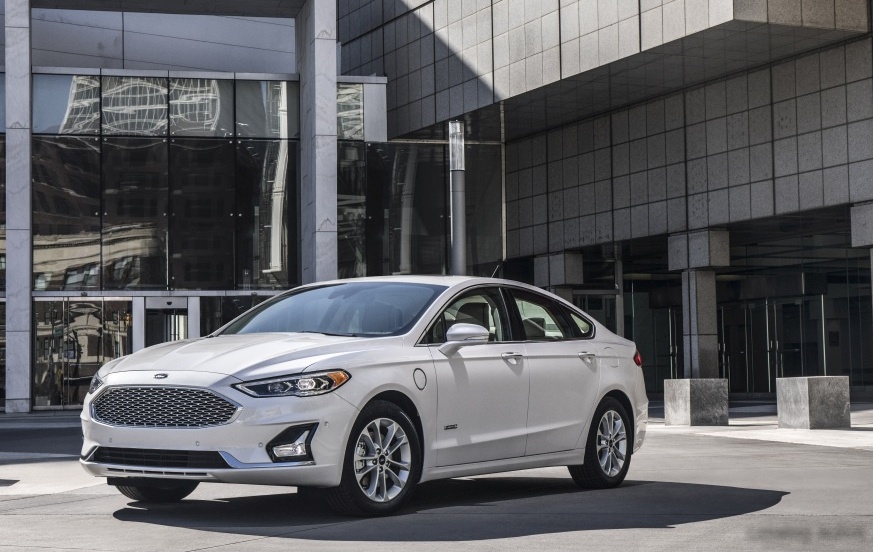
The Ford Fusion II, specifically the 2.5 Duratec (175 Hp) SelectShift variant introduced with the 2018 facelift, represents a mid-cycle update to Ford’s popular mid-size sedan. Production of this configuration began in 2018 and continued through the end of the Fusion’s lifecycle in North America. Positioned as a mainstream offering within the Fusion lineup, it aimed to provide a balance of fuel efficiency, comfortable driving dynamics, and affordability. This model falls within the second generation of the Fusion (2013-2020), which itself was based on Ford’s global CD2 platform, also underpinning the Mondeo in Europe and other Ford models worldwide.
Technical Specifications
| Brand | Ford |
| Model | Fusion |
| Generation | Fusion II (facelift 2018) |
| Type (Engine) | 2.5 Duratec (175 Hp) SelectShift |
| Start of production | 2018 |
| Powertrain Architecture | Internal Combustion engine |
| Body type | Sedan |
| Seats | 5 |
| Doors | 4 |
| Fuel consumption (urban) | 11.2 l/100 km (21 US mpg) |
| Fuel consumption (extra urban) | 7.3 l/100 km (32.2 US mpg) |
| Fuel consumption (combined) | 9.4 l/100 km (25 US mpg) |
| Fuel Type | Petrol (Gasoline) |
| Weight-to-power ratio | 9 kg/Hp |
| Weight-to-torque ratio | 6.6 kg/Nm |
| Power | 175 Hp @ 6000 rpm |
| Power per litre | 70.3 Hp/l |
| Torque | 237 Nm @ 4500 rpm (174.8 lb.-ft. @ 4500 rpm) |
| Engine layout | Front, Transverse |
| Engine displacement | 2488 cm3 (151.83 cu. in.) |
| Number of cylinders | 4 |
| Engine configuration | Inline |
| Cylinder Bore | 89 mm (3.5 in.) |
| Piston Stroke | 100 mm (3.94 in.) |
| Compression ratio | 9.7:1 |
| Number of valves per cylinder | 4 |
| Fuel injection system | Multi-port manifold injection |
| Engine aspiration | Naturally aspirated engine |
| Valvetrain | DOHC, Ti-VCT |
| Engine oil capacity | 5.4 l (5.71 US qt | 4.75 UK qt) |
| Coolant capacity | 7.4 l (7.82 US qt | 6.51 UK qt) |
| Kerb Weight | 1575 kg (3472.28 lbs.) |
| Trunk (boot) space | 453 l (16 cu. ft.) |
| Fuel tank capacity | 62 l (16.38 US gal | 13.64 UK gal) |
| Length | 4872 mm (191.81 in.) |
| Width | 1852 mm (72.91 in.) |
| Width with mirrors folded | 1910 mm (75.2 in.) |
| Width including mirrors | 2121 mm (83.5 in.) |
| Height | 1478 mm (58.19 in.) |
| Wheelbase | 2850 mm (112.2 in.) |
| Front track | 1593 mm (62.72 in.) |
| Rear track | 1585 mm (62.4 in.) |
| Drivetrain Architecture | Front wheel drive |
| Number of gears | 6 |
| Gearbox type | Automatic transmission SelectShift |
| Front suspension | Independent, McPherson with coil spring and anti-roll bar |
| Rear suspension | Independent multi-link suspension |
| Front brakes | Ventilated discs |
| Rear brakes | Disc |
| Assisting systems | ABS (Anti-lock braking system) |
| Steering type | Steering rack and pinion |
| Power steering | Electric |
| Tires size | 215/60 R16 |
| Wheel rims size | 16 |
Powertrain & Engine Architecture
The heart of this Fusion variant is Ford’s 2.5-liter Duratec inline-four cylinder engine. This engine, internally designated as the 2.5L Duratec, is a naturally aspirated powerplant utilizing multi-port fuel injection. The engine features a double overhead camshaft (DOHC) valvetrain with variable valve timing (Ti-VCT) on both intake and exhaust camshafts, contributing to improved efficiency and responsiveness. The 2.5 Duratec produces 175 horsepower at 6000 rpm and 175 lb-ft of torque at 4500 rpm. Paired with this engine is Ford’s 6-speed “SelectShift” automatic transmission. This transmission offers a traditional automatic driving experience but includes a manual shift mode for greater driver control. The SelectShift transmission is designed for smooth operation and contributes to the Fusion’s overall comfortable ride.
Driving Characteristics
The 2.5L Duratec with the 6-speed automatic delivers adequate, though not particularly sporty, performance. Acceleration is sufficient for everyday driving situations, but it won’t provide the briskness of the available turbocharged EcoBoost engines or the higher-performance V6 option. The automatic transmission is tuned for fuel efficiency, with gear ratios optimized for comfortable cruising. The transmission’s shift points are generally smooth, but can sometimes feel hesitant during quick acceleration. Compared to manual transmission versions of the 2.5L, the automatic sacrifices some responsiveness, but gains in ease of use, particularly in urban traffic. The weight-to-power ratio of 9 kg/Hp results in a noticeable difference in acceleration compared to lighter-weight trims.
Equipment & Trim Levels
The 2.5 Duratec SelectShift trim typically included standard features such as air conditioning, power windows and locks, a basic infotainment system with a touchscreen display, and a rearview camera. Higher trim levels, such as the SE and Titanium, added features like leather upholstery, upgraded audio systems, advanced safety technologies (blind-spot monitoring, lane-keeping assist), and premium interior finishes. Optional extras for the 2.5L variant often included a sunroof, navigation system, and various driver-assistance packages. The interior generally featured durable materials and a functional layout, prioritizing comfort and practicality over outright luxury.
Chassis & Braking
The Fusion II utilizes an independent front suspension with McPherson struts and a multi-link independent rear suspension. This setup provides a comfortable ride quality and reasonably controlled handling. The front suspension incorporates a coil spring and anti-roll bar to reduce body roll during cornering. Braking duties are handled by ventilated discs at the front and solid discs at the rear. The braking system is equipped with an Anti-lock Braking System (ABS) as standard. Steering is provided by an electric power steering system, offering a light and easy steering feel. The 16-inch wheels, typically fitted with 215/60 R16 tires, contribute to the ride comfort.
Market Reception & Comparison
The 2.5L Duratec SelectShift Fusion was generally well-received as a practical and affordable mid-size sedan. Critics praised its comfortable ride, spacious interior, and decent fuel economy. However, it was often criticized for its lack of excitement compared to competitors offering turbocharged engines or more engaging driving dynamics. Compared to the Fusion’s EcoBoost variants, the 2.5L offered lower performance but better fuel economy. Against the V6 model, it provided a more economical option with a lower purchase price. In terms of reliability, the 2.5L Duratec engine proved to be generally dependable, though some owners reported minor issues with the automatic transmission over time.
Legacy
The Ford Fusion II, including the 2.5 Duratec SelectShift variant, enjoyed a solid reputation for reliability and practicality. On the used car market, these models represent a good value proposition for buyers seeking a comfortable and dependable mid-size sedan. The 2.5L Duratec engine is known for its relatively simple design and ease of maintenance, making it an attractive option for budget-conscious buyers. While not a performance standout, the 2.5L Fusion provided a well-rounded package that appealed to a broad range of customers, contributing to the Fusion’s overall success in the competitive mid-size sedan segment. The discontinuation of the Fusion in North America has led to increased demand and stable resale values for well-maintained examples.