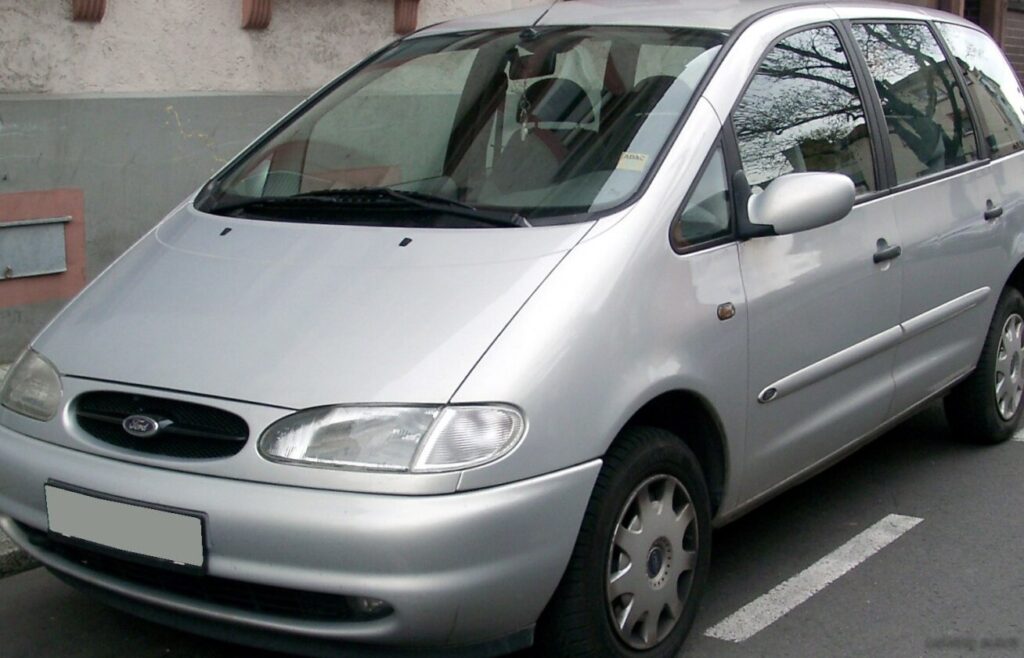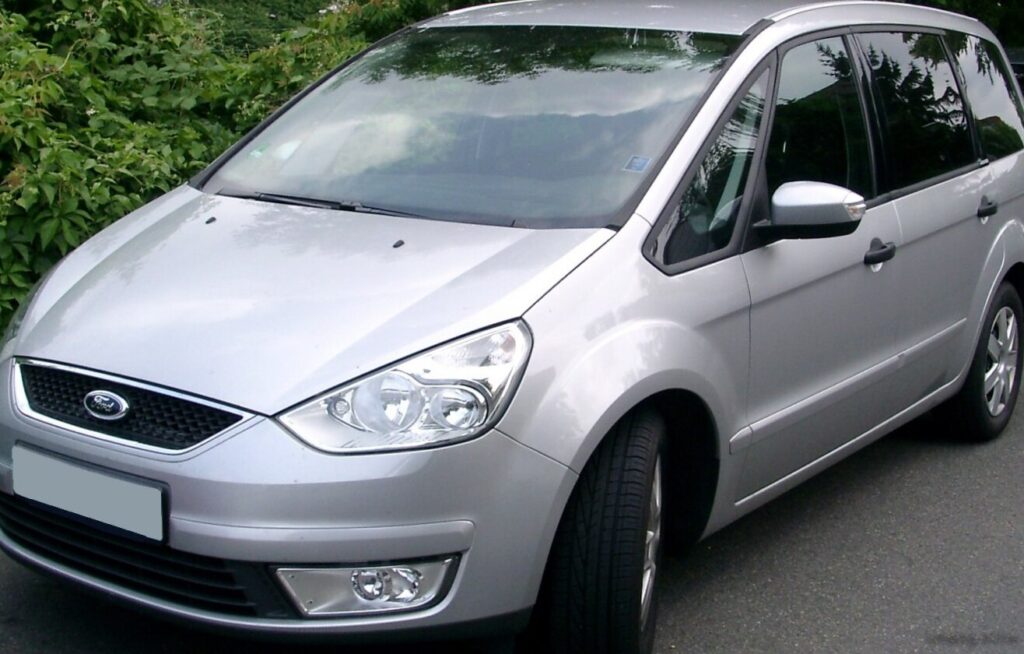
The Ford Galaxy II 1.8 TDCi, produced from 2006 to 2007, represented an entry-level diesel option within the second generation of Ford’s popular minivan. Part of the larger Ford Galaxy range (WA6), this variant utilized the 1HX0/A3 platform shared with other Ford and Volkswagen group vehicles like the S-MAX and certain Passats. Positioned as a more economical choice, the 1.8 TDCi aimed to provide family-friendly practicality with reasonable fuel efficiency, though at a modest performance level. It was primarily sold in the European market, where MPVs (Multi-Purpose Vehicles) were, and continue to be, a significant segment.
Technical Specifications
| Brand | Ford |
| Model | Galaxy |
| Generation | Galaxy II |
| Type (Engine) | 1.8 TDCi (101 Hp) |
| Start of production | 2006 |
| End of production | 2007 |
| Powertrain Architecture | Internal Combustion engine |
| Body type | Minivan |
| Seats | 7 |
| Doors | 5 |
| Fuel consumption (urban) | 8 l/100 km (29.4 US mpg) |
| Fuel consumption (extra urban) | 5.3 l/100 km (44.4 US mpg) |
| Fuel Type | Diesel |
| Acceleration 0 – 100 km/h | 14.3 sec |
| Acceleration 0 – 62 mph | 14.3 sec |
| Acceleration 0 – 60 mph | 13.6 sec |
| Maximum speed | 171 km/h (106.25 mph) |
| Weight-to-power ratio | 17 kg/Hp |
| Weight-to-torque ratio | 5.7 kg/Nm |
| Power | 101 Hp @ 3850 rpm |
| Power per litre | 57.6 Hp/l |
| Torque | 300 Nm @ 1800 rpm (221.27 lb.-ft. @ 1800 rpm) |
| Engine layout | Front, Transverse |
| Engine Model/Code | FFWA |
| Engine displacement | 1753 cm3 (106.97 cu. in.) |
| Number of cylinders | 4 |
| Engine configuration | Inline |
| Cylinder Bore | 82.5 mm (3.25 in.) |
| Piston Stroke | 82 mm (3.23 in.) |
| Compression ratio | 18.5:1 |
| Number of valves per cylinder | 2 |
| Fuel injection system | Diesel Commonrail |
| Engine aspiration | Turbocharger, Intercooler |
| Engine oil capacity | 5.6 l (5.92 US qt | 4.93 UK qt) |
| Coolant | 7.9 l (8.35 US qt | 6.95 UK qt) |
| Kerb Weight | 1720 kg (3791.95 lbs.) |
| Max. weight | 2505 kg (5522.58 lbs.) |
| Max load | 785 kg (1730.63 lbs.) |
| Trunk (boot) space – minimum | 308 l (10.88 cu. ft.) |
| Trunk (boot) space – maximum | 2325 l (82.11 cu. ft.) |
| Fuel tank capacity | 70 l (18.49 US gal | 15.4 UK gal) |
| Length | 4820 mm (189.76 in.) |
| Width | 1854 mm (72.99 in.) |
| Height | 1723 mm (67.83 in.) |
| Wheelbase | 2850 mm (112.2 in.) |
| Front track | 1589 mm (62.56 in.) |
| Rear (Back) track | 1605 mm (63.19 in.) |
| Drivetrain Architecture | The Internal combustion engine (ICE) drives the front wheels of the vehicle. |
| Drive wheel | Front wheel drive |
| Number of gears and type of gearbox | 5 gears, manual transmission |
| Front suspension | Independent, type McPherson with coil spring and anti-roll bar |
| Rear suspension | Independent multi-link spring suspension with stabilizer |
| Front brakes | Disc |
| Rear brakes | Disc |
| Assisting systems | ABS (Anti-lock braking system) |
| Steering type | Steering rack and pinion |
| Tires size | 215/60R16 |
Powertrain & Engine Architecture
The 1.8 TDCi engine, designated FFWA, is a four-cylinder, inline diesel engine. It features a common rail direct injection system, delivering fuel at extremely high pressure for improved combustion efficiency and reduced emissions. The engine is turbocharged and intercooled, enhancing power output. The 18.5:1 compression ratio is typical for a diesel engine, contributing to its thermal efficiency. The engine’s valvetrain utilizes two valves per cylinder (SOHC). The 5-speed manual transmission was the standard offering for this variant, chosen for its balance of cost and fuel economy. While an automatic transmission was available on other Galaxy II models, it wasn’t typically paired with the 1.8 TDCi due to the engine’s relatively modest power output and the automatic’s impact on fuel consumption.
Driving Characteristics
The 1.8 TDCi Galaxy II offered a practical, if not particularly exciting, driving experience. With 101 horsepower and 221 lb-ft of torque, acceleration was leisurely, taking around 14.3 seconds to reach 62 mph. The engine’s strength lay in its low-end torque, making it reasonably capable for everyday driving and hauling passengers. The 5-speed manual transmission was well-matched to the engine’s characteristics, allowing drivers to keep the engine in its optimal torque band. Compared to the more powerful 2.0 TDCi or petrol variants, the 1.8 TDCi felt noticeably slower, especially when fully loaded. However, it provided a smoother and more relaxed driving experience than the higher-output engines, particularly in urban environments.
Equipment & Trim Levels
The 1.8 TDCi typically represented the entry-level trim in the Galaxy II range. Standard equipment generally included air conditioning, power steering, electric front windows, and a basic audio system. Safety features such as ABS and driver/passenger airbags were also standard. Higher trim levels, such as the Titanium, added features like alloy wheels, climate control, rear parking sensors, and upgraded interior trim. The interior upholstery was typically cloth, with a functional, if somewhat basic, dashboard layout. Optional extras included a sunroof, navigation system, and leather upholstery.
Chassis & Braking
The Galaxy II utilized an independent suspension setup, with McPherson struts at the front and a multi-link system at the rear. This provided a comfortable ride quality, although handling was not particularly sporty. The front and rear brakes were discs, offering adequate stopping power for the vehicle’s weight. The steering was rack and pinion, providing reasonable precision. Stabilizer bars were fitted to both the front and rear axles to reduce body roll during cornering. The 1.8 TDCi models typically rode on 215/60R16 tires, balancing comfort and grip.
Market Reception & Comparison
The 1.8 TDCi Galaxy II was generally well-received as a practical and economical family vehicle. Critics praised its spacious interior, comfortable ride, and reasonable fuel economy. However, the engine’s modest power output was a common criticism, particularly when compared to the more powerful alternatives. In terms of fuel economy, the 1.8 TDCi offered a significant improvement over the petrol engines, achieving around 44.4 US mpg on the extra-urban cycle. Compared to the 2.0 TDCi, the 1.8 TDCi was less refined and offered lower performance, but it was also more affordable to purchase and insure. Reliability was generally good, although common diesel engine issues, such as injector problems and turbocharger wear, could occur.
Legacy
The Ford Galaxy II 1.8 TDCi remains a relatively common sight on European roads today. The FFWA engine, while not known for being particularly powerful, has proven to be reasonably durable with proper maintenance. Used examples are generally affordable, making them an attractive option for budget-conscious buyers. However, potential buyers should be aware of the potential for diesel engine issues and ensure that the vehicle has been well-maintained. The Galaxy II, in general, established Ford as a major player in the European MPV market, and the 1.8 TDCi variant played a role in making this versatile vehicle accessible to a wider range of customers.