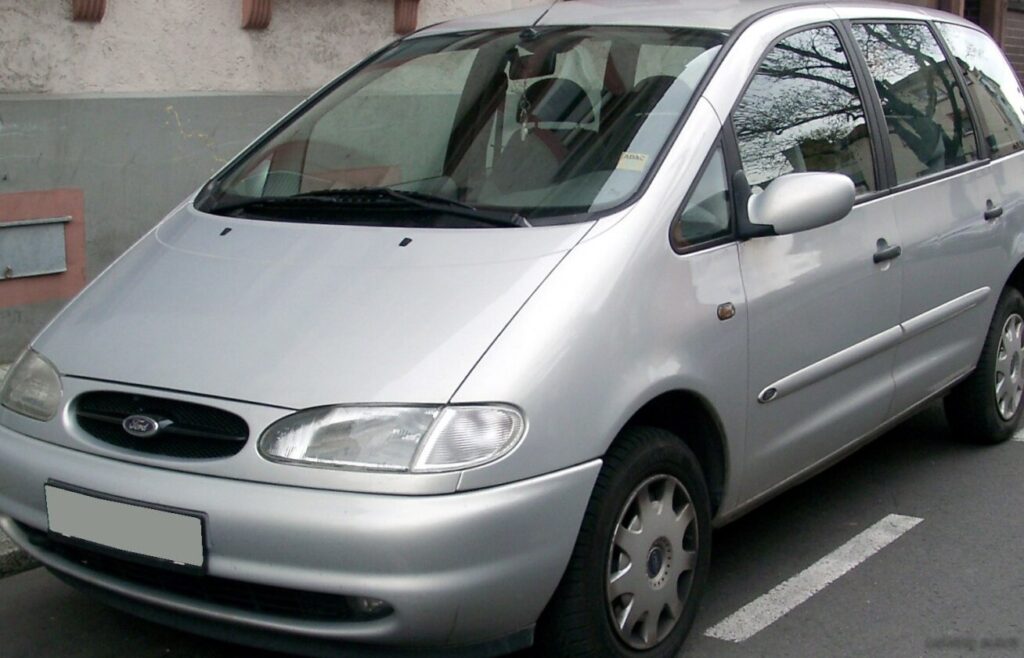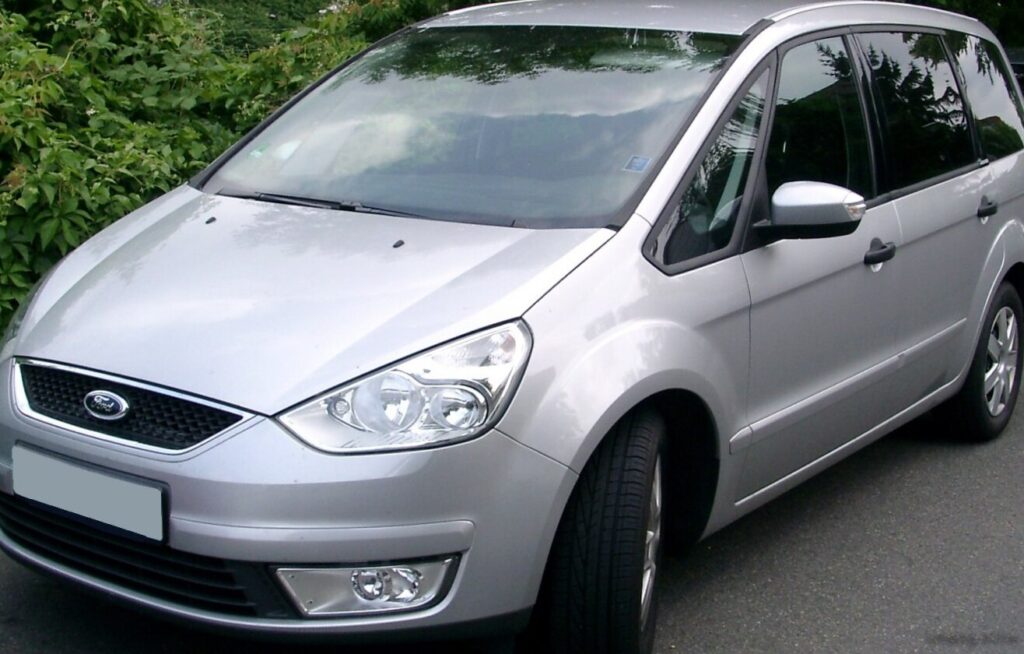
The Ford Galaxy II 1.8 TDCi, produced between 2006 and 2007, represented a key offering in Ford’s European minivan lineup. Positioned as a practical and relatively economical option within the second-generation Galaxy (WA6) range, it catered to families seeking a spacious seven-seater vehicle. This variant utilized the QYWA engine code and was part of the broader 1HX0/A3 platform shared with other Ford and Volkswagen group vehicles. It aimed to balance affordability with the Galaxy’s core strengths: versatility, comfort, and a large interior volume. While not the performance leader of the range, the 1.8 TDCi offered a compelling package for buyers prioritizing fuel efficiency and everyday usability.
Technical Specifications
| Brand | Ford |
| Model | Galaxy |
| Generation | Galaxy II |
| Type (Engine) | 1.8 TDCi (125 Hp) |
| Start of production | 2006 |
| End of production | 2007 |
| Powertrain Architecture | Internal Combustion engine |
| Body type | Minivan |
| Seats | 7 |
| Doors | 5 |
| Fuel consumption (urban) | 8 l/100 km (29.4 US mpg) |
| Fuel consumption (extra urban) | 5.3 l/100 km (44.4 US mpg) |
| Fuel Type | Diesel |
| Acceleration 0 – 100 km/h | 11.9 sec |
| Acceleration 0 – 62 mph | 11.9 sec |
| Acceleration 0 – 60 mph | 11.3 sec |
| Maximum speed | 187 km/h (116.2 mph) |
| Weight-to-power ratio | 13.8 kg/Hp |
| Weight-to-torque ratio | 5.1 kg/Nm |
| Power | 125 Hp @ 3850 rpm |
| Power per litre | 71.3 Hp/l |
| Torque | 340 Nm @ 1750 rpm (250.77 lb.-ft. @ 1750 rpm) |
| Engine layout | Front, Transverse |
| Engine Model/Code | QYWA |
| Engine displacement | 1753 cm3 (106.97 cu. in.) |
| Number of cylinders | 4 |
| Engine configuration | Inline |
| Cylinder Bore | 82.5 mm (3.25 in.) |
| Piston Stroke | 82 mm (3.23 in.) |
| Compression ratio | 18:1 |
| Number of valves per cylinder | 2 |
| Fuel injection system | Diesel Commonrail |
| Engine aspiration | Turbocharger, Intercooler |
| Engine oil capacity | 5.6 l (5.92 US qt | 4.93 UK qt) |
| Coolant | 7.9 l (8.35 US qt | 6.95 UK qt) |
| Kerb Weight | 1720 kg (3791.95 lbs.) |
| Max. weight | 2505 kg (5522.58 lbs.) |
| Max load | 785 kg (1730.63 lbs.) |
| Trunk (boot) space – minimum | 308 l (10.88 cu. ft.) |
| Trunk (boot) space – maximum | 2325 l (82.11 cu. ft.) |
| Fuel tank capacity | 70 l (18.49 US gal | 15.4 UK gal) |
| Length | 4820 mm (189.76 in.) |
| Width | 1854 mm (72.99 in.) |
| Height | 1723 mm (67.83 in.) |
| Wheelbase | 2850 mm (112.2 in.) |
| Front track | 1589 mm (62.56 in.) |
| Rear (Back) track | 1605 mm (63.19 in.) |
| Drivetrain Architecture | The Internal combustion engine (ICE) drives the front wheels of the vehicle. |
| Drive wheel | Front wheel drive |
| Number of gears and type of gearbox | 5 gears, manual transmission |
| Front suspension | Independent, type McPherson with coil spring and anti-roll bar |
| Rear suspension | Independent multi-link spring suspension with stabilizer |
| Front brakes | Disc |
| Rear brakes | Disc |
| Assisting systems | ABS (Anti-lock braking system) |
| Steering type | Steering rack and pinion |
| Tires size | 215/60R16 |
Powertrain & Engine Architecture
The heart of the Galaxy II 1.8 TDCi was the QYWA engine, a 1.8-liter inline-four cylinder diesel. This engine belonged to the Ford Duratorq family, known for its robust construction and relatively simple design. It featured a common rail direct injection system, delivering fuel at extremely high pressure for improved combustion efficiency and reduced emissions. A turbocharger with an intercooler was employed to boost power output, providing 125 horsepower at 3850 rpm and a respectable 340 Nm (250 lb-ft) of torque at just 1750 rpm. The engine utilized a two-valve per cylinder configuration (SOHC) and a compression ratio of 18:1. The Galaxy 1.8 TDCi was exclusively offered with a five-speed manual transmission, designed to efficiently manage the engine’s torque curve and provide reasonable fuel economy.
Driving Characteristics
The 1.8 TDCi-equipped Galaxy offered a comfortable, if not particularly exhilarating, driving experience. Acceleration from 0-60 mph took around 11.3 seconds, and top speed was limited to 116.2 mph. The engine’s strong low-end torque made it well-suited for everyday driving and hauling passengers or cargo. The five-speed manual transmission was well-matched to the engine, providing adequate gear spacing for both urban and highway driving. Compared to the more powerful 2.0-liter TDCi variants, the 1.8 felt less strained when fully loaded, but lacked the same level of outright performance. The gear ratios were optimized for fuel efficiency rather than rapid acceleration. Steering was light and easy, making maneuvering in tight spaces straightforward, but didn’t offer much in the way of driver feedback.
Equipment & Trim Levels
The 1.8 TDCi Galaxy typically occupied a mid-range position in the lineup. Standard equipment generally included air conditioning, power windows, central locking, and an audio system. Safety features such as ABS and front airbags were also standard. Interior upholstery was typically cloth, with a functional, if somewhat basic, dashboard layout. Optional extras included alloy wheels, rear parking sensors, upgraded audio systems, and a sunroof. Higher trim levels added features like climate control, leather upholstery, and more sophisticated audio systems. The focus was on providing a practical and well-equipped vehicle for family use, without the premium price tag of the top-spec models.
Chassis & Braking
The Galaxy II utilized an independent suspension setup on both the front and rear axles. The front employed a McPherson strut design with coil springs and an anti-roll bar, while the rear featured a multi-link setup, also with a stabilizer bar. This configuration aimed to provide a comfortable ride and reasonable handling characteristics. Brakes were disc brakes all around, providing adequate stopping power for the vehicle’s weight. ABS (Anti-lock Braking System) was standard, enhancing safety during emergency braking situations. The suspension was tuned for comfort, prioritizing ride quality over sporty handling.
Market Reception & Comparison
The Ford Galaxy II 1.8 TDCi was generally well-received by critics as a practical and affordable family vehicle. It was praised for its spacious interior, comfortable ride, and relatively good fuel economy. However, some reviewers noted that the 1.8-liter engine could feel underpowered when the vehicle was fully loaded, particularly on inclines. Compared to the 2.0-liter TDCi models, the 1.8 offered lower running costs but sacrificed some performance. Against competitors like the Renault Espace and Volkswagen Sharan, the Galaxy offered a competitive package in terms of space, practicality, and value for money. Fuel economy figures of around 44.4 US mpg on the extra-urban cycle were considered respectable for a vehicle of its size and class.
Legacy
The QYWA engine, while generally reliable, is known to require regular maintenance, particularly regarding the fuel injection system and turbocharger. The diesel particulate filter (DPF) can also be a potential issue, especially on vehicles primarily used for short journeys. Today, the Galaxy II 1.8 TDCi can be found on the used car market at relatively affordable prices. Its reputation for practicality and spaciousness continues to make it a popular choice for families. However, potential buyers should be aware of the potential maintenance costs associated with a diesel engine of this age and mileage. The Galaxy II, in general, remains a well-regarded minivan, and the 1.8 TDCi variant offers a good balance of affordability, practicality, and fuel efficiency for those seeking a spacious and versatile family vehicle.