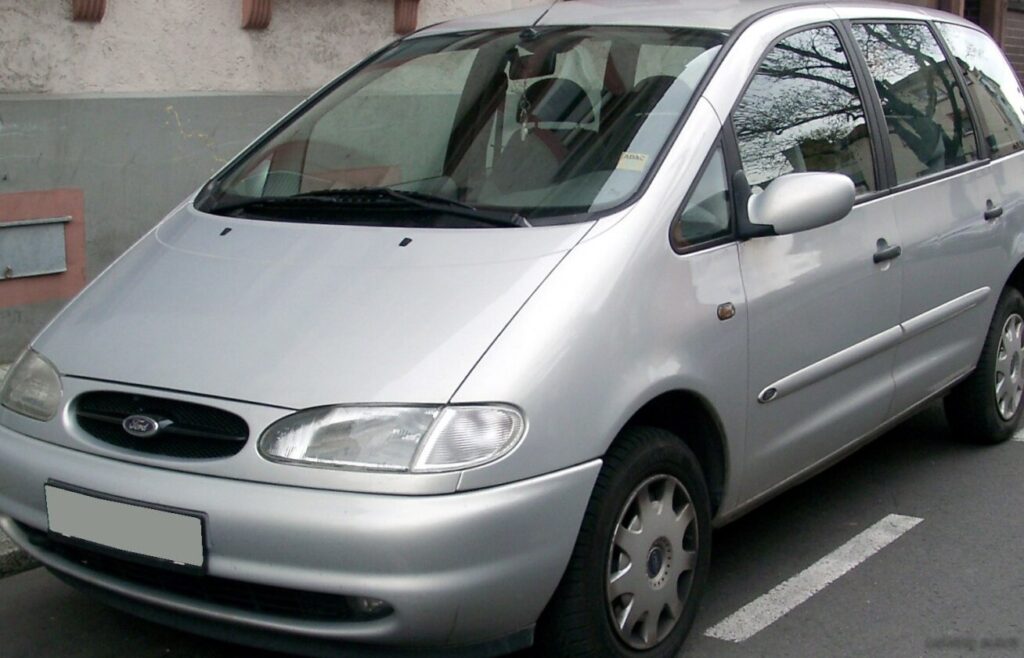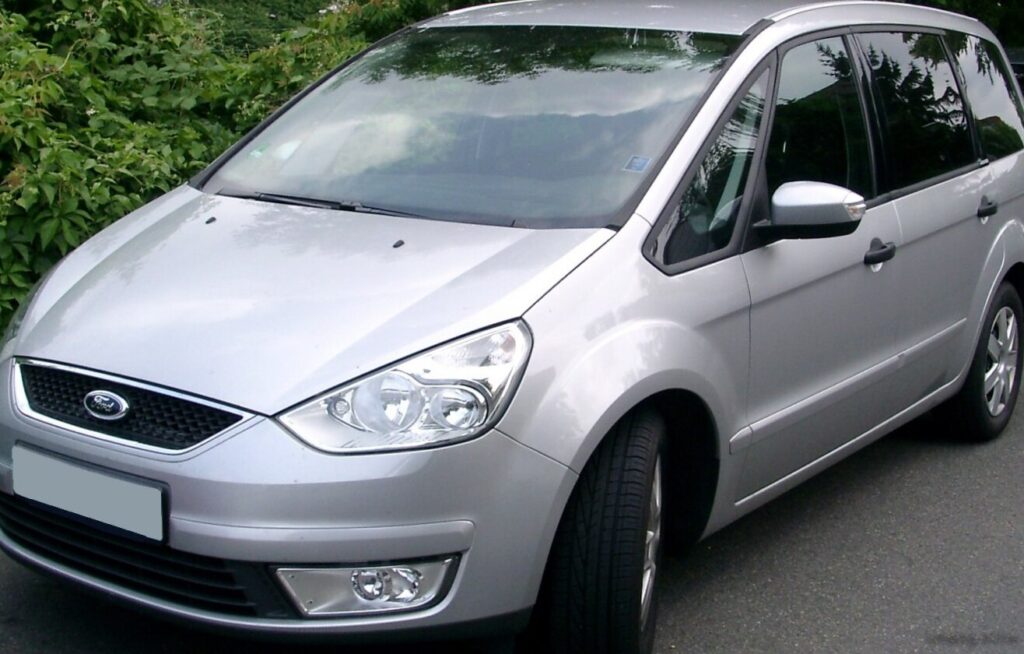
The Ford Galaxy II 2.0 i 16V, produced between 2006 and 2010, represents a significant iteration of Ford’s popular people carrier. Positioned as a mid-range offering within the second-generation Galaxy (WA6) lineup, this variant aimed to balance practicality, fuel efficiency, and a reasonable level of performance for family transport. The Galaxy II, built in collaboration with Volkswagen (sharing a platform with the VW Sharan and SEAT Alhambra), was primarily marketed in Europe as a spacious and versatile alternative to traditional station wagons and smaller MPVs. This particular 2.0-liter engine and five-speed manual transmission combination offered a compelling option for buyers seeking a comfortable and capable vehicle without the expense of the higher-powered trims.
Technical Specifications
| Brand | Ford |
| Model | Galaxy |
| Generation | Galaxy II |
| Type (Engine) | 2.0 i 16V (145 Hp) |
| Start of production | 2006 |
| End of production | 2010 |
| Powertrain Architecture | Internal Combustion engine |
| Body type | Minivan |
| Seats | 7 |
| Doors | 5 |
| Fuel consumption (urban) | 11.2 l/100 km (21 US mpg) |
| Fuel consumption (extra urban) | 6.5 l/100 km (36.2 US mpg) |
| Fuel Type | Petrol (Gasoline) |
| Acceleration 0 – 100 km/h | 11.2 sec |
| Acceleration 0 – 62 mph | 11.2 sec |
| Acceleration 0 – 60 mph | 10.6 sec |
| Maximum speed | 194 km/h (120.55 mph) |
| Weight-to-power ratio | 11.2 kg/Hp |
| Weight-to-torque ratio | 8.6 kg/Nm |
| Power | 145 Hp @ 6000 rpm |
| Torque | 190 Nm @ 4500 rpm (140.14 lb.-ft. @ 4500 rpm) |
| Engine layout | Front, Transverse |
| Engine Model/Code | AOWA, AOWB |
| Engine displacement | 1999 cm3 (121.99 cu. in.) |
| Number of cylinders | 4 |
| Engine configuration | Inline |
| Cylinder Bore | 87.5 mm (3.44 in.) |
| Piston Stroke | 83.1 mm (3.27 in.) |
| Compression ratio | 10.8:1 |
| Number of valves per cylinder | 4 |
| Fuel injection system | Multi-port manifold injection |
| Engine aspiration | Naturally aspirated engine |
| Valvetrain | DOHC |
| Engine oil capacity | 4.3 l (4.54 US qt | 3.78 UK qt) |
| Coolant capacity | 6.2 l (6.55 US qt | 5.46 UK qt) |
| Kerb Weight | 1625 kg (3582.51 lbs.) |
| Max. weight | 2415 kg (5324.16 lbs.) |
| Max load | 790 kg (1741.65 lbs.) |
| Trunk (boot) space – minimum | 308 l (10.88 cu. ft.) |
| Trunk (boot) space – maximum | 2325 l (82.11 cu. ft.) |
| Fuel tank capacity | 70 l (18.49 US gal | 15.4 UK gal) |
| Length | 4820 mm (189.76 in.) |
| Width | 1854 mm (72.99 in.) |
| Height | 1723 mm (67.83 in.) |
| Wheelbase | 2850 mm (112.2 in.) |
| Front track | 1589 mm (62.56 in.) |
| Rear track | 1605 mm (63.19 in.) |
| Drivetrain Architecture | Front wheel drive |
| Number of gears | 5 |
| Gearbox type | Manual transmission |
| Front suspension | Independent, McPherson with coil spring and anti-roll bar |
| Rear suspension | Independent multi-link with stabilizer |
| Front brakes | Disc |
| Rear brakes | Disc |
| Assisting systems | ABS |
| Steering type | Steering rack and pinion |
| Tires size | 215/60R16 |
Powertrain & Engine Architecture
The heart of the Galaxy II 2.0 i 16V is the Ford AOWA or AOWB engine, a 1.999-liter inline-four cylinder gasoline engine. This engine belongs to the Ford Zetec family, known for its relatively simple design and reasonable reliability. The ‘16V’ designation indicates a dual overhead camshaft (DOHC) valvetrain with four valves per cylinder, enhancing breathing and contributing to improved power output compared to older, single overhead cam designs. Fuel delivery is managed by a multi-port fuel injection system, providing precise fuel metering for optimal combustion. The engine’s 10.8:1 compression ratio is a typical value for naturally aspirated gasoline engines of this era, balancing performance and fuel efficiency. Paired with this engine is a five-speed manual transmission, offering a good balance between fuel economy and driver control. The transmission’s gear ratios are tuned for everyday usability, prioritizing smooth acceleration and comfortable cruising rather than outright performance.
Driving Characteristics
The 145 horsepower and 190 Nm (140 lb-ft) of torque produced by the 2.0-liter engine provide adequate, though not exhilarating, performance for the Galaxy II. Acceleration from 0-60 mph takes around 10.6 seconds, making it competitive with other MPVs in its class. The five-speed manual transmission allows drivers to maintain optimal engine speed for various driving conditions. Compared to the more powerful 2.3-liter variants, the 2.0-liter feels less strained when fully loaded with passengers and luggage. However, it also lacks the punch for quick overtaking maneuvers. The gear ratios are spaced to provide reasonable acceleration in each gear, but the engine can feel somewhat underpowered when climbing steep hills or carrying a full load. The overall driving experience is comfortable and refined, with a focus on practicality and ease of use.
Equipment & Trim Levels
The 2.0 i 16V trim typically included features such as air conditioning, power windows, central locking, and an integrated audio system. Interior upholstery was generally cloth, with options for upgraded materials available. Dashboard design was functional and straightforward, prioritizing usability over aesthetics. Optional extras included alloy wheels, a sunroof, parking sensors, and upgraded audio systems. The Galaxy II offered a high degree of flexibility in terms of seating configuration, with individual seats that could be folded, tumbled, or removed to create a larger cargo area. Safety features included ABS brakes, front airbags, and seatbelt pretensioners.
Chassis & Braking
The Galaxy II utilizes an independent suspension system on both the front and rear axles. The front suspension employs a McPherson strut design with coil springs and an anti-roll bar, providing a comfortable ride and predictable handling. The rear suspension features a multi-link setup, further enhancing ride quality and stability. Brakes are disc brakes on all four wheels, providing adequate stopping power for the vehicle’s weight. ABS (Anti-lock Braking System) is standard, enhancing safety by preventing wheel lockup during hard braking. The steering is rack and pinion, offering precise and responsive control.
Market Reception & Comparison
The Ford Galaxy II 2.0 i 16V was generally well-received by automotive critics as a practical and versatile family vehicle. It was praised for its spacious interior, comfortable ride, and reasonable fuel economy. However, some critics noted that the 2.0-liter engine could feel underpowered when fully loaded. Compared to the higher-powered 2.3-liter variants, the 2.0-liter offered a more affordable entry point into the Galaxy II range. It also provided better fuel economy than the more powerful engines, making it a popular choice for drivers who prioritized efficiency. Compared to diesel variants, the 2.0-liter gasoline engine offered a smoother and quieter driving experience, but at the expense of fuel economy.
Legacy
The Ford Galaxy II 2.0 i 16V has proven to be a relatively reliable vehicle, with the Zetec engine generally considered durable and long-lasting. Common maintenance items include regular oil changes, timing belt replacement (typically every 100,000 miles), and inspection of the cooling system. In the used car market, these Galaxies represent a good value for money, offering a lot of space and practicality for a relatively low price. However, potential buyers should be aware of potential issues such as corrosion and wear and tear on suspension components. Overall, the Galaxy II 2.0 i 16V remains a popular choice for families seeking a spacious, comfortable, and reliable MPV.