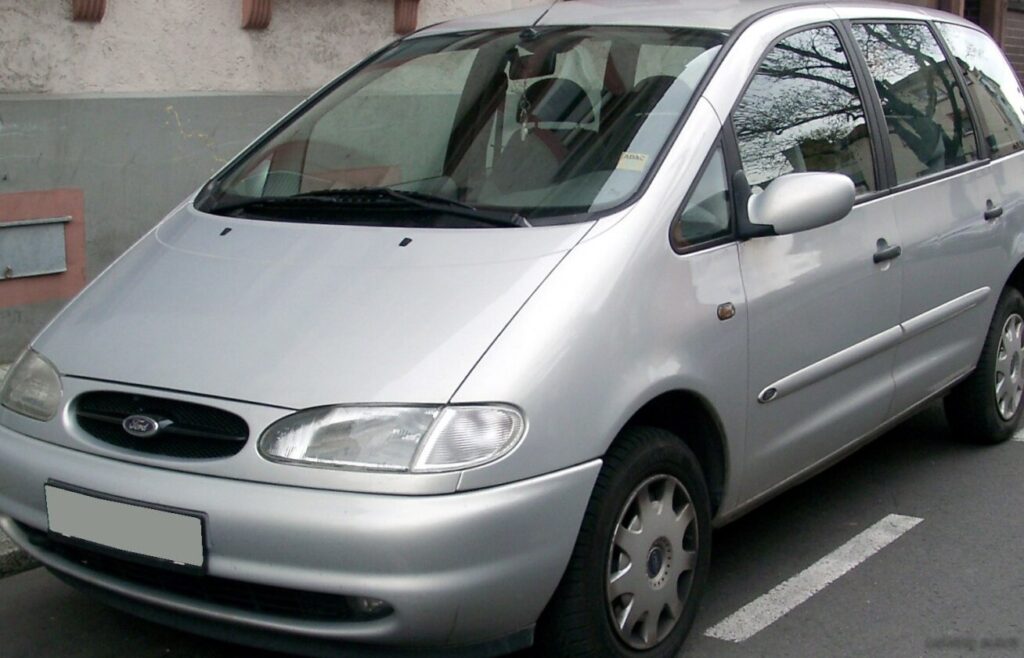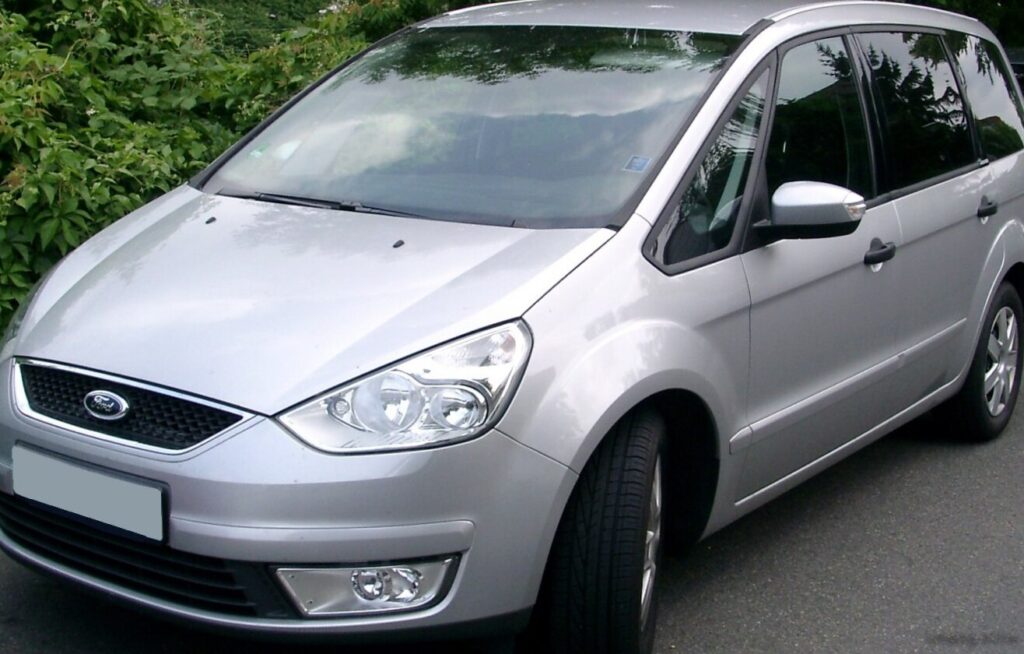
The Ford Galaxy II 2.0 TDCi, producing 140 horsepower, was a significant variant within the second-generation Galaxy lineup, manufactured between 2006 and 2010. Positioned as a mid-range offering, it aimed to balance fuel efficiency with acceptable performance for family transport. The Galaxy II, built on the Ford C1 platform shared with the S-MAX, represented a move upmarket for Ford’s people carrier, offering a more refined driving experience and a greater emphasis on practicality and space than its predecessor. This 2.0 TDCi engine became a popular choice in European markets, where diesel engines dominated the minivan segment due to favorable taxation and fuel economy.
Technical Specifications
| Brand | Ford |
| Model | Galaxy |
| Generation | Galaxy II |
| Type (Engine) | 2.0 TDCi (140 Hp) |
| Start of production | 2006 |
| End of production | 2010 |
| Powertrain Architecture | Internal Combustion engine |
| Body type | Minivan |
| Seats | 7 |
| Doors | 5 |
| Fuel consumption (urban) | 8.2 l/100 km (28.7 US mpg) |
| Fuel consumption (extra urban) | 5.5 l/100 km (42.8 US mpg) |
| Fuel Type | Diesel |
| Acceleration 0 – 100 km/h | 10.5 sec |
| Acceleration 0 – 62 mph | 10.5 sec |
| Acceleration 0 – 60 mph | 10 sec |
| Maximum speed | 193 km/h (119.92 mph) |
| Weight-to-power ratio | 12.4 kg/Hp |
| Weight-to-torque ratio | 5.1 kg/Nm |
| Power | 140 Hp @ 4000 rpm |
| Torque | 340 Nm @ 1750 rpm (250.77 lb.-ft. @ 1750 rpm) |
| Engine layout | Front, Transverse |
| Engine Model/Code | QXWA, QXWB, QXWC |
| Engine displacement | 1997 cm3 (121.86 cu. in.) |
| Number of cylinders | 4 |
| Engine configuration | Inline |
| Cylinder Bore | 85 mm (3.35 in.) |
| Piston Stroke | 88 mm (3.46 in.) |
| Compression ratio | 17.9:1 |
| Number of valves per cylinder | 4 |
| Fuel injection system | Diesel Commonrail |
| Engine aspiration | Turbocharger, Intercooler |
| Engine oil capacity | 5.5 l (5.81 US qt | 4.84 UK qt) |
| Coolant | 8.1 l (8.56 US qt | 7.13 UK qt) |
| Kerb Weight | 1735 kg (3825.02 lbs.) |
| Max. weight | 2505 kg (5522.58 lbs.) |
| Max load | 770 kg (1697.56 lbs.) |
| Trunk (boot) space – minimum | 308 l (10.88 cu. ft.) |
| Trunk (boot) space – maximum | 2325 l (82.11 cu. ft.) |
| Fuel tank capacity | 70 l (18.49 US gal | 15.4 UK gal) |
| Length | 4820 mm (189.76 in.) |
| Width | 1854 mm (72.99 in.) |
| Height | 1723 mm (67.83 in.) |
| Wheelbase | 2850 mm (112.2 in.) |
| Front track | 1589 mm (62.56 in.) |
| Rear (Back) track | 1605 mm (63.19 in.) |
| Drivetrain Architecture | Front wheel drive |
| Number of gears | 6 gears, manual transmission |
| Front suspension | Independent, type McPherson with coil spring and anti-roll bar |
| Rear suspension | Independent multi-link spring suspension with stabilizer |
| Front brakes | Disc |
| Rear brakes | Disc |
| Assisting systems | ABS (Anti-lock braking system) |
| Steering type | Steering rack and pinion |
| Tires size | 215/60R16 |
Powertrain & Engine Architecture
The heart of the Galaxy II 2.0 TDCi was the Ford-PSA jointly developed 2.0-liter four-cylinder diesel engine. Engine codes QXWA, QXWB, and QXWC denote slight variations within the engine family, primarily relating to emissions control equipment and calibration. This engine utilized a common rail direct injection system, delivering fuel at extremely high pressure for optimized combustion. A variable geometry turbocharger (VGT) and intercooler were employed to boost power and improve torque across a wider rev range. The engine featured a 16-valve DOHC (Double Overhead Camshaft) cylinder head. The 6-speed manual transmission was the standard offering, providing a good balance between fuel economy and drivability. The engine’s design prioritized low-end torque, making it well-suited for hauling passengers and luggage.
Driving Characteristics
The 140 hp 2.0 TDCi Galaxy II offered a comfortable and practical driving experience. While not particularly sporty, it provided sufficient power for everyday driving and highway cruising. Acceleration from 0-60 mph took around 10 seconds, which was adequate for a large minivan. The engine’s strong low-end torque meant that overtaking maneuvers were generally effortless, even with a full load. Compared to the more powerful 2.5-liter petrol variants, the 2.0 TDCi prioritized fuel economy. The manual transmission allowed for greater driver control, but the gear ratios were tuned for efficiency rather than outright performance. The 2.0 TDCi felt less strained than the petrol engines when fully loaded, making it a popular choice for families who frequently used all seven seats.
Equipment & Trim Levels
The 2.0 TDCi Galaxy II was typically offered in mid-range trim levels, such as LX or Zetec. Standard equipment generally included air conditioning, power windows, power mirrors, a CD stereo, and ABS brakes. Higher trim levels added features like alloy wheels, rear parking sensors, cruise control, and upgraded interior trim. Interior upholstery was typically cloth, with options for leather available on higher-spec models. The dashboard layout was functional and user-friendly, with a clear instrument cluster and logically placed controls. Optional extras included a panoramic sunroof, satellite navigation, and a DVD entertainment system for rear passengers.
Chassis & Braking
The Galaxy II featured an independent suspension system all around, with McPherson struts at the front and a multi-link setup at the rear. This provided a comfortable ride quality, even on uneven surfaces. The suspension was tuned for stability and handling, rather than outright sportiness. Disc brakes were fitted on all four wheels, providing adequate stopping power. ABS (Anti-lock Braking System) was standard, enhancing safety in emergency braking situations. The Galaxy II’s chassis was designed to accommodate the vehicle’s large size and weight, providing a stable and predictable driving experience.
Market Reception & Comparison
The Ford Galaxy II 2.0 TDCi was well-received by critics and consumers alike. It was praised for its spacious interior, comfortable ride, and fuel efficiency. Compared to the petrol variants, the 2.0 TDCi offered significantly better fuel economy, making it a more cost-effective option for high-mileage drivers. It also provided more torque than the petrol engines, making it better suited for hauling heavy loads. However, some critics noted that the engine could be somewhat noisy and that the manual transmission was not as refined as some of its competitors. Compared to rivals like the Renault Espace and Volkswagen Sharan, the Galaxy II offered a good balance of price, practicality, and features.
Legacy
The Ford Galaxy II 2.0 TDCi has proven to be a relatively reliable powertrain. The 2.0 TDCi engine, while not without its potential issues (such as DPF problems and occasional injector failures), is generally considered durable and long-lasting when properly maintained. In the used car market, these Galaxies represent good value for money, offering a lot of space and practicality for a reasonable price. However, potential buyers should be aware of the common diesel engine issues and ensure that the vehicle has been regularly serviced. The Galaxy II 2.0 TDCi remains a popular choice for families who need a spacious and versatile vehicle.