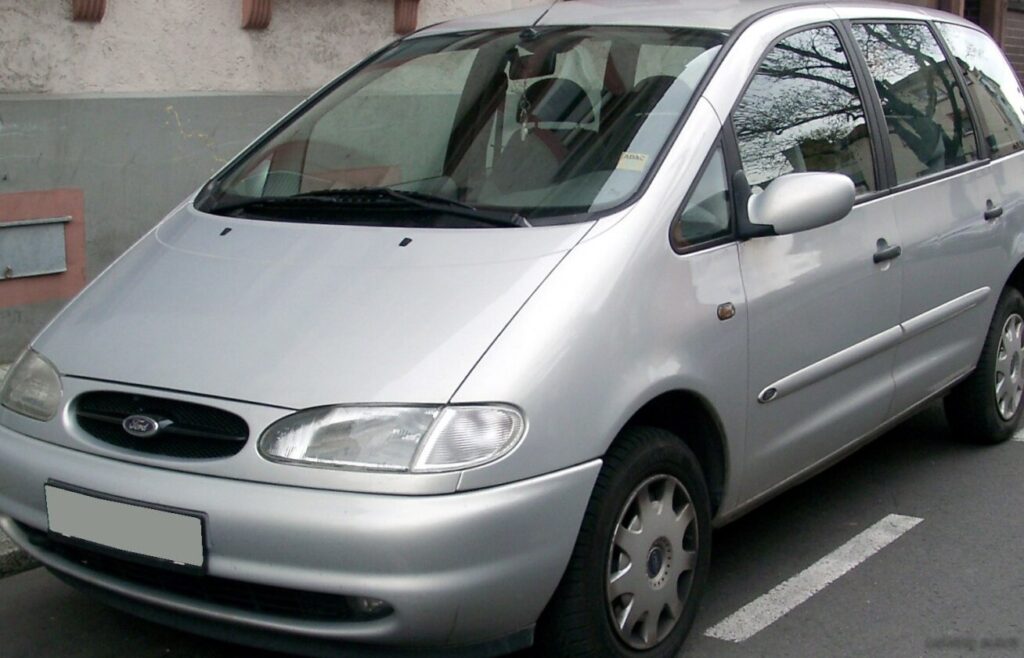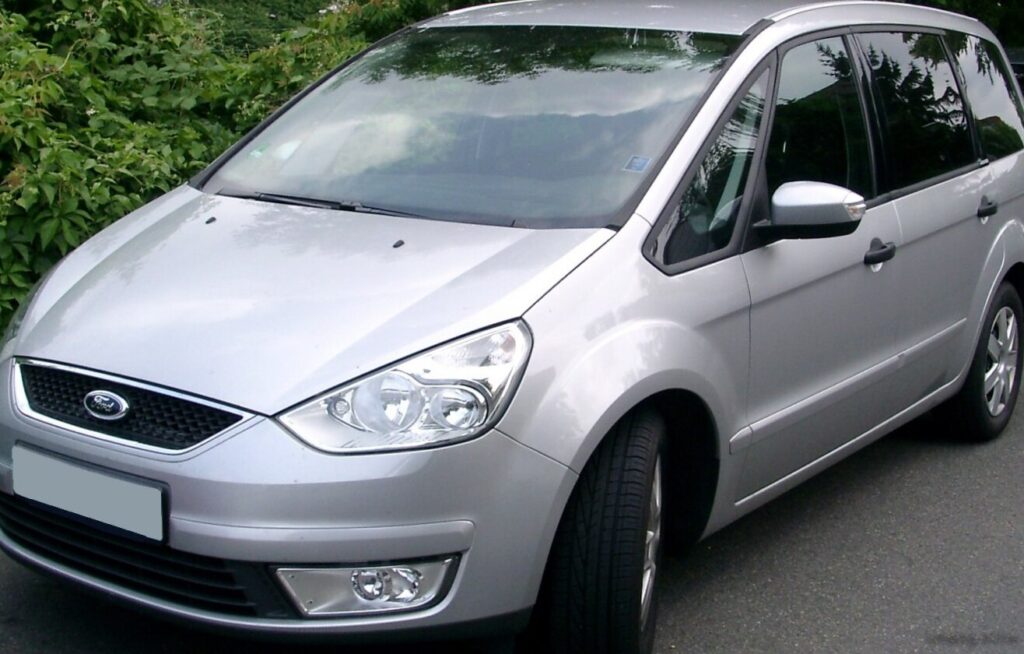
The Ford Galaxy II 2.3i 16V, produced between 2007 and 2010, represents a mid-cycle offering within the second generation of Ford’s popular minivan. Positioned as a practical family vehicle, the Galaxy II aimed to provide spaciousness and versatility. This particular variant, equipped with the 2.3-liter Duratec engine and Ford’s Durashift 6-speed automatic transmission, served as a mainstream option in the Galaxy lineup, bridging the gap between the base models and the more powerful, often diesel-powered, trims. It was primarily marketed in Europe, where large MPVs (Multi-Purpose Vehicles) were, and continue to be, a significant segment of the automotive market. The Galaxy II, built on the Ford C1 platform (shared with the S-MAX), offered a compelling alternative to rivals like the Renault Espace and Volkswagen Sharan.
Technical Specifications
| Brand | Ford |
| Model | Galaxy |
| Generation | Galaxy II |
| Type (Engine) | 2.3 i 16V (161 Hp) Durashift |
| Start of production | 2007 |
| End of production | 2010 |
| Powertrain Architecture | Internal Combustion engine |
| Body type | Minivan |
| Seats | 7 |
| Doors | 5 |
| Fuel consumption (urban) | 13.8 l/100 km (17 US mpg, 20.5 UK mpg) |
| Fuel consumption (extra urban) | 7.5 l/100 km (31.4 US mpg, 37.7 UK mpg) |
| Fuel consumption (combined) | 9.8 l/100 km (24 US mpg, 28.8 UK mpg) |
| Fuel Type | Petrol (Gasoline) |
| Acceleration 0 – 100 km/h | 11.6 sec |
| Acceleration 0 – 62 mph | 11.6 sec |
| Acceleration 0 – 60 mph | 11 sec |
| Maximum speed | 191 km/h (118.68 mph) |
| Emission standard | Euro 4 |
| Weight-to-power ratio | 10.1 kg/Hp |
| Weight-to-torque ratio | 7.8 kg/Nm |
| Power | 161 Hp @ 6500 rpm |
| Torque | 208 Nm @ 4200 rpm (153.41 lb.-ft. @ 4200 rpm) |
| Engine layout | Front, Transverse |
| Engine Model/Code | SEWA |
| Engine displacement | 2261 cm3 (137.97 cu. in.) |
| Number of cylinders | 4 |
| Engine configuration | Inline |
| Cylinder Bore | 87.5 mm (3.44 in.) |
| Piston Stroke | 94 mm (3.7 in.) |
| Compression ratio | 10.6:1 |
| Number of valves per cylinder | 4 |
| Fuel injection system | Multi-port manifold injection |
| Engine aspiration | Naturally aspirated engine |
| Valvetrain | DOHC |
| Engine oil capacity | 4.3 l (4.54 US qt | 3.78 UK qt) |
| Coolant capacity | 6.9 l (7.29 US qt | 6.07 UK qt) |
| Kerb Weight | 1625 kg (3582.51 lbs.) |
| Max. weight | 2415 kg (5324.16 lbs.) |
| Max load | 790 kg (1741.65 lbs.) |
| Trunk (boot) space – minimum | 308 l (10.88 cu. ft.) |
| Trunk (boot) space – maximum | 2325 l (82.11 cu. ft.) |
| Fuel tank capacity | 70 l (18.49 US gal | 15.4 UK gal) |
| Length | 4820 mm (189.76 in.) |
| Width | 1854 mm (72.99 in.) |
| Height | 1723 mm (67.83 in.) |
| Wheelbase | 2850 mm (112.2 in.) |
| Front track | 1589 mm (62.56 in.) |
| Rear track | 1605 mm (63.19 in.) |
| Drivetrain Architecture | Front wheel drive |
| Number of gears | 6 |
| Gearbox type | Automatic transmission |
| Front suspension | Independent, McPherson with coil spring and anti-roll bar |
| Rear suspension | Independent multi-link with stabilizer |
| Front brakes | Disc |
| Rear brakes | Disc |
| Assisting systems | ABS (Anti-lock braking system) |
| Steering type | Steering rack and pinion |
| Tires size | 215/60R16 |
Powertrain & Engine Architecture
The heart of this Galaxy variant is the Ford Duratec 2.3-liter inline-four cylinder engine, designated as the SEWA code. This engine is a naturally aspirated powerplant featuring a double overhead camshaft (DOHC) valvetrain with four valves per cylinder. It utilizes a multi-port fuel injection system, delivering fuel directly into the intake ports. The Duratec engine family was known for its relatively smooth operation and decent reliability. The 2.3-liter version, while not particularly powerful, offered a good balance of performance and fuel economy. Paired with this engine is Ford’s Durashift 6-speed automatic transmission. This transmission, introduced in the early 2000s, offered smoother shifts and improved fuel efficiency compared to older automatic designs. It featured a torque converter and electronic control for optimized gear selection. The Durashift transmission was designed to be relatively durable, but like all automatics, required regular fluid changes for longevity.
Driving Characteristics
The 2.3i 16V automatic Galaxy delivers a comfortable, if not particularly exhilarating, driving experience. With 161 horsepower and 208 Nm (153 lb-ft) of torque, acceleration is adequate for everyday driving, taking around 11.6 seconds to reach 62 mph. The Durashift transmission provides smooth gear changes, but can sometimes feel hesitant during quick acceleration. Compared to the higher-output 2.0-liter turbocharged EcoBoost engine offered in later Galaxy models, or even the diesel variants, the 2.3-liter feels noticeably less responsive. However, it offers a more linear power delivery, making it easier to modulate in traffic. The automatic transmission’s gear ratios are tuned for fuel efficiency and comfort, rather than outright performance. The Galaxy’s relatively high weight (1625 kg / 3583 lbs) further contributes to its relaxed driving character.
Equipment & Trim Levels
The 2.3i 16V typically came equipped with a reasonable level of standard features. This included air conditioning, power windows and mirrors, a basic audio system, and alloy wheels. Higher trim levels, such as the Ghia, added features like leather upholstery, upgraded audio systems, parking sensors, and automatic climate control. Optional extras included a panoramic sunroof, navigation system, and rear entertainment system. Interior upholstery was typically cloth, with the option of leather on higher-spec models. The dashboard layout was functional and straightforward, prioritizing usability over stylistic flair.
Chassis & Braking
The Galaxy II utilizes an independent suspension setup at all four wheels. The front suspension employs McPherson struts with coil springs and an anti-roll bar, while the rear features a multi-link suspension with a stabilizer bar. This setup provides a comfortable ride quality, absorbing bumps and imperfections in the road effectively. Braking duties are handled by disc brakes on all four wheels, supplemented by an Anti-lock Braking System (ABS). The braking performance is adequate for the vehicle’s weight and intended use, but not particularly sporty. The steering is a rack and pinion system, providing reasonably precise control.
Market Reception & Comparison
The Ford Galaxy II 2.3i 16V was generally well-received as a practical and spacious family vehicle. Critics praised its comfortable ride, generous interior space, and versatile seating configuration. However, the 2.3-liter engine was often criticized for being underpowered, especially when fully loaded with passengers and luggage. Compared to the diesel variants, the 2.3i offered lower fuel economy, but a quieter and smoother driving experience. The Durashift automatic transmission was generally considered a good unit, but some owners reported occasional issues with its reliability. In terms of fuel economy, the 2.3i averaged around 24 US mpg combined, which was less efficient than the diesel options.
Legacy
The Ford Galaxy II 2.3i 16V, while not the most exciting variant in the lineup, remains a reasonably reliable and affordable option in the used car market. The Duratec 2.3-liter engine is known for its durability, provided it has been properly maintained. The Durashift transmission, while potentially requiring attention as it ages, is generally robust. Common issues include oil leaks, worn suspension components, and occasional electrical glitches. Overall, the Galaxy II 2.3i 16V represents a solid choice for families seeking a spacious, comfortable, and practical minivan.