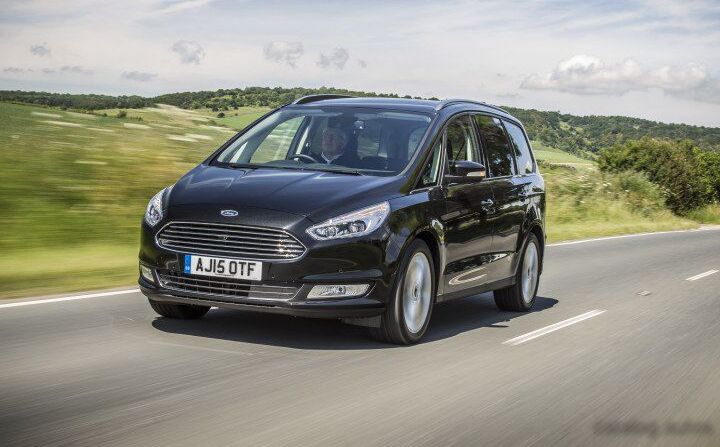
The Ford Galaxy III 1.5 EcoBoost (165 hp) S&S represents a specific configuration within the third generation of Ford’s popular minivan, produced between 2018 and 2019. Positioned as a mid-range offering in the Galaxy lineup, this variant aimed to balance fuel efficiency with acceptable performance for family transport. It falls within the broader Galaxy III range (2015-2022), which was a significant update to the model, sharing its platform with both the Ford S-Max and, initially, the Ford Mondeo. The “S&S” designation indicates the inclusion of Ford’s Auto Start/Stop technology, designed to improve fuel economy in urban driving conditions.
Technical Specifications
| Brand | Ford |
| Model | Galaxy |
| Generation | Galaxy III |
| Type (Engine) | 1.5 EcoBoost (165 Hp) S&S |
| Start of production | 2018 |
| End of production | 2019 |
| Powertrain Architecture | Internal Combustion engine |
| Body type | Minivan |
| Seats | 5 |
| Doors | 5 |
| Fuel consumption (urban) | 9 l/100 km (26.1 US mpg, 31.4 UK mpg, 11.1 km/l) |
| Fuel consumption (extra urban) | 6.5 l/100 km (36.2 US mpg, 43.5 UK mpg, 15.4 km/l) |
| Fuel consumption (combined) | 7.5 l/100 km (31.4 US mpg, 37.7 UK mpg, 13.3 km/l) |
| CO2 emissions | 172 g/km |
| Fuel Type | Petrol (Gasoline) |
| Acceleration 0 – 100 km/h | 9.9 sec |
| Acceleration 0 – 62 mph | 9.9 sec |
| Acceleration 0 – 60 mph | 9.4 sec |
| Maximum speed | 195 km/h (121.17 mph) |
| Emission standard | Euro 6 d-TEMP |
| Weight-to-power ratio | 9.9 kg/Hp, 101 Hp/tonne |
| Weight-to-torque ratio | 6.7 kg/Nm, 148.2 Nm/tonne |
| Power | 165 Hp @ 5500 rpm |
| Power per litre | 110.1 Hp/l |
| Torque | 242 Nm @ 1600-4000 rpm (178.49 lb.-ft. @ 1600-4000 rpm) |
| Engine layout | Front, Transverse |
| Engine Model/Code | C15HDTX |
| Engine displacement | 1498 cm3 (91.41 cu. in.) |
| Number of cylinders | 4 |
| Engine configuration | Inline |
| Cylinder Bore | 79.02 mm (3.11 in.) |
| Piston Stroke | 76.4 mm (3.01 in.) |
| Compression ratio | 10:1 |
| Number of valves per cylinder | 4 |
| Fuel injection system | Direct injection |
| Engine aspiration | Turbocharger, Intercooler |
| Valvetrain | DOHC |
| Engine oil capacity | 4.05 l (4.28 US qt | 3.56 UK qt) |
| Coolant | 10.7 l (11.31 US qt | 9.41 UK qt) |
| Kerb Weight | 1633 kg (3600.15 lbs.) |
| Max. weight | 2510 kg (5533.6 lbs.) |
| Max load | 877 kg (1933.45 lbs.) |
| Trunk (boot) space – minimum | 300 l (10.59 cu. ft.) |
| Trunk (boot) space – maximum | 2339 l (82.6 cu. ft.) |
| Fuel tank capacity | 70 l (18.49 US gal | 15.4 UK gal) |
| Permitted trailer load with brakes (8%) | 1800 kg (3968.32 lbs.) |
| Permitted trailer load with brakes (12%) | 1600 kg (3527.4 lbs.) |
| Permitted trailer load without brakes | 750 kg (1653.47 lbs.) |
| Permitted towbar download | 90 kg (198.42 lbs.) |
| Length | 4848 mm (190.87 in.) |
| Width | 1916 mm (75.43 in.) |
| Width with mirrors folded | 1953 mm (76.89 in.) |
| Width including mirrors | 2137 mm (84.13 in.) |
| Height | 1747 mm (68.78 in.) |
| Wheelbase | 2849 mm (112.17 in.) |
| Front track | 1606 mm (63.23 in.) |
| Rear (Back) track | 1606 mm (63.23 in.) |
| Ride height (ground clearance) | 124 mm (4.88 in.) |
| Minimum turning circle (turning diameter) | 12 m (39.37 ft.) |
| Drivetrain Architecture | The Internal combustion engine (ICE) drives the front wheels of the vehicle. |
| Drive wheel | Front wheel drive |
| Number of gears and type of gearbox | 6 gears, manual transmission |
| Front suspension | Independent, type McPherson with coil spring and anti-roll bar |
| Rear suspension | Independent multi-link spring suspension with stabilizer |
| Front brakes | Ventilated discs |
| Rear brakes | Disc |
| Assisting systems | ABS (Anti-lock braking system) |
| Steering type | Steering rack and pinion |
| Tires size | 235/55 R17; 235/50 R18; 245/45 R19 |
| Wheel rims size | 7.5J x 17; 7.5J x 18; 8J x 19 |
Powertrain & Engine Architecture
The heart of this Galaxy variant is the 1.5-liter EcoBoost inline-four cylinder engine, bearing the Ford engine code C15HDTX. This engine is part of Ford’s EcoBoost family, characterized by turbocharging and direct fuel injection to deliver a balance of power and efficiency. The 1498cc engine utilizes a single scroll turbocharger with an integrated intercooler, boosting output to 165 horsepower at 5500 rpm and 242 Nm (178.49 lb-ft) of torque between 1600 and 4000 rpm. The direct injection system, coupled with a 10:1 compression ratio, contributes to improved combustion efficiency. The engine features a double overhead camshaft (DOHC) valvetrain with four valves per cylinder. The Galaxy III 1.5 EcoBoost was typically paired with a six-speed manual transmission, although a six-speed automatic transmission was also available as an option. The automatic transmission was designed to provide smooth shifts and contribute to overall driving comfort.
Driving Characteristics
The 1.5 EcoBoost engine in the Galaxy III provides adequate performance for everyday driving, but it isn’t a particularly sporty configuration. Acceleration from 0-60 mph takes approximately 9.4 seconds, and top speed is rated at 195 km/h (121.17 mph). The turbocharger provides a noticeable boost in power during acceleration, but the engine can feel somewhat strained when fully loaded or climbing hills. The six-speed manual transmission offers precise shifts, allowing drivers to maintain optimal engine speed for performance or fuel economy. Compared to the higher-output 2.0-liter EcoBoost variants, the 1.5L feels less responsive, but it offers better fuel economy. The automatic transmission, while convenient, can sometimes exhibit hesitant shifts, particularly at lower speeds.
Equipment & Trim Levels
The 1.5 EcoBoost variant of the Galaxy III typically came equipped as a mid-range trim level, often designated as ‘Zetec’ or similar. Standard features generally included air conditioning, a basic infotainment system with Bluetooth connectivity, alloy wheels, and a suite of safety features such as ABS, ESP, and multiple airbags. Interior upholstery was typically cloth, with options for leather upgrades. Common optional extras included a larger touchscreen infotainment system with navigation, parking sensors, a rearview camera, and a panoramic sunroof. Higher trim levels added features like heated seats, automatic climate control, and advanced driver-assistance systems.
Chassis & Braking
The Galaxy III utilizes an independent suspension system on both the front and rear axles. The front suspension employs McPherson struts with a coil spring and anti-roll bar, while the rear features a multi-link setup with a stabilizer bar. This configuration provides a comfortable ride quality, absorbing bumps and irregularities in the road surface effectively. Braking duties are handled by ventilated discs on the front wheels and solid discs on the rear. The braking system is assisted by ABS (Anti-lock Braking System) and ESP (Electronic Stability Program) to enhance safety and control.
Market Reception & Comparison
The Ford Galaxy III 1.5 EcoBoost (165 hp) S&S was generally well-received by automotive critics as a practical and fuel-efficient family vehicle. However, some reviewers noted that the engine could feel underpowered when the vehicle was fully loaded. Compared to the 2.0-liter EcoBoost variants, the 1.5L offered better fuel economy (around 31.4 US mpg combined) but at the expense of performance. The 1.5L also represented a more affordable entry point into the Galaxy III range, making it an attractive option for budget-conscious buyers. Reliability reports suggest that the 1.5 EcoBoost engine is generally reliable, although some owners have reported issues with the turbocharger and fuel injectors.
Legacy
The Ford Galaxy III 1.5 EcoBoost (165 hp) S&S remains a popular choice in the used car market, particularly for families seeking a spacious and practical minivan. The engine’s relatively simple design and readily available parts contribute to reasonable maintenance costs. While not the most exciting variant in the Galaxy III lineup, the 1.5 EcoBoost offers a good balance of fuel efficiency, practicality, and affordability, making it a sensible option for those prioritizing everyday usability over outright performance. Its continued presence on the used market demonstrates its enduring appeal as a family vehicle.