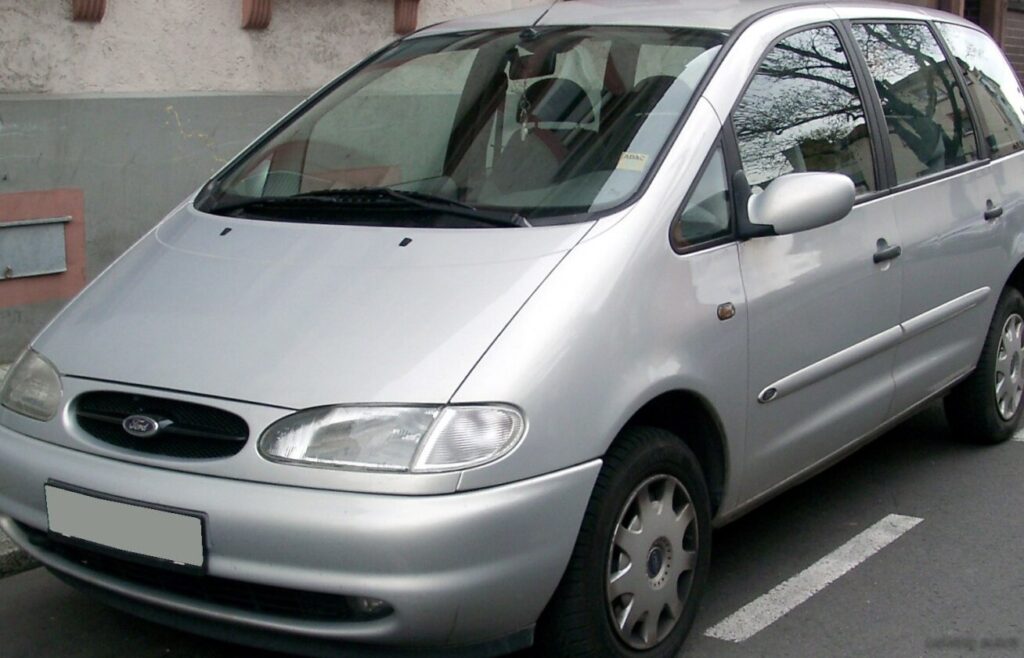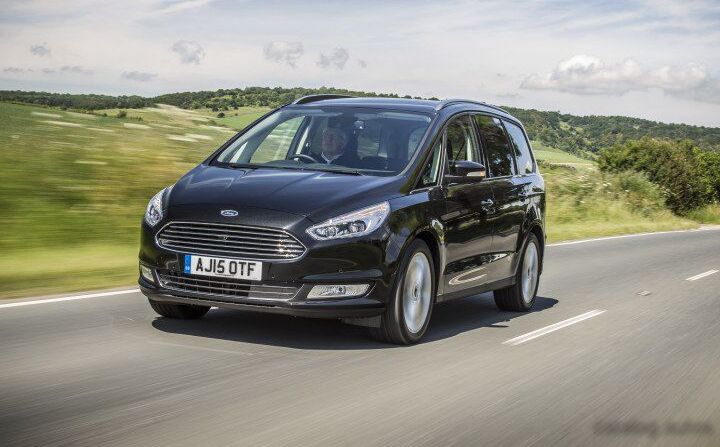
The Ford Galaxy III 2.0 EcoBlue (150 hp) Automatic S&S 7-Seat, produced from 2018 to 2019, represents a mid-cycle offering within the third generation of Ford’s popular people carrier. Positioned as a practical and efficient option within the Galaxy lineup, this variant aimed to balance fuel economy with adequate performance for family transport. It falls within the broader context of the Galaxy III (2015-2022), which shared its platform – the CD270 – with both the Ford S-Max and the Land Rover Discovery Sport. The EcoBlue engine family was Ford’s attempt to modernize its diesel offerings, focusing on reduced emissions and improved refinement. This particular configuration, paired with the six-speed automatic transmission, was a common choice for buyers prioritizing convenience and ease of driving over outright performance.
Technical Specifications
| Brand | Ford |
| Model | Galaxy |
| Generation | Galaxy III |
| Type | 2.0 EcoBlue (150 Hp) Automatic S&S 7 Seat |
| Start of production | 2018 |
| End of production | 2019 |
| Powertrain Architecture | Internal Combustion engine |
| Body type | Minivan |
| Seats | 7 |
| Doors | 5 |
| Fuel consumption (urban) | 6.1-6.2 l/100 km (38.6 – 37.9 US mpg) |
| Fuel consumption (extra urban) | 4.8-5.0 l/100 km (49 – 47 US mpg) |
| Fuel consumption (combined) | 5.3-5.9 l/100 km (44.4 – 39.9 US mpg) |
| CO2 emissions | 140-153 g/km |
| Fuel Type | Diesel |
| Acceleration 0 – 100 km/h | 10.8 sec |
| Acceleration 0 – 62 mph | 10.8 sec |
| Acceleration 0 – 60 mph | 10.3 sec |
| Maximum speed | 192 km/h (119.3 mph) |
| Emission standard | Euro 6 d-TEMP |
| Weight-to-power ratio | 11.2 kg/Hp |
| Weight-to-torque ratio | 4.6 kg/Nm |
| Power | 150 Hp @ 3500 rpm |
| Torque | 370 Nm @ 2000-2500 rpm (272.9 lb.-ft. @ 2000-2500 rpm) |
| Engine layout | Front, Transverse |
| Engine Model/Code | YMCB |
| Engine displacement | 1997 cm3 (121.86 cu. in.) |
| Number of cylinders | 4 |
| Engine configuration | Inline |
| Cylinder Bore | 85 mm (3.35 in.) |
| Piston Stroke | 88 mm (3.46 in.) |
| Compression ratio | 17:1 |
| Number of valves per cylinder | 4 |
| Fuel injection system | Diesel Commonrail |
| Engine aspiration | Turbocharger, Intercooler |
| Valvetrain | DOHC |
| Engine oil capacity | 6.4 l (6.76 US qt | 5.63 UK qt) |
| Coolant capacity | 10.7 l (11.31 US qt | 9.41 UK qt) |
| Kerb Weight | 1685 kg (3714.79 lbs.) |
| Max. weight | 2600 kg (5732.02 lbs.) |
| Max load | 915 kg (2017.23 lbs.) |
| Trunk (boot) space – minimum | 300 l (10.59 cu. ft.) |
| Trunk (boot) space – maximum | 2339 l (82.6 cu. ft.) |
| Fuel tank capacity | 70 l (18.49 US gal | 15.4 UK gal) |
| Permitted trailer load with brakes (8%) | 2000 kg (4409.25 lbs.) |
| Permitted trailer load with brakes (12%) | 2000 kg (4409.25 lbs.) |
| Permitted trailer load without brakes | 750 kg (1653.47 lbs.) |
| Permitted towbar download | 90 kg (198.42 lbs.) |
| Length | 4848 mm (190.87 in.) |
| Width | 1916 mm (75.43 in.) |
| Width with mirrors folded | 1953 mm (76.89 in.) |
| Width including mirrors | 2137 mm (84.13 in.) |
| Height | 1747 mm (68.78 in.) |
| Wheelbase | 2849 mm (112.17 in.) |
| Front track | 1606 mm (63.23 in.) |
| Rear track | 1606 mm (63.23 in.) |
| Ride height (ground clearance) | 124 mm (4.88 in.) |
| Minimum turning circle | 12 m (39.37 ft.) |
| Drivetrain | Front wheel drive |
| Number of gears | 8 |
| Gearbox type | Automatic transmission |
Powertrain & Engine Architecture
The heart of this Galaxy variant is the 2.0-liter EcoBlue diesel engine, specifically the YMCB code. This engine is a four-cylinder, inline configuration, utilizing a common-rail direct injection system and a turbocharger with intercooling. The EcoBlue series represented a significant investment by Ford in diesel technology, aiming to meet increasingly stringent emissions standards. The YMCB engine features a 17:1 compression ratio and a double overhead camshaft (DOHC) valvetrain with four valves per cylinder. The engine’s 150 horsepower peak is achieved at 3500 rpm, while its 370 Nm (272.9 lb-ft) of torque is available between 2000 and 2500 rpm. Paired with this engine is a six-speed automatic transmission, designed for smooth shifting and optimized fuel efficiency. The Start & Stop system further contributes to fuel savings by automatically shutting off the engine when the vehicle is stationary.
Driving Characteristics
The 2.0 EcoBlue 150 hp automatic Galaxy offers a comfortable and relaxed driving experience. While not particularly sporty, the engine provides sufficient power for everyday driving and highway cruising. Acceleration from 0-60 mph takes around 10.3 seconds, which is adequate for a large minivan. The automatic transmission generally shifts smoothly, although it can sometimes feel hesitant during quick acceleration. The torque delivery is relatively flat, making it easy to maintain speed on inclines. Compared to the higher-output 2.0 EcoBlue variants (typically around 180-210 hp), this version feels less responsive, but it offers better fuel economy. Against the petrol options, the diesel provides superior torque and fuel efficiency, but lacks the refinement and higher revving nature of a gasoline engine.
Equipment & Trim Levels
The ‘S&S’ designation indicates the inclusion of the Start & Stop system. Standard equipment on this trim typically included air conditioning, a touchscreen infotainment system with Bluetooth connectivity, alloy wheels, and a comprehensive suite of safety features such as ABS, ESP, and multiple airbags. Higher trim levels offered upgrades like leather upholstery, a panoramic sunroof, and advanced driver-assistance systems like adaptive cruise control and lane-keeping assist. The seven-seat configuration was standard, offering flexible seating arrangements for families. Options often included parking sensors, a rear-view camera, and upgraded audio systems.
Chassis & Braking
The Galaxy III utilizes an independent suspension setup on both the front and rear axles. The front suspension employs McPherson struts with a coil spring and anti-roll bar, while the rear features a multi-link suspension with a stabilizer bar. This configuration provides a comfortable ride quality, absorbing bumps and imperfections in the road effectively. Braking duties are handled by ventilated discs on the front wheels and solid discs on the rear. The braking system is assisted by ABS (Anti-lock Braking System) and ESP (Electronic Stability Program) for enhanced safety.
Market Reception & Comparison
The Ford Galaxy III 2.0 EcoBlue 150 hp Automatic S&S 7-Seat was generally well-received by critics as a practical and fuel-efficient family vehicle. It was praised for its spacious interior, comfortable ride, and reasonable running costs. However, some reviewers noted that the engine could feel underpowered when fully loaded. Compared to other trims in the Galaxy lineup, this variant offered a good balance between price and performance. It was a popular choice for buyers who prioritized fuel economy and practicality over outright performance. Compared to competitors like the Volkswagen Sharan and the Citroen C4 Picasso, the Galaxy offered a competitive package in terms of space, features, and price.
Legacy
The 2.0 EcoBlue engine has proven to be relatively reliable, although, like all modern diesels, it is susceptible to issues with the diesel particulate filter (DPF) if not driven on longer journeys regularly. The six-speed automatic transmission is also generally considered durable. In the used car market, this Galaxy variant represents a good value proposition for families seeking a spacious and economical people carrier. Its relatively low running costs and comfortable ride make it a practical choice for long-distance travel. However, potential buyers should be aware of the potential for DPF issues and ensure the vehicle has been properly maintained.