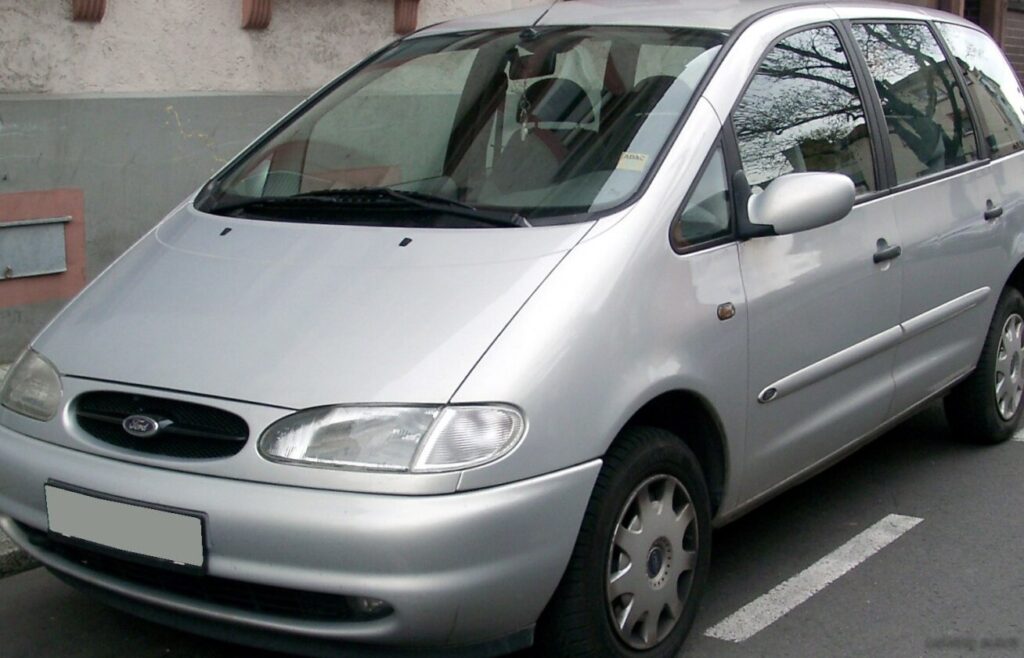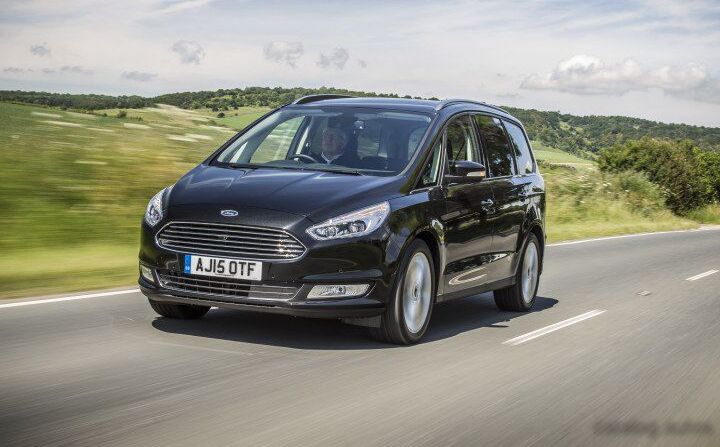
The Ford Galaxy III 2.0 EcoBlue (190 Hp) AWD Automatic S&S represents a sophisticated iteration of Ford’s long-running people carrier, produced between 2018 and 2019. Positioned as a high-end trim within the third-generation Galaxy (introduced in 2015), this variant combined a potent diesel engine with all-wheel drive and a smooth-shifting automatic transmission, targeting families and drivers prioritizing comfort, space, and all-weather capability. It was built on the CD270 platform, shared with other Ford and Volvo models, and aimed to compete with premium MPVs like the Volkswagen Sharan and the Citroën Grand C4 Picasso.
Technical Specifications
| Brand | Ford |
| Model | Galaxy |
| Generation | Galaxy III |
| Type | 2.0 EcoBlue (190 Hp) AWD Automatic S&S |
| Start of production | 2018 |
| End of production | 2019 |
| Powertrain Architecture | Internal Combustion engine |
| Body type | Minivan |
| Seats | 5 |
| Doors | 5 |
| Fuel consumption (urban) | 7.0-7.2 l/100 km (33.6 – 32.7 US mpg, 40.4 – 39.2 UK mpg, 14.3 – 13.9 km/l) |
| Fuel consumption (extra urban) | 5.5-5.6 l/100 km (42.8 – 42 US mpg, 51.4 – 50.4 UK mpg, 18.2 – 17.9 km/l) |
| Fuel consumption (combined) | 6.1-6.3 l/100 km (38.6 – 37.3 US mpg, 46.3 – 44.8 UK mpg, 16.4 – 15.9 km/l) |
| CO2 emissions | 159-164 g/km |
| Fuel Type | Diesel |
| Acceleration 0 – 100 km/h | 10 sec |
| Acceleration 0 – 62 mph | 10 sec |
| Acceleration 0 – 60 mph | 9.5 sec |
| Maximum speed | 202 km/h (125.52 mph) |
| Emission standard | Euro 6 d-TEMP |
| Weight-to-power ratio | 9.3 kg/Hp, 107.6 Hp/tonne |
| Weight-to-torque ratio | 4.4 kg/Nm, 226.5 Nm/tonne |
| Power | 190 Hp @ 3500 rpm |
| Power per litre | 95.1 Hp/l |
| Torque | 400 Nm @ 2000-3000 rpm (295.02 lb.-ft. @ 2000-3000 rpm) |
| Engine layout | Front, Transverse |
| Engine Model/Code | BCCC |
| Engine displacement | 1997 cm3 (121.86 cu. in.) |
| Number of cylinders | 4 |
| Engine configuration | Inline |
| Cylinder Bore | 85 mm (3.35 in.) |
| Piston Stroke | 88 mm (3.46 in.) |
| Compression ratio | 17:1 |
| Number of valves per cylinder | 4 |
| Fuel injection system | Diesel Commonrail |
| Engine aspiration | Turbocharger, Intercooler |
| Valvetrain | DOHC |
| Engine oil capacity | 6.4 l (6.76 US qt | 5.63 UK qt) |
| Coolant | 10.7 l (11.31 US qt | 9.41 UK qt) |
| Kerb Weight | 1766 kg (3893.36 lbs.) |
| Max. weight | 2685 kg (5919.41 lbs.) |
| Max load | 919 kg (2026.05 lbs.) |
| Trunk (boot) space – minimum | 300 l (10.59 cu. ft.) |
| Trunk (boot) space – maximum | 2339 l (82.6 cu. ft.) |
| Fuel tank capacity | 70 l (18.49 US gal | 15.4 UK gal) |
| Permitted trailer load with brakes (8%) | 2000 kg (4409.25 lbs.) |
| Permitted trailer load with brakes (12%) | 2000 kg (4409.25 lbs.) |
| Permitted trailer load without brakes | 750 kg (1653.47 lbs.) |
| Permitted towbar download | 90 kg (198.42 lbs.) |
| Length | 4848 mm (190.87 in.) |
| Width | 1916 mm (75.43 in.) |
| Width with mirrors folded | 1953 mm (76.89 in.) |
| Width including mirrors | 2137 mm (84.13 in.) |
| Height | 1747 mm (68.78 in.) |
| Wheelbase | 2849 mm (112.17 in.) |
| Front track | 1606 mm (63.23 in.) |
| Rear (Back) track | 1606 mm (63.23 in.) |
| Ride height (ground clearance) | 124 mm (4.88 in.) |
| Minimum turning circle (turning diameter) | 12 m (39.37 ft.) |
| Drivetrain Architecture | The Internal combustion engine (ICE) drives permanently the four wheels of the vehicle. |
| Drive wheel | All wheel drive (4×4) |
| Number of gears and type of gearbox | 8 gears, automatic transmission |
| Front suspension | Independent, type McPherson with coil spring and anti-roll bar |
| Rear suspension | Independent multi-link spring suspension with stabilizer |
| Front brakes | Ventilated discs |
| Rear brakes | Disc |
| Assisting systems | ABS (Anti-lock braking system) |
| Steering type | Steering rack and pinion |
| Tires size | 235/55 R17; 235/50 R18; 245/45 R19 |
| Wheel rims size | 7.5J x 17; 7.5J x 18; 8J x 19 |
Powertrain & Engine Architecture
At the heart of the Galaxy III 2.0 EcoBlue AWD Automatic S&S lies the Ford BCCC engine, a 1997cc inline-four cylinder diesel. This engine is part of Ford’s EcoBlue family, known for its focus on efficiency and reduced emissions. The BCCC utilizes a common-rail direct fuel injection system, delivering fuel at extremely high pressure for optimized combustion. A turbocharger with intercooling further enhances performance, boosting power output to 190 horsepower at 3500 rpm and generating 400 Nm (295 lb-ft) of torque between 2000 and 3000 rpm. The engine features a double overhead camshaft (DOHC) valvetrain with four valves per cylinder, contributing to its responsiveness. Paired with this engine is a sophisticated eight-speed automatic transmission, providing smooth and efficient gear changes. The ‘S&S’ designation indicates the inclusion of Ford’s Auto Start-Stop system, which automatically shuts off the engine when the vehicle is stationary to conserve fuel.
Driving Characteristics
The 2.0 EcoBlue engine, while not the most powerful option in the Galaxy III range, provides ample performance for everyday driving and long-distance journeys. The eight-speed automatic transmission is well-tuned, offering quick and seamless shifts. Acceleration from 0-60 mph takes around 9.5 seconds, and the vehicle has a top speed of 125.52 mph. The all-wheel-drive system provides enhanced traction and stability, particularly in adverse weather conditions. Compared to the lower-powered 1.5 EcoBlue variants, the 2.0 EcoBlue offers a noticeable improvement in responsiveness and effortless cruising ability. While not as sporty as some competitors, the Galaxy prioritizes comfort and refinement, delivering a smooth and composed ride.
Equipment & Trim Levels
The ‘S&S’ trim level of the Galaxy III 2.0 EcoBlue AWD Automatic typically included a generous array of standard features. These often encompassed keyless entry and start, a touchscreen infotainment system with navigation, dual-zone climate control, front and rear parking sensors, and a rearview camera. Interior upholstery was typically a high-quality cloth or leather combination. Optional extras could include a panoramic sunroof, adaptive cruise control, a premium sound system, and power-adjustable front seats with memory function. The Galaxy was designed with family practicality in mind, offering a spacious cabin with flexible seating configurations and ample storage compartments.
Chassis & Braking
The Galaxy III utilizes an independent suspension setup on both the front and rear axles. The front suspension employs McPherson struts with coil springs and an anti-roll bar, while the rear features a multi-link setup, also with a stabilizer bar. This configuration provides a comfortable ride and good handling characteristics. Braking duties are handled by ventilated discs on the front wheels and solid discs on the rear, supported by an Anti-lock Braking System (ABS). The all-wheel-drive system contributes to enhanced braking stability, particularly on slippery surfaces.
Market Reception & Comparison
The Ford Galaxy III 2.0 EcoBlue AWD Automatic S&S was generally well-received by automotive critics. It was praised for its spacious interior, comfortable ride, and refined powertrain. The all-wheel-drive system was seen as a valuable asset for drivers in regions with inclement weather. Compared to the lower-powered Galaxy variants, the 2.0 EcoBlue offered a more satisfying driving experience, particularly when fully loaded with passengers and luggage. Fuel economy was competitive for its class, averaging around 38.6-37.3 US mpg in combined driving. However, some reviewers noted that the Galaxy’s styling was somewhat conservative compared to some of its more visually striking rivals.
Legacy
The Ford Galaxy III 2.0 EcoBlue AWD Automatic S&S has proven to be a reliable and durable vehicle in the used car market. The EcoBlue engine, while complex, has generally demonstrated good longevity when properly maintained. The eight-speed automatic transmission is also known for its robustness. Common maintenance items include regular oil changes, filter replacements, and inspection of the turbocharger and fuel injection system. Today, these Galaxies represent a practical and comfortable choice for families seeking a spacious and well-equipped MPV, offering a good balance of performance, efficiency, and all-weather capability.