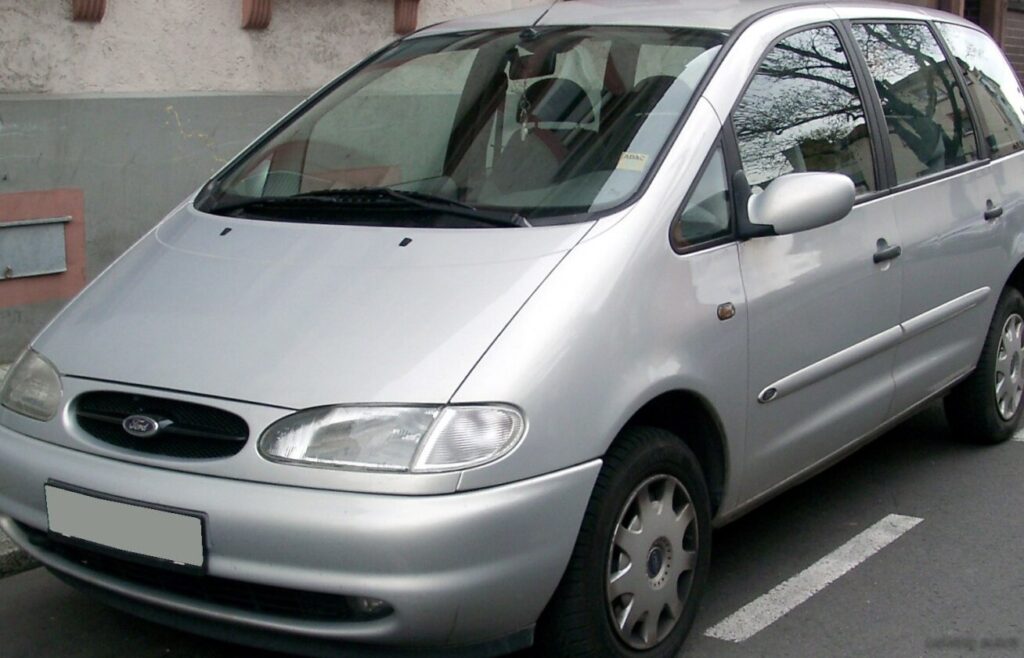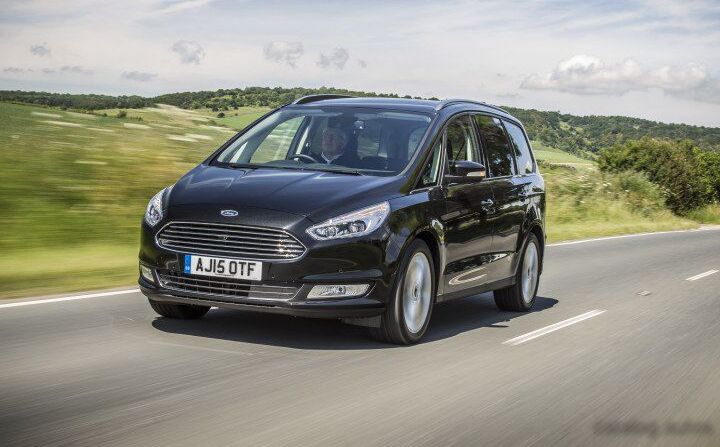
The Ford Galaxy III 2.0 EcoBoost (240 Hp) Automatic S&S represents a significant iteration in Ford’s long-running minivan lineage. Produced from 2015 to 2018, this variant occupied a mid-to-upper position within the Galaxy III range, offering a blend of performance, space, and technology aimed at families and those requiring versatile passenger and cargo capacity. It was primarily marketed in Europe, where large MPVs remained popular, and represented Ford’s attempt to offer a more engaging driving experience within the segment. The Galaxy III, built on the CD2 platform (shared with the Ford S-Max and Land Rover Freelander), aimed to provide a more premium feel compared to its predecessors.
Technical Specifications
| Brand | Ford |
| Model | Galaxy |
| Generation | Galaxy III |
| Type | 2.0 EcoBoost (240 Hp) Automatic S&S |
| Start of production | 2015 |
| End of production | 2018 |
| Powertrain Architecture | Internal Combustion engine |
| Body type | Minivan |
| Seats | 5-7 |
| Doors | 5 |
| Fuel consumption (urban) | 10.3 l/100 km (22.8 US mpg) |
| Fuel consumption (extra urban) | 6.5 l/100 km (36.2 US mpg) |
| Fuel consumption (combined) | 7.9 l/100 km (29.8 US mpg) |
| CO2 emissions | 180 g/km |
| Fuel Type | Petrol (Gasoline) |
| Acceleration 0 – 100 km/h | 8.6 sec |
| Acceleration 0 – 62 mph | 8.6 sec |
| Acceleration 0 – 60 mph | 8.2 sec |
| Maximum speed | 222 km/h (137.94 mph) |
| Emission standard | Euro 6 |
| Weight-to-power ratio | 6.9 kg/Hp |
| Weight-to-torque ratio | 4.8 kg/Nm |
| Power | 240 Hp @ 5400 rpm |
| Torque | 345 Nm @ 2300-4900 rpm (254.46 lb.-ft.) |
| Engine layout | Front, Transverse |
| Engine Model/Code | R9CD, R9CI |
| Engine displacement | 1999 cm3 (121.99 cu. in.) |
| Number of cylinders | 4 |
| Engine configuration | Inline |
| Cylinder Bore | 87.5 mm (3.44 in.) |
| Piston Stroke | 83.1 mm (3.27 in.) |
| Compression ratio | 10:1 |
| Number of valves per cylinder | 4 |
| Fuel injection system | Direct injection |
| Engine aspiration | Turbocharger, Intercooler |
| Valvetrain | DOHC |
| Engine oil capacity | 5.4 l (5.71 US qt | 4.75 UK qt) |
| Coolant | 8.9 l (9.4 US qt | 7.83 UK qt) |
| Kerb Weight | 1658 kg (3655.26 lbs.) |
| Max. weight | 2585 kg (5698.95 lbs.) |
| Max load | 927 kg (2043.69 lbs.) |
| Trunk (boot) space – minimum | 300 l (10.59 cu. ft.) |
| Trunk (boot) space – maximum | 2339 l (82.6 cu. ft.) |
| Fuel tank capacity | 70 l (18.49 US gal | 15.4 UK gal) |
| Permitted trailer load with brakes (8%) | 1800 kg (3968.32 lbs.) |
| Permitted trailer load with brakes (12%) | 1800 kg (3968.32 lbs.) |
| Permitted trailer load without brakes | 750 kg (1653.47 lbs.) |
| Permitted towbar download | 90 kg (198.42 lbs.) |
| Length | 4848 mm (190.87 in.) |
| Width | 1916 mm (75.43 in.) |
| Width with mirrors folded | 1953 mm (76.89 in.) |
| Width including mirrors | 2137 mm (84.13 in.) |
| Height | 1747 mm (68.78 in.) |
| Wheelbase | 2849 mm (112.17 in.) |
| Front track | 1606 mm (63.23 in.) |
| Rear track | 1606 mm (63.23 in.) |
| Ride height (ground clearance) | 124 mm (4.88 in.) |
| Minimum turning circle | 12 m (39.37 ft.) |
| Drivetrain | Front wheel drive |
| Number of gears | 6 |
| Gearbox type | Automatic transmission |
| Front suspension | Independent, McPherson with coil spring and anti-roll bar |
| Rear suspension | Independent multi-link with stabilizer |
| Front brakes | Ventilated discs |
| Rear brakes | Disc |
| Tires size | 235/55 R17; 235/50 R18; 245/45 R19 |
| Wheel rims size | 7.5J x 17; 7.5J x 18; 8J x 19 |
Powertrain & Engine Architecture
The heart of the Galaxy III 2.0 EcoBoost was the Ford R9CD/R9CI engine, a 1.999-liter turbocharged inline-four cylinder petrol engine. This engine was part of Ford’s EcoBoost family, emphasizing a balance of power and fuel efficiency through direct injection and turbocharging. The R9CD and R9CI codes denote slight variations in calibration and emissions control. The engine featured a twin-scroll turbocharger, designed to reduce turbo lag and improve responsiveness. Direct fuel injection, operating at pressures up to 200 bar, ensured precise fuel delivery and optimized combustion. The engine utilized a double overhead camshaft (DOHC) valvetrain with four valves per cylinder, contributing to its high power output. The six-speed automatic transmission, sourced from Aisin, was specifically tuned to handle the engine’s torque output and provide smooth shifts. The inclusion of Ford’s Start-Stop system further enhanced fuel economy in urban driving conditions.
Driving Characteristics
The 240 hp and 345 Nm (254 lb-ft) of torque delivered by the 2.0 EcoBoost engine provided a noticeable step up in performance compared to lower-powered Galaxy III variants. Acceleration from 0-60 mph took approximately 8.2 seconds, making it reasonably quick for a large MPV. The automatic transmission, while generally smooth, wasn’t particularly sporty. Gear ratios were geared towards fuel efficiency and comfortable cruising rather than outright acceleration. Compared to the 1.5 EcoBoost or diesel options, the 2.0 EcoBoost offered a more responsive and engaging driving experience, particularly when overtaking or carrying a full load. However, it came at the cost of slightly higher fuel consumption.
Equipment & Trim Levels
The 2.0 EcoBoost Automatic S&S trim typically included a generous level of standard equipment. This often encompassed features like alloy wheels (typically 17-19 inch depending on options), automatic climate control, a touchscreen infotainment system with navigation, Bluetooth connectivity, and parking sensors. Higher trim levels, such as Titanium, added features like leather upholstery, a panoramic sunroof, and advanced driver-assistance systems (ADAS) like adaptive cruise control and lane-keeping assist. Interior upholstery was typically cloth on lower trims, with leather options available. Dashboard configurations were generally consistent across the range, featuring a modern and functional design.
Chassis & Braking
The Galaxy III utilized an independent suspension setup on both the front and rear axles. The front employed a McPherson strut design with a coil spring and anti-roll bar, while the rear featured a multi-link setup, also with a stabilizer bar. This configuration aimed to provide a comfortable ride while maintaining reasonable handling characteristics. Braking systems consisted of ventilated discs on the front wheels and solid discs on the rear. Anti-lock Braking System (ABS) was standard, ensuring safe stopping performance in various conditions. The suspension was tuned to prioritize ride comfort, given the vehicle’s intended role as a family transport.
Market Reception & Comparison
The Ford Galaxy III 2.0 EcoBoost Automatic S&S received generally positive reviews. Critics praised its spacious interior, comfortable ride, and the punchy performance of the 2.0 EcoBoost engine. However, some noted that the automatic transmission could feel slightly hesitant at times. Compared to the diesel variants, the petrol engine offered a more refined driving experience but suffered from higher fuel consumption. Against competitors like the Volkswagen Sharan and Citroën C4 Picasso, the Galaxy III was often seen as offering a more premium feel and a more engaging driving experience. Fuel economy averaged around 29.8 US mpg in combined driving, which was competitive but not class-leading.
Legacy
The Ford Galaxy III 2.0 EcoBoost Automatic S&S has proven to be a relatively reliable vehicle in the used car market. The EcoBoost engine, while occasionally susceptible to timing belt issues (requiring scheduled replacement), has generally demonstrated good durability. The Aisin automatic transmission is also known for its robustness. Common issues reported by owners include occasional problems with the infotainment system and minor electrical glitches. Today, these Galaxies represent a good value proposition for families seeking a spacious, comfortable, and relatively well-equipped MPV. Their continued presence on the used car market is a testament to their overall build quality and practicality.