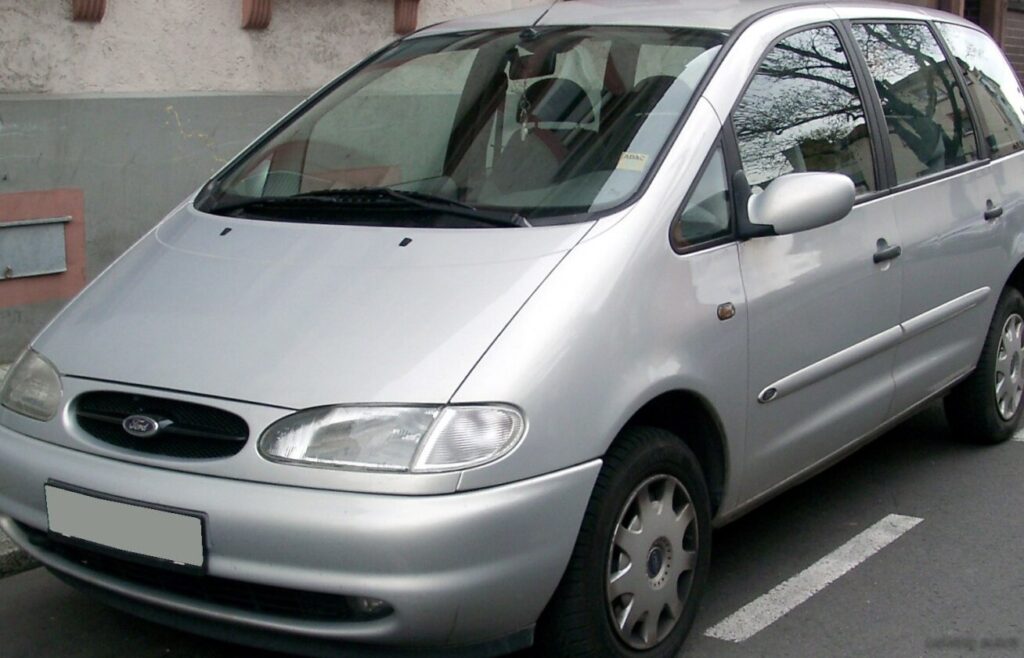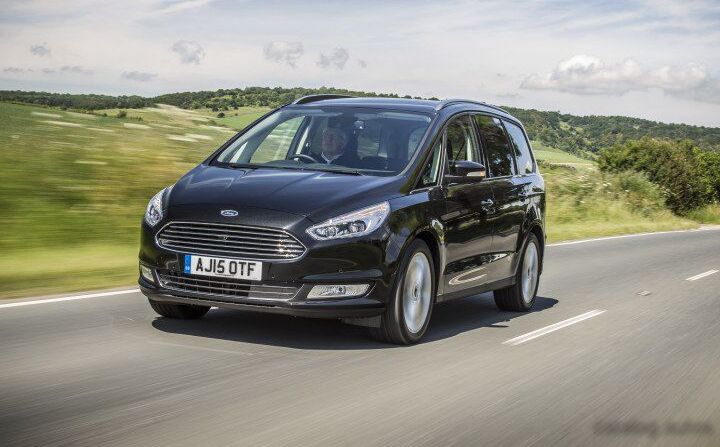
The Ford Galaxy III 2.0 TDCi (120 hp) S&S represents a mid-range offering within the third generation of Ford’s popular people carrier, produced between 2015 and 2018. Positioned as a balance between economy and practicality, this variant aimed to provide family transport with reasonable running costs. It falls within the broader Galaxy III range (2015-2022), which shared its platform with both the Ford S-Max and, initially, the Land Rover Freelander 2. The “S&S” designation indicates the inclusion of Ford’s Auto Start/Stop technology, designed to improve fuel efficiency in urban driving conditions. This model was primarily sold in the European market, where large MPVs remained a popular choice for families.
Technical Specifications
| Brand | Ford |
| Model | Galaxy |
| Generation | Galaxy III |
| Type (Engine) | 2.0 TDCi (120 Hp) S&S |
| Start of production | 2015 |
| End of production | 2018 |
| Powertrain Architecture | Internal Combustion engine |
| Body type | Minivan |
| Seats | 5-7 |
| Doors | 5 |
| Fuel consumption (urban) | 5.6 l/100 km (42 US mpg, 50.4 UK mpg, 17.9 km/l) |
| Fuel consumption (extra urban) | 4.6 l/100 km (51.1 US mpg, 61.4 UK mpg, 21.7 km/l) |
| Fuel consumption (combined) | 5 l/100 km (47 US mpg, 56.5 UK mpg, 20 km/l) |
| CO2 emissions | 129 g/km |
| Fuel Type | Diesel |
| Acceleration 0 – 100 km/h | 13.6 sec |
| Acceleration 0 – 62 mph | 13.6 sec |
| Acceleration 0 – 60 mph | 12.9 sec |
| Maximum speed | 180 km/h (111.85 mph) |
| Emission standard | Euro 6 |
| Weight-to-power ratio | 14 kg/Hp, 71.6 Hp/tonne |
| Weight-to-torque ratio | 5.4 kg/Nm, 184.9 Nm/tonne |
| Power | 120 Hp @ 3500 rpm |
| Power per litre | 60.1 Hp/l |
| Torque | 310 Nm @ 1750-2000 rpm (228.64 lb.-ft. @ 1750-2000 rpm) |
| Engine layout | Front, Transverse |
| Engine Model/Code | UFCA, UFCB |
| Engine displacement | 1997 cm3 (121.86 cu. in.) |
| Number of cylinders | 4 |
| Engine configuration | Inline |
| Cylinder Bore | 85 mm (3.35 in.) |
| Piston Stroke | 88 mm (3.46 in.) |
| Compression ratio | 17:1 |
| Number of valves per cylinder | 4 |
| Fuel injection system | Diesel Commonrail |
| Engine aspiration | Turbocharger, Intercooler |
| Valvetrain | DOHC |
| Engine oil capacity | 6.1 l (6.45 US qt | 5.37 UK qt) |
| Coolant | 7.3 l (7.71 US qt | 6.42 UK qt) |
| Kerb Weight | 1677 kg (3697.15 lbs.) |
| Max. weight | 2565 kg (5654.86 lbs.) |
| Max load | 888 kg (1957.7 lbs.) |
| Trunk (boot) space – minimum | 300 l (10.59 cu. ft.) |
| Trunk (boot) space – maximum | 2339 l (82.6 cu. ft.) |
| Fuel tank capacity | 70 l (18.49 US gal | 15.4 UK gal) |
| Permitted trailer load with brakes (8%) | 2000 kg (4409.25 lbs.) |
| Permitted trailer load with brakes (12%) | 1500 kg (3306.93 lbs.) |
| Permitted trailer load without brakes | 750 kg (1653.47 lbs.) |
| Permitted towbar download | 90 kg (198.42 lbs.) |
| Length | 4848 mm (190.87 in.) |
| Width | 1916 mm (75.43 in.) |
| Width with mirrors folded | 1953 mm (76.89 in.) |
| Width including mirrors | 2137 mm (84.13 in.) |
| Height | 1747 mm (68.78 in.) |
| Wheelbase | 2849 mm (112.17 in.) |
| Front track | 1606 mm (63.23 in.) |
| Rear (Back) track | 1606 mm (63.23 in.) |
| Ride height (ground clearance) | 124 mm (4.88 in.) |
| Minimum turning circle | 12 m (39.37 ft.) |
| Drivetrain Architecture | Front wheel drive |
| Number of gears and type of gearbox | 6 gears, manual transmission |
| Front suspension | Independent, type McPherson with coil spring and anti-roll bar |
| Rear suspension | Independent multi-link spring suspension with stabilizer |
| Front brakes | Ventilated discs |
| Rear brakes | Disc |
| Tires size | 235/55 R17; 235/50 R18; 245/45 R19 |
| Wheel rims size | 7.5J x 17; 7.5J x 18; 8J x 19 |
Powertrain & Engine Architecture
The 2.0 TDCi engine, specifically the UFCA or UFCB variants, is a four-cylinder diesel engine utilizing common rail direct injection. This engine family was widely used across the Ford and PSA (Peugeot-Citroën) ranges. The 120 horsepower output was achieved through careful calibration of the engine management system, balancing performance with fuel economy. The engine features a turbocharger with an intercooler to increase air density and improve combustion efficiency. The DOHC (Double Overhead Camshaft) valvetrain, with four valves per cylinder, further enhances breathing and contributes to the engine’s torque output. The Auto Start/Stop system, activated under certain conditions (e.g., idling at traffic lights), shuts off the engine to reduce fuel consumption and emissions. This variant was typically paired with a 6-speed manual transmission, although a 6-speed automatic (Powershift) was also available as an option, though less common with this power output.
Driving Characteristics
The 2.0 TDCi 120 hp Galaxy III, with its manual transmission, offered adequate performance for everyday driving and family duties. Acceleration was not brisk, with a 0-60 mph time around 12.9 seconds, but the 310 Nm of torque available from 1750-2000 rpm provided sufficient pulling power for overtaking and carrying a full load of passengers and luggage. The gear ratios were tuned for fuel efficiency rather than outright speed. Compared to the higher-powered 2.0 TDCi variants (150 hp or more), this version felt noticeably less responsive, particularly when fully loaded. The automatic transmission, when equipped, further dulled acceleration due to its programming prioritizing smooth shifts and fuel economy. However, the lower power output also meant better fuel economy compared to its more powerful siblings.
Equipment & Trim Levels
The 2.0 TDCi 120 hp typically represented a mid-range trim level within the Galaxy III lineup. Standard equipment generally included air conditioning, a basic audio system with USB connectivity, alloy wheels, and electrically adjustable door mirrors. Higher trim levels added features such as a touchscreen infotainment system with navigation, leather upholstery, parking sensors, and a panoramic sunroof. Interior upholstery was typically cloth, with options for partial leather. The dashboard layout was functional and user-friendly, though not particularly luxurious. Optional extras included a rear entertainment system, adaptive cruise control, and keyless entry.
Chassis & Braking
The Galaxy III utilized an independent suspension setup, with McPherson struts at the front and a multi-link system at the rear. This provided a comfortable ride quality, even on uneven surfaces. Stabilizer bars were fitted to both axles to reduce body roll during cornering. Braking was handled by ventilated discs at the front and solid discs at the rear. ABS (Anti-lock Braking System) was standard. The suspension was tuned to prioritize comfort and stability over sporty handling, reflecting the vehicle’s role as a family MPV.
Market Reception & Comparison
The Ford Galaxy III 2.0 TDCi 120 hp was generally well-received by critics as a practical and economical family vehicle. It was praised for its spacious interior, comfortable ride, and reasonable fuel economy. However, some reviewers noted that the engine felt underpowered, particularly when the vehicle was fully loaded. Compared to the more powerful TDCi variants, this version offered a lower purchase price and better fuel efficiency, but at the expense of performance. Against competitors like the Volkswagen Sharan and Citroën C4 Picasso, the Galaxy offered a compelling combination of space, practicality, and value.
Legacy
The 2.0 TDCi engine, in its various iterations, proved to be a relatively reliable unit, although issues with the diesel particulate filter (DPF) and dual-mass flywheel were common, particularly on vehicles used primarily for short journeys. The Galaxy III, as a whole, has maintained a reasonable reputation for durability. On the used car market, the 2.0 TDCi 120 hp variant represents a more affordable entry point into Galaxy ownership, appealing to buyers prioritizing economy and practicality over outright performance. Regular maintenance, including timely DPF regeneration and flywheel inspection, is crucial to ensure the long-term reliability of this powertrain.