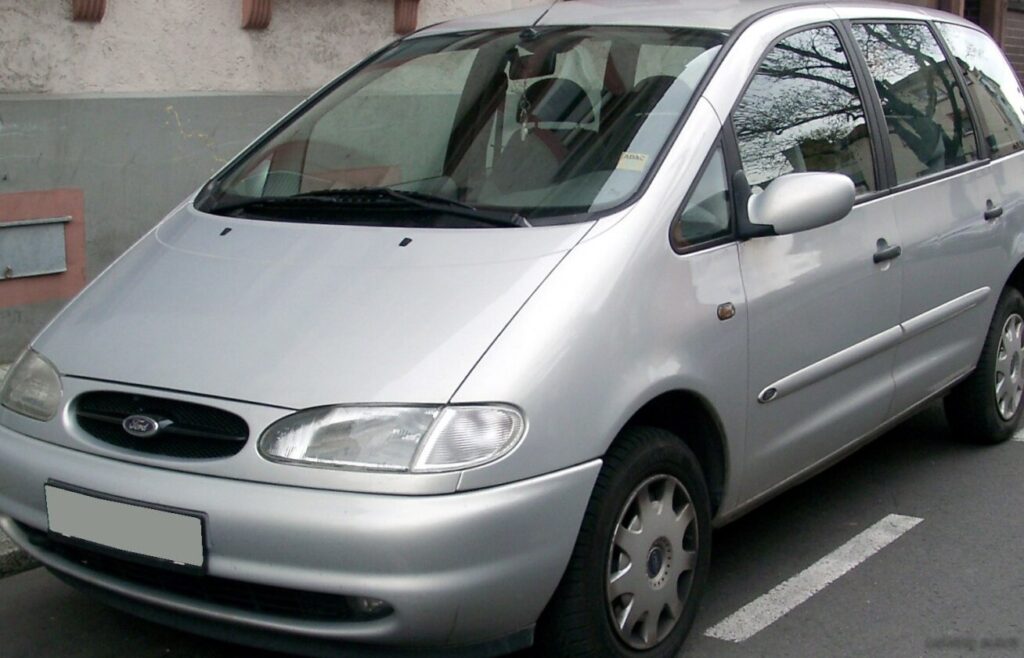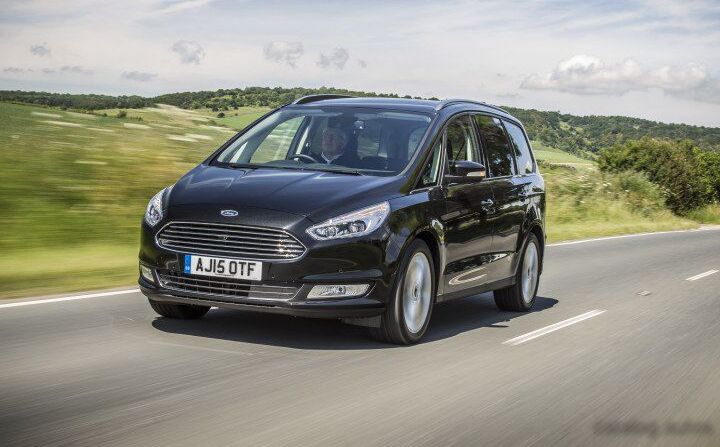
The Ford Galaxy III 2.0 TDCi (180 Hp) S&S represents a significant iteration in Ford’s long-running minivan line, produced between 2015 and 2018. Positioned as a mid-to-upper trim level within the third-generation Galaxy (introduced in 2015, internally designated as the MK3), this variant aimed to balance fuel efficiency with respectable performance for family transport. It shared its platform with both the Ford S-Max and, through a collaboration with PSA Group, the Peugeot 5008 and Citroën C4 Picasso/Grand C4 Picasso. The “S&S” designation indicates the inclusion of Ford’s Auto-Start-Stop system, a fuel-saving technology that became increasingly common during this period.
Technical Specifications
| Brand | Ford |
| Model | Galaxy |
| Generation | Galaxy III |
| Type (Engine) | 2.0 TDCi (180 Hp) S&S |
| Start of production | 2015 |
| End of production | 2018 |
| Powertrain Architecture | Internal Combustion engine |
| Body type | Minivan |
| Seats | 5-7 |
| Doors | 5 |
| Fuel consumption (urban) | 5.6 l/100 km (42 US mpg, 50.4 UK mpg, 17.9 km/l) |
| Fuel consumption (extra urban) | 4.6 l/100 km (51.1 US mpg, 61.4 UK mpg, 21.7 km/l) |
| Fuel consumption (combined) | 5 l/100 km (47 US mpg, 56.5 UK mpg, 20 km/l) |
| CO2 emissions | 129 g/km |
| Fuel Type | Diesel |
| Acceleration 0 – 100 km/h | 9.8 sec |
| Acceleration 0 – 62 mph | 9.8 sec |
| Acceleration 0 – 60 mph | 9.3 sec |
| Maximum speed | 208 km/h (129.25 mph) |
| Emission standard | Euro 6 |
| Weight-to-power ratio | 9.3 kg/Hp, 107.1 Hp/tonne |
| Weight-to-torque ratio | 4.2 kg/Nm, 238 Nm/tonne |
| Power | 180 Hp @ 3500 rpm |
| Power per litre | 90.1 Hp/l |
| Torque | 400 Nm @ 2000-2500 rpm (295.02 lb.-ft. @ 2000-2500 rpm) |
| Engine layout | Front, Transverse |
| Engine Model/Code | T8CG, T8CH, T8CI, T8CJ |
| Engine displacement | 1997 cm3 (121.86 cu. in.) |
| Number of cylinders | 4 |
| Engine configuration | Inline |
| Cylinder Bore | 85 mm (3.35 in.) |
| Piston Stroke | 88 mm (3.46 in.) |
| Compression ratio | 17:1 |
| Number of valves per cylinder | 4 |
| Fuel injection system | Diesel Commonrail |
| Engine aspiration | Turbocharger, Intercooler |
| Valvetrain | DOHC |
| Engine oil capacity | 6.1 l (6.45 US qt | 5.37 UK qt) |
| Coolant | 7.8 l (8.24 US qt | 6.86 UK qt) |
| Kerb Weight | 1681 kg (3705.97 lbs.) |
| Max. weight | 2595 kg (5721 lbs.) |
| Max load | 914 kg (2015.03 lbs.) |
| Trunk (boot) space – minimum | 300 l (10.59 cu. ft.) |
| Trunk (boot) space – maximum | 2339 l (82.6 cu. ft.) |
| Fuel tank capacity | 70 l (18.49 US gal | 15.4 UK gal) |
| Permitted trailer load with brakes (8%) | 2000 kg (4409.25 lbs.) |
| Permitted trailer load with brakes (12%) | 2000 kg (4409.25 lbs.) |
| Permitted trailer load without brakes | 750 kg (1653.47 lbs.) |
| Permitted towbar download | 90 kg (198.42 lbs.) |
| Length | 4848 mm (190.87 in.) |
| Width | 1916 mm (75.43 in.) |
| Width with mirrors folded | 1953 mm (76.89 in.) |
| Width including mirrors | 2137 mm (84.13 in.) |
| Height | 1747 mm (68.78 in.) |
| Wheelbase | 2849 mm (112.17 in.) |
| Front track | 1606 mm (63.23 in.) |
| Rear (Back) track | 1606 mm (63.23 in.) |
| Ride height (ground clearance) | 124 mm (4.88 in.) |
| Minimum turning circle (turning diameter) | 12 m (39.37 ft.) |
| Drivetrain Architecture | The Internal combustion engine (ICE) drives the front wheels of the vehicle. |
| Drive wheel | Front wheel drive |
| Number of gears and type of gearbox | 6 gears, manual transmission |
| Front suspension | Independent, type McPherson with coil spring and anti-roll bar |
| Rear suspension | Independent multi-link spring suspension with stabilizer |
| Front brakes | Ventilated discs |
| Rear brakes | Disc |
| Assisting systems | ABS (Anti-lock braking system) |
| Steering type | Steering rack and pinion |
| Tires size | 235/55 R17; 235/50 R18; 245/45 R19 |
| Wheel rims size | 7.5J x 17; 7.5J x 18; 8J x 19 |
Powertrain & Engine Architecture
The heart of the Galaxy III 2.0 TDCi (180 Hp) S&S is the Ford Duratorq engine family. Specifically, it utilizes a 2.0-liter inline-four cylinder diesel engine, identified by engine codes such as T8CG, T8CH, T8CI, and T8CJ. This engine is a common-rail direct injection diesel, meaning fuel is delivered to the cylinders at extremely high pressure via electronically controlled injectors. The Duratorq engine features a single overhead camshaft (SOHC) design per cylinder bank (DOHC), operating four valves per cylinder. A turbocharger with an intercooler is employed to boost power output, providing increased air intake to the engine. The Auto-Start-Stop system, denoted by the “S&S” in the model name, automatically shuts off the engine when the vehicle is stationary (e.g., at traffic lights) and restarts it when the driver depresses the clutch or brake pedal. The Galaxy III 2.0 TDCi (180 Hp) S&S was typically paired with a six-speed manual transmission, although a six-speed automatic transmission (Powershift) was also available as an option.
Driving Characteristics
The 180 horsepower and 400 Nm (295 lb-ft) of torque offered by the 2.0 TDCi engine provided a reasonable level of performance for a large minivan. Acceleration from 0-60 mph took approximately 9.3 seconds, and top speed was rated at 208 km/h (129 mph). The engine delivered its peak torque between 2000 and 2500 rpm, resulting in good mid-range responsiveness for overtaking and highway cruising. Compared to lower-powered versions of the Galaxy, the 2.0 TDCi offered a noticeable improvement in acceleration and overall drivability. However, it didn’t possess the outright performance of the petrol-powered variants. The six-speed manual transmission allowed for precise gear selection, while the optional automatic provided convenience, though sometimes at the expense of responsiveness. The Galaxy’s relatively high weight did impact handling, but the suspension provided a comfortable ride quality.
Equipment & Trim Levels
The 2.0 TDCi (180 Hp) S&S trim typically included a generous level of standard equipment. This often encompassed features such as air conditioning, power windows and mirrors, a basic audio system with USB connectivity, and alloy wheels. Higher trim levels, such as Titanium, added features like leather upholstery, a more advanced infotainment system with navigation, parking sensors, and automatic climate control. Optional extras included a panoramic sunroof, adaptive cruise control, and a rear-view camera. Interior upholstery was generally cloth on lower trims, with leather options available on higher-spec models. The dashboard layout was functional and user-friendly, with a focus on practicality.
Chassis & Braking
The Ford Galaxy III utilized an independent suspension setup on both the front and rear axles. The front suspension employed McPherson struts with coil springs and an anti-roll bar, while the rear featured a multi-link setup, also with coil springs and a stabilizer bar. This configuration aimed to provide a balance between ride comfort and handling stability. Braking duties were handled by ventilated discs on the front wheels and solid discs on the rear. Anti-lock Braking System (ABS) was standard. The Galaxy’s weight necessitated a robust braking system to ensure adequate stopping power.
Market Reception & Comparison
The Ford Galaxy III 2.0 TDCi (180 Hp) S&S was generally well-received by automotive critics. It was praised for its spacious interior, comfortable ride, and fuel efficiency. The 2.0 TDCi engine was considered a good compromise between performance and economy. Compared to the lower-powered 1.5 TDCi variants, the 180 hp version offered a more refined driving experience. However, some reviewers noted that the automatic transmission could be hesitant at times. Fuel economy figures of around 5.0 l/100 km (47 US mpg) combined were competitive for its class.
Legacy
The Ford Galaxy III 2.0 TDCi (180 Hp) S&S has proven to be a relatively reliable vehicle in the used car market. The Duratorq engine is known for its durability, although regular maintenance is crucial. Common issues can include diesel particulate filter (DPF) problems, particularly on vehicles that primarily undertake short journeys. The Auto-Start-Stop system can also be prone to failure over time. Overall, the Galaxy III 2.0 TDCi (180 Hp) S&S remains a popular choice for families seeking a spacious, practical, and reasonably economical minivan.